Why One Troy Pound of Junk Silver Matters for Your Portfolio
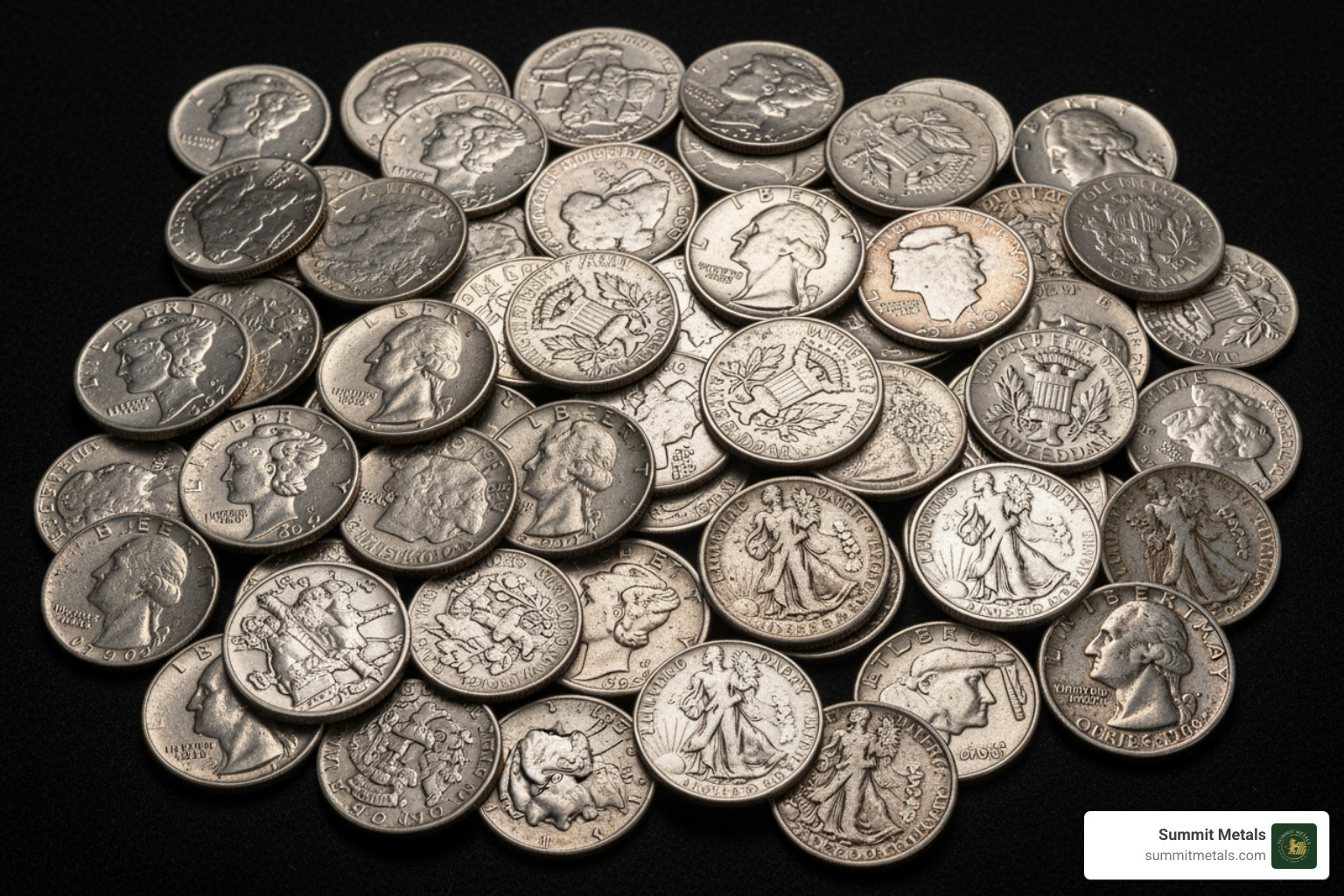
1 troy pound of junk silver represents approximately 12 troy ounces of pre-1965 US coins valued for their silver content, not their numismatic worth. Here's a quick overview:
- Weight: 1 troy pound = 12 troy ounces (not 16 like a standard pound).
- Pure Silver Content: Approximately 10.8 troy ounces of pure silver (from 90% pure coins).
- Face Value Equivalent: Roughly $1.40 in face value of dimes, quarters, or half dollars equals 1 troy ounce of silver.
- Typical Value: With silver around $32.47 per troy ounce, 1 troy pound contains about $350+ worth of silver.
If you've inherited a jar of old quarters or stumbled across a bag of pre-1965 dimes, you're sitting on something valuable. These worn coins—minted before the US stopped using silver in 1965—hold no collector's premium but pack significant precious metal worth.
Junk silver offers one of the most accessible, divisible, and recognizable ways to own physical silver. Unlike bullion bars, these circulated pieces are ideal for portfolio diversification, barter scenarios, or hedging against economic instability. At Summit Metals, we help everyday investors add tangible assets like 1 troy pound of junk silver to their portfolios, adding resilience when markets turn volatile. This guide will show you how to evaluate, purchase, and sell junk silver with a disciplined approach.
Easy 1 troy pound of junk silver glossary:
What is "Junk Silver" or Constitutional Silver?
Don't let the name fool you; 'junk silver' is anything but worthless. The term "junk" simply means these coins have no numismatic (collector's) value beyond their intrinsic silver content. They are circulated, pre-1965 U.S. coins whose value comes directly from the precious metal they contain.
These coins are also known as "Constitutional Silver" because they were minted with 90% silver content as mandated by U.S. law until the Coinage Act of 1965. This change marked the end of a long era of silver in circulating U.S. currency. Investing in junk silver is essentially buying silver bullion in a highly recognizable and divisible form. For a deeper dive, explore our guide on Constitutional Silver / Junk Silver.

Identifying 90% vs. 40% Silver Coins
Knowing the silver content of your coins is the first step to determining their value.
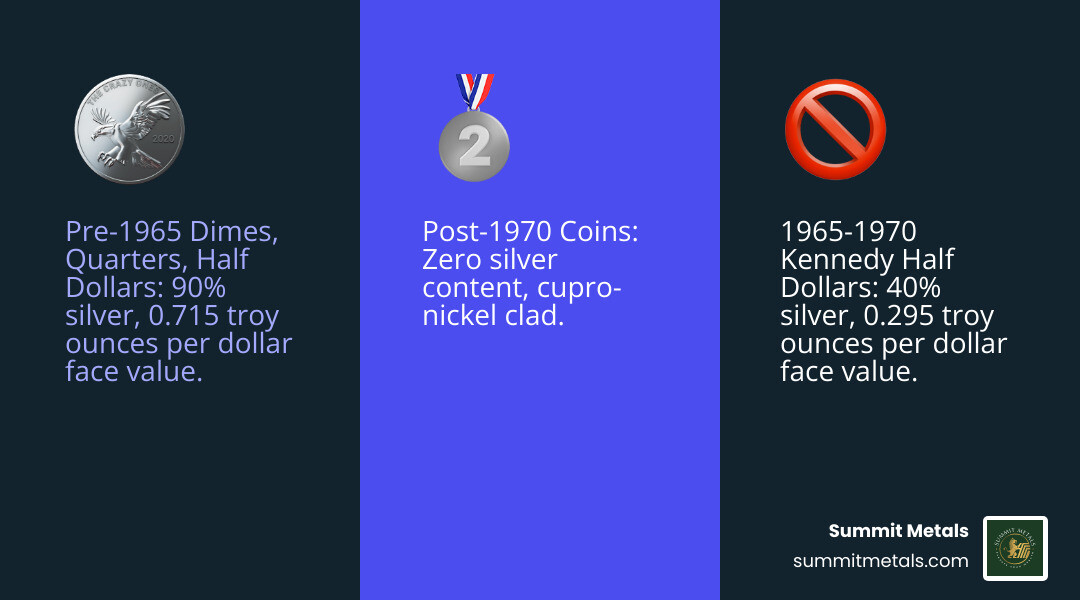
90% Silver Coins: These are the most common type of junk silver.
- Dimes, Quarters, and Half Dollars dated 1964 or earlier. This includes Mercury Dimes, Roosevelt Dimes, Standing Liberty Quarters, Washington Quarters, Walking Liberty Half Dollars, and Franklin Half Dollars.
- Kennedy Half Dollars from 1964 only.
- Morgan and Peace Dollars (1878-1935) also contain 90% silver but may carry a numismatic premium.
40% Silver Coins: Often called "silver-clad," these contain less silver but are still valuable.
- Kennedy Half Dollars dated 1965-1970.
- Some Eisenhower Dollars and Bicentennial coins (1971-1976) were also made with 40% silver for collectors.
Quick Identification Tips:
- Check the Date: This is the easiest method. For dimes, quarters, and half dollars, 1964 or earlier is 90% silver.
- The Edge Test: A 90% silver coin has a solid silver stripe on its edge. A modern clad coin shows a distinct copper-colored layer. A 40% silver coin has a less obvious, grayish edge.
- The Magnet Test: Silver is not magnetic. If a coin sticks to a strong magnet, it's not silver.
- The Sound Test: When dropped on a hard surface, a silver coin produces a high-pitched, ringing sound, unlike the dull thud of a clad coin.
For a more detailed look at valuing your silver coins, check out A Comprehensive Guide to Junk Silver Value.
The Troy Pound vs. The Standard Pound
When discussing precious metals like a 1 troy pound of junk silver, using the correct units is critical. The industry standard is the troy system, not the common Avoirdupois system used for groceries.
- Troy Pound: 1 troy pound = 12 troy ounces. This is the standard for precious metals.
Standard (Avoirdupois) Pound: 1 standard pound = 16 standard ounces.
Troy Ounce vs. Standard Ounce: A troy ounce (31.1 grams) is about 10% heavier than a standard ounce (28.35 grams).
This distinction is vital. A 1 troy pound of junk silver contains 12 troy ounces of material. Confusing this with a standard pound would lead to a 25% error in your valuation. For quick calculations, a Silver Price per Pound Calculator can be useful, but always confirm it uses troy units for precious metals.
Calculating the Value of 1 Troy Pound of Junk Silver
The primary value of junk silver is its "melt value"—the market value of the pure silver within the coins. This value is tied directly to the live silver spot price. While Summit Metals provides transparent, real-time pricing, understanding the calculation empowers you as an investor. You can always check the live price with our Silver Prices Today: Live Silver Price Per Ounce Guide.
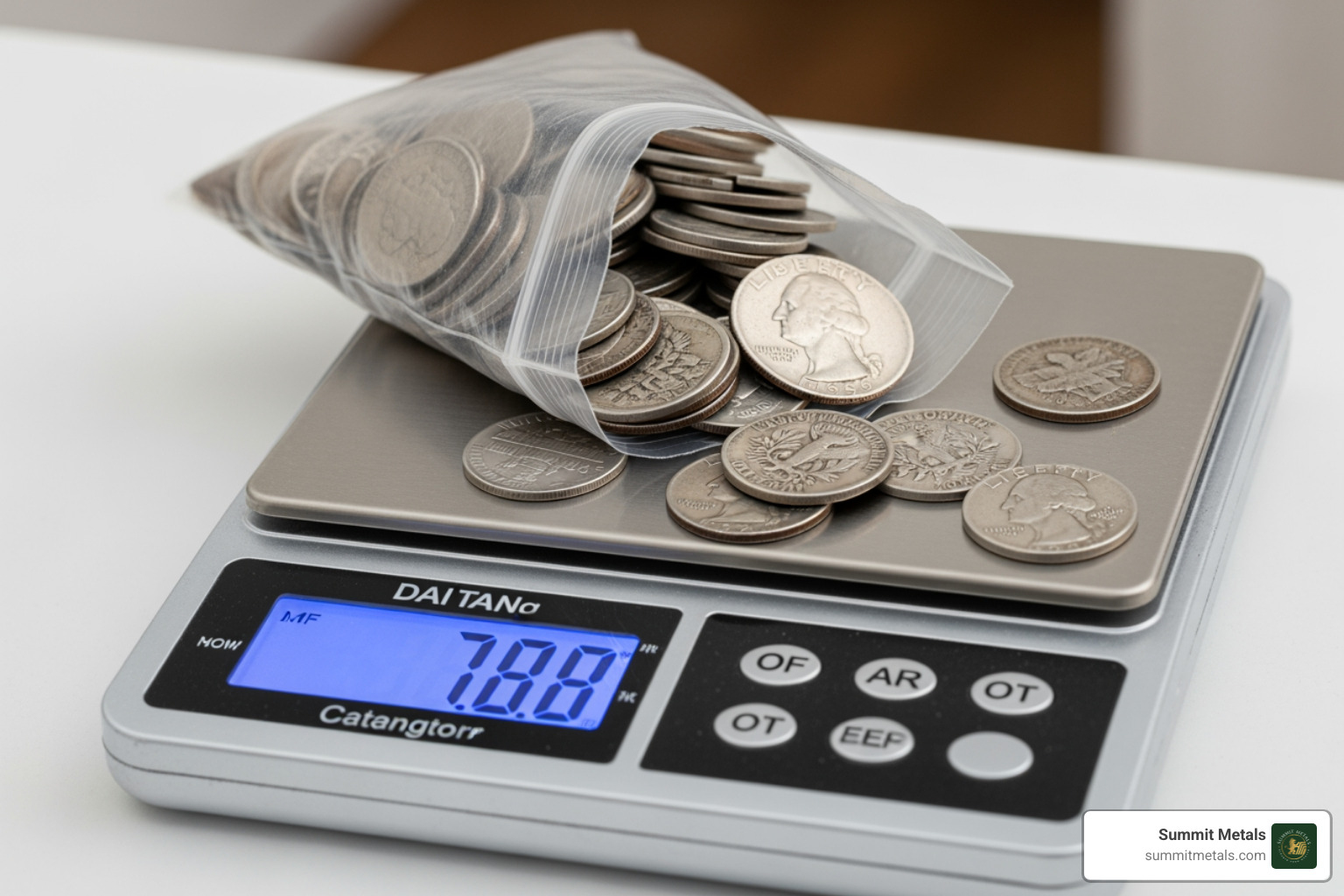
How Much Silver is in 1 Troy Pound of Junk Silver?
Let's break down the pure silver content in 1 troy pound of junk silver:
- Total Weight: 1 troy pound equals 12 troy ounces.
- Purity: Pre-1965 junk silver coins are 90% silver and 10% copper.
- Pure Silver Calculation: To find the pure silver content, multiply the total weight by the purity: 12 troy ounces (total weight) * 0.90 (90% purity) = 10.8 troy ounces of pure silver.
Therefore, 1 troy pound of junk silver contains approximately 10.8 troy ounces of pure silver.
Face Value Equivalent: A common rule of thumb is that $1.40 in face value of 90% junk silver (e.g., 14 dimes) contains about 1 troy ounce of pure silver. This means a troy pound of junk silver is equivalent to roughly $15.12 in face value, though this can vary slightly with coin wear. Learn more about these conversions in our article How Much Junk Silver Equals an Ounce.
Step-by-Step Melt Value Calculation
With 10.8 troy ounces of pure silver, calculating the melt value is simple:
- Find the Current Silver Spot Price: Use a live price for accuracy. For this example, we'll use $32.47 per troy ounce.
- Apply the Formula: Melt Value = Pure Silver Content (troy oz) × Current Silver Spot Price Melt Value = 10.8 troy ounces × $32.47/troy ounce = $350.68
So, at this spot price, your 1 troy pound of junk silver has a melt value of approximately $350.68.
For convenience, a reliable Junk Silver Calculator can quickly determine the melt value of mixed coins based on live spot prices.
Common Calculation Mistakes to Avoid:
- Using standard ounces instead of troy ounces.
- Forgetting the 10% copper content (calculating at 100% purity).
- Using an outdated spot price.
- Mixing up 90% and 40% silver coins.
Avoiding these pitfalls ensures you can confidently assess the value of your 1 troy pound of junk silver.
Junk Silver as an Investment: Advantages and Key Factors
Investing in 1 troy pound of junk silver is an attractive option for many. As a tangible asset, it provides a sense of security that digital assets cannot match. Key advantages include:
- Divisibility: Unlike large silver bars, a collection of dimes and quarters can be easily divided for smaller transactions or barter.
- Recognizability: The familiar designs of U.S. coins make them widely trusted and easy to transact with.
- Barter Potential: In times of economic uncertainty, the fractional nature and historical recognition of junk silver make it an ideal medium of exchange.
- Lower Premiums: Junk silver often carries lower premiums over the spot price compared to modern bullion coins, meaning you get more silver for your money.
Junk silver is a smart addition to a diversified portfolio. To learn more about silver as an asset, read our guide, Is Silver a Good Investment.
Junk Silver vs. American Silver Eagles vs. Silver Bars
To illustrate junk silver's unique advantages, here’s a comparison with other popular forms of silver investment:
| Feature | Junk Silver (e.g., 1 Troy Pound) | American Silver Eagles | Silver Bars (e.g., 10 oz, 100 oz) |
|---|---|---|---|
| Investment Goal | Practical, divisible, recognizable, barter potential | Collectible, government-backed, high liquidity, numismatic appeal | Efficient, low premium, bulk investment, storage efficiency |
| Divisibility | High (individual coins) | Moderate (1-ounce units) | Low (larger units, less practical for small transactions) |
| Premium over Spot | Generally lower (10-30% over melt) | Higher (25-50% over spot, due to collectibility/government backing) | Lowest (5-20% over spot, depends on size/brand) |
| Recognizability | Very High (familiar US coinage) | High (well-known modern bullion coin) | Moderate (generic bars less recognizable than coins) |
| IRA Eligibility | Not typically (not pure enough, not government-minted bullion) | Yes (meets IRS purity standards and is government-issued) | Yes (specific brands/purity levels meet IRS standards) |
| Government Guarantee | Face value (but worth far more in silver) | Yes (weight and purity guaranteed by US government) | No (guaranteed by private refiner, not government) |
Each form of silver has its place, but 1 troy pound of junk silver excels in practicality and accessibility, making it a favorite for those seeking a tangible, ready-for-anything asset.
Factors Influencing Price Beyond Melt Value
While melt value is the foundation, other factors influence the price of your 1 troy pound of junk silver:
- Dealer Premiums: Dealers add a premium to the spot price to cover business costs. When you sell, they buy back at a price slightly below melt value. Understanding this Spot Price vs. Premium is key to getting a fair deal.
- Supply and Demand: High demand and low supply can increase premiums.
- Coin Condition: While most junk silver has no numismatic value, extremely worn coins might fetch a slightly lower price. Conversely, a rare date or high-grade coin could be worth more than its melt value.
- Market Sentiment: Economic uncertainty and inflation fears often increase demand for physical silver, driving up both spot prices and premiums.
Building Your Stack with Dollar-Cost Averaging
One of the smartest strategies for building a long-term precious metals portfolio is dollar-cost averaging (DCA). This involves investing a fixed amount of money at regular intervals, regardless of price fluctuations.
At Summit Metals, we champion this approach with our Autoinvest strategy. Think of it as a 401k for physical silver. By making consistent, monthly purchases of 1 troy pound of junk silver (or other metals), you:
- Mitigate Volatility: You avoid trying to time the market. Your fixed investment buys more silver when prices are low and less when they are high, averaging your cost over time.
- Build Wealth Systematically: Consistency is key. DCA instills a disciplined, emotion-free approach to steadily accumulating tangible assets.
This simple, powerful strategy is highly effective for building financial resilience with assets like silver. Learn more in our guide on The Power of Dollar Cost Averaging in Gold and Silver Investments.
A Practical Guide to Buying and Selling Junk Silver
Whether acquiring your first 1 troy pound of junk silver or liquidating your holdings, knowing the best practices is essential. At Summit Metals, we offer transparent, competitive rates for both buying and selling.
Where to Buy Junk Silver:
- Reputable Online Dealers: This is often the most convenient option with competitive pricing and secure shipping. Our Guide to Buying Silver Coins Online offers a comprehensive overview.
- Local Coin Shops: Shops in areas like Salt Lake City, Utah, offer a hands-on experience. Always compare prices.
- Coin Shows: These events allow you to browse multiple dealers but are less common.
Where to Sell Junk Silver:
- Bullion Dealers (Online and Local): Your best bet for competitive prices based on melt value. Compare offers to find the best rate. Our guide on Online vs. Local: Where to Sell Silver can help.
- Online Marketplaces: Platforms like eBay are an option, but be mindful of high fees and shipping logistics.
Practical Steps to Selling 1 Troy Pound of Junk Silver
To get the best price when selling your 1 troy pound of junk silver, follow these steps:
- Inventory Your Coins: Sort by denomination and separate 90% from 40% silver.
- Calculate Melt Value: Use the current spot price to establish a baseline value.
- Get Multiple Quotes: Contact several reputable dealers to compare their buy-back prices.
- Package Securely: If shipping, use discreet, well-padded packaging to prevent damage.
- Understand the Process: A trustworthy dealer will clearly outline their verification and payment procedures.
For more tips, see our guide on Selling Your Silver Coins Wisely.
Your Exit Strategy: Selling to a Trusted Dealer
A smart investment strategy includes a clear exit plan. It's not just about buying; it's about knowing you can easily and fairly liquidate your assets when the time comes. That's why we invite you to Sell to Us.
When you're ready to sell your 1 troy pound of junk silver, Summit Metals offers a transparent and competitive buying process. Based in Wyoming, our business is built on real-time pricing and trust.
Consider your broader exit strategy:
- Liquidity: Junk silver is highly liquid, a core advantage for investors needing to convert assets to cash.
- Secure Storage: For larger holdings, private vaults offer security and can facilitate a quick sale directly from storage, enhancing liquidity.
- Fair Pricing: We provide fair market pricing that reflects the true value of your silver. We aim to be your trusted partner for the entire investment journey.
Having a clear exit plan reduces stress and ensures you get the most from your assets. Learn more about turning metals into cash with our guide on How to Sell Your Scrap Gold and Silver.
Frequently Asked Questions about Junk Silver
Here are answers to common questions about 1 troy pound of junk silver and Constitutional Silver.
Is it legal to melt junk silver coins in the USA?
Yes, it is legal in the U.S. to melt silver coins. Unlike pennies and nickels, restrictions do not apply to silver coinage because it is no longer in circulation and its metal value far exceeds its face value. Laws can change, so it's wise to stay informed, but melting silver coins for their bullion content is currently permitted.
Can I sell my junk silver coins to a bank?
No, you should not sell junk silver to a bank. Banks will only offer you the coin's face value (e.g., $0.25 for a silver quarter worth several dollars in melt value), resulting in a significant financial loss. Always sell to a specialized bullion dealer like Summit Metals or a reputable coin shop that pays based on the current silver spot price.
Are some junk silver coins worth more than their melt value?
Usually, no. The term "junk silver" implies the value is in the metal, not its collector status. However, there are exceptions for coins with key dates, rare mint marks, or exceptional condition. A coin in a high grade (like Uncirculated) or a rare variety might command a numismatic premium above its melt value. While the vast majority of a 1 troy pound of junk silver is valued by its melt price, it's always fun to keep an eye out for a rare find.
Conclusion: Is a Troy Pound of Junk Silver Right for You?
We've explored how 1 troy pound of junk silver serves as a unique and practical investment. As historical U.S. Constitutional Silver, it offers a compelling option for portfolio diversification.
Junk silver is a highly divisible and recognizable asset, ideal for investment, bartering, and as a tangible hedge against economic uncertainty. Its value is directly tied to its silver content and the global spot price. Whether you're starting small or building a large stack, 1 troy pound of junk silver is an accessible way to own physical silver, often at lower premiums than other bullion products.
At Summit Metals, we are your trusted partner for acquiring authenticated precious metals. We provide transparent, real-time pricing to ensure you receive competitive rates and lasting value.
Ready to add this classic form of silver to your holdings? Explore our collection of Constitutional Silver today and take a tangible step toward securing your financial future.