Don't Get Shortchanged: Why Smart Silver Coin Selling Matters
Selling silver coins can be surprisingly complex, and many sellers unknowingly leave hundreds or even thousands of dollars on the table. Whether you've inherited a collection, invested in silver as a hedge against inflation, or simply want to cash in on rising precious metals prices, understanding the selling process is crucial to getting fair value for your assets.
Quick Answer for Selling Silver Coins:
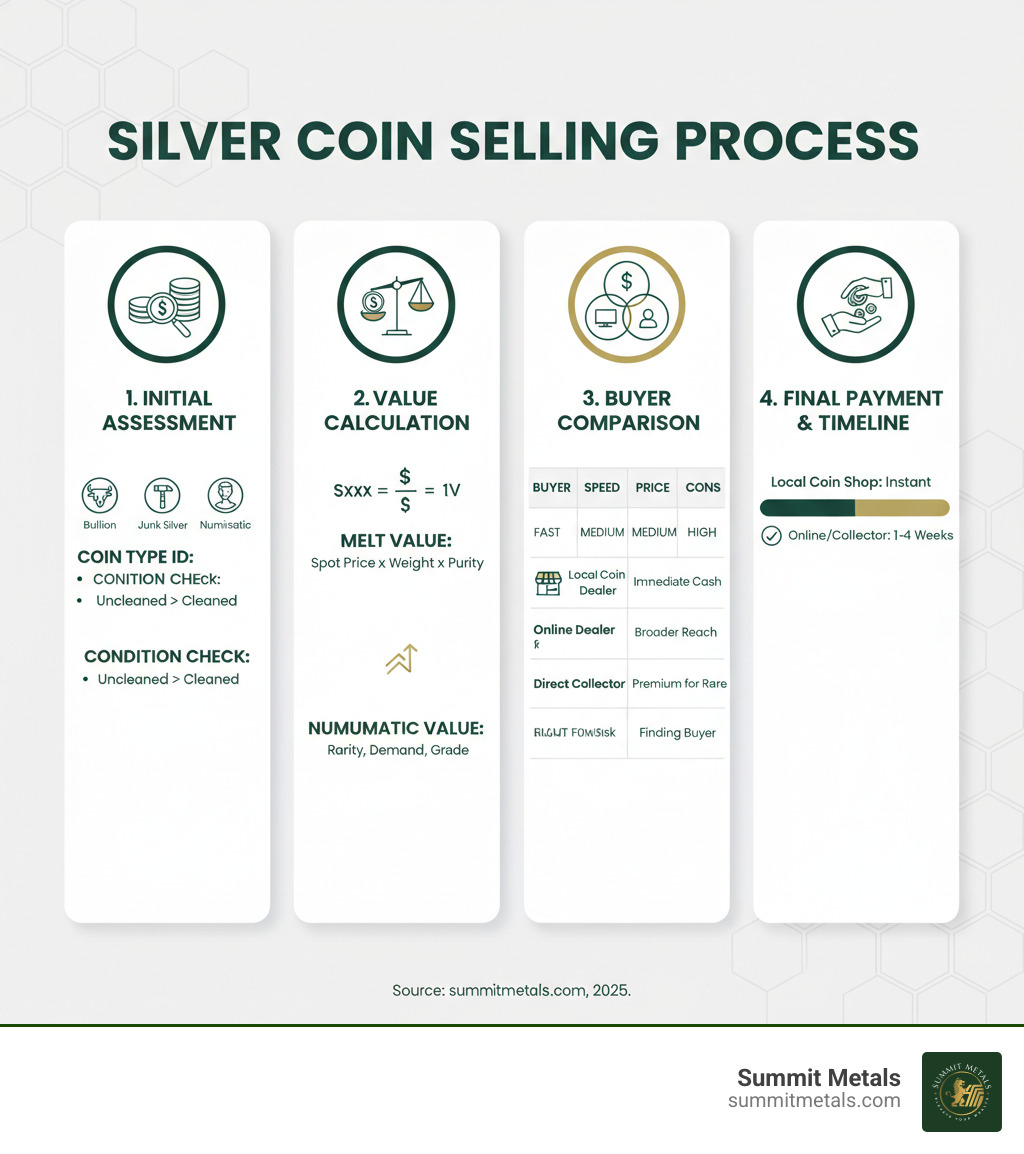
- Know your type: Bullion coins, "junk" silver (pre-1965), or numismatic (collectible)
- Calculate melt value: Current silver spot price × weight × purity percentage
- Get multiple quotes: Local coin shops, online dealers, and specialized buyers
- Avoid: Pawn shops, mail-in services, and cleaning your coins
- Best for speed: Local coin dealers (immediate cash)
- Best for price: Online dealers or direct-to-collector sales
The difference between a smart sale and getting shortchanged often comes down to preparation. Most bullion dealers offer about 95% of the spot price for buybacks, but this can vary significantly based on the type of coins, market conditions, and where you sell. Without proper knowledge, a seller might accept an offer far below the coin's actual value.
The key is understanding what you have and where to sell it. A rare Morgan dollar might fetch a significant premium from a knowledgeable collector but only its basic silver value from an uninformed dealer. Pre-1965 "junk" silver quarters contain 90% silver and should trade close to their melt value, while rare dates or key mintages can command much higher prices.
At Summit Metals, we guide clients through complex financial transactions in the precious metals market. We believe that successful selling silver coins requires a disciplined approach: know your assets, understand the market, and choose the right exit strategy. Our experience has shown us that informed sellers consistently achieve better outcomes than those who rush to the first buyer they find.
Basic selling silver coins vocab:
- American silver eagle
- investing in bullion
- precious metals storage
Step 1: Determine the True Value of Your Silver Coins
Before you even think about selling silver coins, you need to understand what makes your coins valuable. This isn't just about checking today's silver price and calling it done. Your coins might be worth far more than their weight in silver, or they might be exactly what the metal is worth. The difference between these scenarios can mean hundreds or even thousands of dollars in your pocket.
Here's a quick reality check: silver isn't magnetic. If a magnet sticks to your "silver" coin, you've just saved yourself a lot of time. For everything else, you'll want to track current silver prices on reliable platforms like TradingView to understand the baseline value of your coins.
Bullion vs. "Junk" vs. Numismatic: Know Your Type
Understanding what type of silver coins you own is like knowing whether you're holding a Honda Civic or a vintage Ferrari. Both get you places, but the value proposition is completely different.
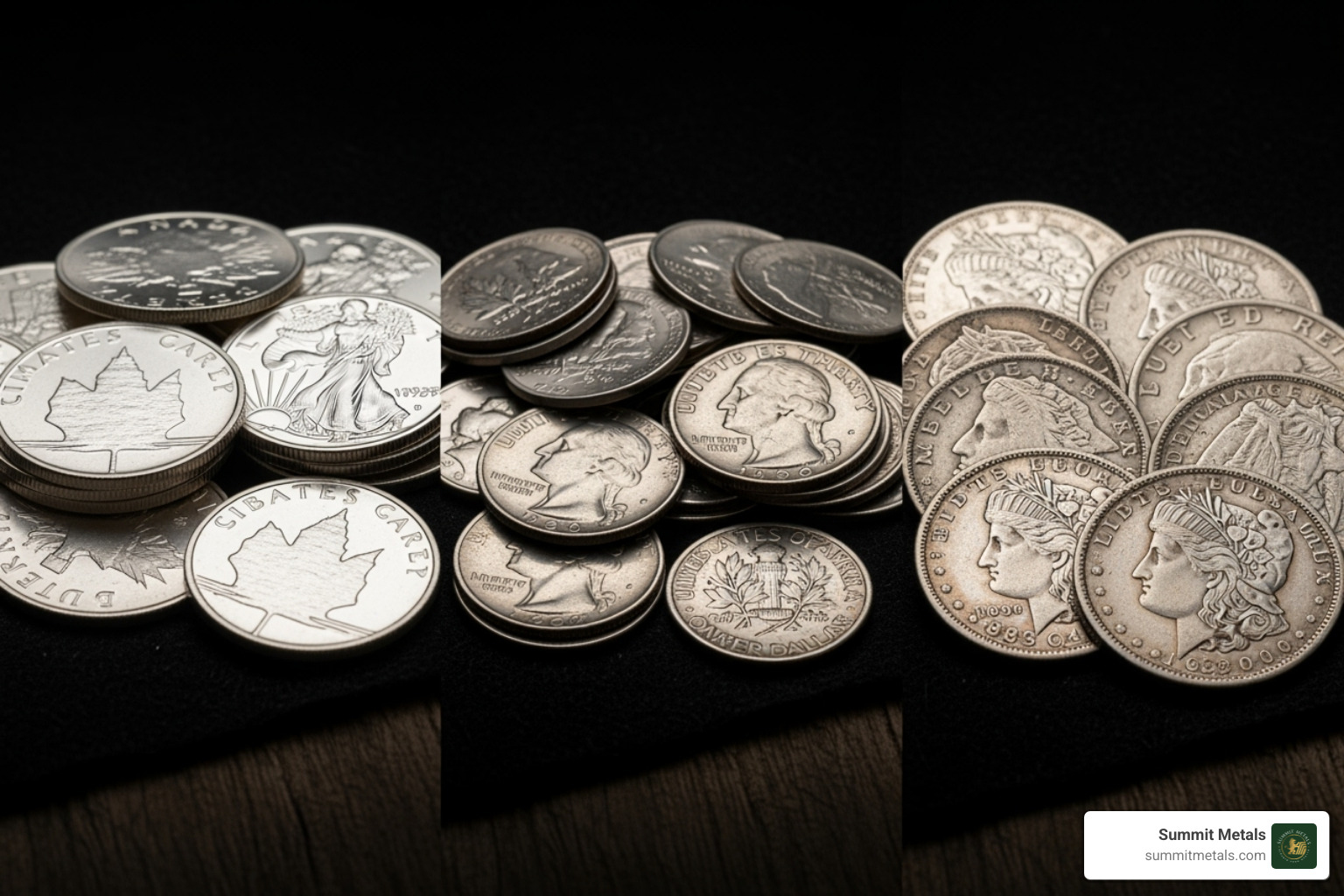
Bullion coins are the workhorses of the precious metals world. These modern coins like American Silver Eagles and Canadian Silver Maple Leafs are minted specifically for their silver content, typically 99.9% pure. Their value tracks closely with silver spot prices, plus a small premium for manufacturing and distribution. Think of them as silver in its most liquid, tradeable form.
"Junk" silver gets its unfortunate nickname not because it's worthless, but because collectors don't prize it for rarity. These are old circulating coins that contain silver but aren't considered collectible. The silver content, however, is quite valuable. US coins minted before 1965 contain 90% silver, and a dollar's worth of these coins contains about 0.715 ounces of pure silver. Kennedy half dollars from 1965-1970 contain 40% silver. The value of these coins is tied directly to their silver content and the current spot price.
Numismatic coins are where things get interesting - and potentially very profitable. These coins command prices far above their silver content due to rarity, historical significance, condition, or collector demand. A common Morgan Dollar might be worth a small premium over its silver content, but a rare date in excellent condition could fetch hundreds or even thousands of dollars.
Melt Value vs. Numismatic Value: What's the Difference?
The difference between melt value and numismatic value is often the difference between paying your electric bill and taking a vacation.
Melt value is straightforward math: (Current Silver Spot Price) x (Coin's Weight in Ounces) x (Purity Percentage). That's what your coin is worth if someone literally melted it down for the metal. For most common coins in average condition, this is a good baseline for the price you'll receive.
Numismatic value is where coin collecting becomes treasure hunting. This value comes from factors that have nothing to do with silver content: rarity (how few were made or survived), condition (a pristine coin versus one that's been carried in someone's pocket for decades), mint marks (some mints produced fewer coins), and historical significance (coins tied to important events or periods). An 1873 Liberty Seated Quarter from the Carson City Mint, for example, has a silver value of a few dollars but is worth thousands due to its extreme rarity.
Silver Coins vs. Silver Bars: What's Better for Resale?
When selling silver coins versus bars, you're dealing with different advantages that affect your final payout. Coins generally offer better liquidity and trust, making them easier to sell.
| Feature | Silver Coins | Silver Bars |
|---|---|---|
| Backing | Government-backed (sovereign mints) | Private mints and refineries |
| Guarantee | Weight and purity guaranteed by a nation | Guaranteed by the manufacturer |
| Recognizability | Highly recognizable and trusted worldwide | Brand recognition varies |
| Liquidity | Generally higher; easier to sell quickly | Can be lower, especially for large bars |
| Premiums | Higher premiums over spot price when buying | Lower premiums over spot price when buying |
| Fraud Protection | Legal tender status and face value add a layer of protection | Relies solely on manufacturer's reputation |
For resale purposes, coins generally offer better liquidity and are easier to sell to a wider range of buyers. While bars might get you slightly more silver per dollar upfront, the trust and recognizability of government-minted coins often make them a better choice for holding value and ensuring a smooth sale.
Should You Get Your Coins Graded?
Professional grading is like getting a certificate of authenticity for artwork - sometimes essential, sometimes unnecessary, but always worth considering for valuable pieces.
Services like the Professional Coin Grading Service (PCGS) and Numismatic Guaranty Corporation (NGC) examine your coins, authenticate them, and assign grades on a standardized scale. They then seal the coins in tamper-evident holders with their assessment.
When grading makes sense: If you suspect your coin is rare, features a key date, or appears to be in exceptional condition, grading can dramatically increase its value. A general rule is to consider grading for any coin whose estimated value exceeds $100 beyond its melt value. A common American Silver Eagle probably won't benefit from grading, but a rare Morgan Dollar from 1893 could be worth the grading fee.
The benefits are substantial: Graded coins eliminate condition disputes, boost buyer confidence, and often command higher prices. The professional authentication also protects against counterfeits, which is increasingly important in today's market.
Many local coin dealers are authorized to help with grading submissions. You can find authorized PCGS dealers in your area who can assess whether your coins are good candidates and guide you through the process.
The key to successful silver coin selling is understanding exactly what you own before you start shopping for buyers. Take the time to properly identify and value your coins - your bank account will thank you.
Step 2: Where and How to Start Selling Silver Coins for the Best Price
You've done the hard work of identifying your silver coins and understanding their value. Now comes the exciting part: turning those coins into cash! This step is where many people either hit a home run or strike out completely. The difference? Preparation and knowing where to look.
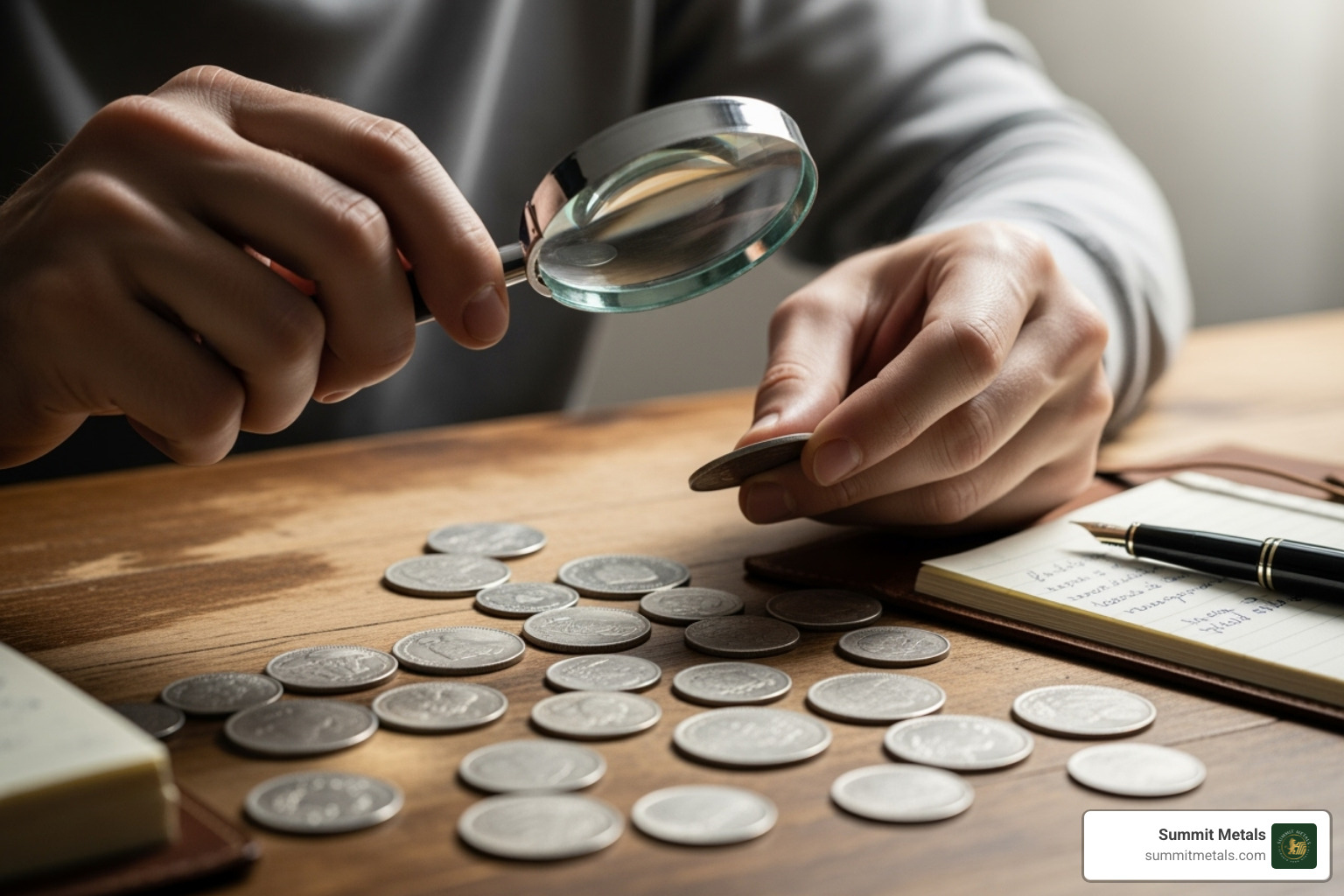
Think of this like preparing for a job interview. You wouldn't walk in unprepared, and you shouldn't approach selling silver coins that way either. The buyers who offer the best prices are looking for sellers who know what they have and take the process seriously.
Preparing to Sell: The "Don'ts" Are as Important as the "Do's"
Before you contact a single buyer, take time to get organized. This isn't just about looking professional - it's about protecting your investment and getting the best possible price.
- Create a detailed inventory of everything you're selling. Write down the denomination, date, mintmark, purity, weight, and quantity for each type of coin. For example: "1964 Washington Quarters, 90% silver, 6.25g each, quantity: 10."
- Separate your coins by type and purity. Group all your 90% U.S. junk silver together, keep Canadian 80% silver separate, and organize bullion coins by type. This organization shows buyers you're serious and makes their job easier, which often translates to better offers.
- Gather any documentation you might have, including original Certificates of Authenticity or purchase receipts. These papers add credibility.
Now for the critical "don'ts" that could cost you hundreds or even thousands of dollars:
- Never, ever clean your silver coins. That tarnish or patina you think looks ugly might be valuable to collectors. Cleaning removes this aging and can destroy numismatic value instantly.
- Don't handle coins by their faces. Always hold them by the edges to avoid leaving fingerprints or oils that damage the surface.
- Don't rush the process. Taking time to get multiple opinions and offers is always worth it.
Here's a quick tip: You can test if a coin is actually silver by using a magnet (silver isn't magnetic) or the "ping" test. Gently balance the coin on your fingertip and tap it with another coin. Silver coins produce a distinctive, high-pitched ring, while base metal coins make a dull thud.
Comparing Your Options: Where to Sell
When it comes to selling silver coins, you have several paths forward. Each has its sweet spot depending on what you're selling and how quickly you need cash.
- Local coin shops are your go-to for immediate cash and face-to-face transactions. These dealers often have decades of experience and can spot valuable numismatic coins you might have missed. The downside? Their overhead costs mean they typically offer lower prices than online dealers. Still, for smaller quantities or when you need cash today, local shops are hard to beat. If you're near our Salt Lake City, Utah location, we invite you to visit for a transparent and convenient selling experience.
- Online dealers often provide the best prices for selling silver coins, particularly bullion. Their lower overhead and competitive nature mean better buyback rates for you. Many, including Summit Metals, allow you to lock in your price over the phone, protecting you from market fluctuations while your coins are in transit. The trade-off is waiting for payment until they receive and verify your coins, but the higher prices usually make this worthwhile.
- Online marketplaces like eBay or Reddit's r/Pmsforsale can potentially fetch the highest prices for numismatic coins, since you're selling directly to collectors. However, high fees can eat into your profits, and these platforms require more time and carry higher risks of scams or disputes.
- Pawn shops might seem convenient, but they're generally the worst option. They are generalists who need large profit margins and rarely understand the nuances of silver coins. We strongly recommend avoiding pawn shops.
- "Cash for Gold/Silver" mail-in services are another trap to avoid. These companies are notorious for offering extremely low prices - sometimes just pennies on the dollar.
How to Approach Different Buyers
Your success depends on knowing how to work with different types of buyers. Before approaching anyone, check the current silver spot price on a reliable financial platform. This knowledge is your superpower in negotiations.
When visiting local coin dealers, walk in with your organized inventory and be friendly but confident. Ask for their "bid" price (what they'll pay you), not their "ask" price (what they sell for). Don't hesitate to mention you're getting multiple quotes. Organizations like the Professional Numismatists Guild can help you find trusted professionals.
For online dealers, most have "sell to us" sections on their websites. Call to lock in your price before shipping, and follow their packaging instructions carefully. Reputable dealers provide insured shipping labels to protect your valuable coins in transit.
Peer-to-peer forums like Reddit's r/Pmsforsale can offer prices between a dealer's retail and buyback prices. However, you'll need to build a reputation gradually, starting with smaller sales.
Watch out for red flags: high-pressure tactics, vague pricing without itemized quotes, anyone suggesting they "clean" your coins (run immediately), refusal to provide paperwork, or dealers who won't let you check current spot prices.
At Summit Metals, we believe transparency builds trust. When you're ready to sell or looking to reinvest your proceeds, we're here to provide honest, competitive pricing and the education you need to make confident decisions.
Frequently Asked Questions
After helping countless clients through their precious metals journey, we've noticed the same questions come up time and time again when people are selling silver coins. Let's address these head-on so you can move forward with confidence.
What is a fair price when selling silver coins?
A fair price depends entirely on the type of silver you have. The key is to understand the market for each category.
- For bullion coins like American Silver Eagles or Canadian Maple Leafs, a fair offer is typically very close to the current spot price. A reputable dealer might offer a price slightly above or below spot, depending on their inventory and market demand. Anything significantly below the spot price is a red flag.
- For "junk" silver (pre-1965 U.S. coins), the price is based on melt value. A dollar of 90% junk silver contains about 0.715 ounces of pure silver. Its value is calculated by multiplying that silver content by the current spot price. For example, if silver is at $30/oz, a dollar face value of these coins is worth about $21.45 in silver.
- For numismatic coins, pricing is more complex. A common, circulated Morgan dollar might trade for a small amount over its silver value, but a key date in mint condition could be worth hundreds or more. This is where getting multiple opinions from trusted experts is crucial.
Always know today's spot price before you negotiate. Calculate your coins' melt value as a baseline, and get quotes from at least three different buyers.
What are the most common scams to avoid when selling silver coins?
Unfortunately, where there's value, there are people looking to take advantage. Be aware of these common tricks:
- Mail-in schemes: These "Cash for Gold/Silver" operations are notorious for offering pennies on the dollar, banking on sellers' lack of knowledge.
- High-pressure tactics: Any buyer who rushes you, dismisses your questions, or pressures you into an immediate decision is not trustworthy. A legitimate dealer will respect your need to consider the offer.
- Bait-and-switch offers: A dealer quotes an attractive price over the phone but drastically lowers it once they have your coins, citing fictional "problems." Get offers in writing when possible.
- Undervalued numismatics: Some buyers may offer only melt value for rare coins, hoping you don't know their true collector value.
- Unsecured payments: For in-person sales, stick to cash or verified funds. For online sales, use secure, traceable methods like bank transfers.
- Offers to "clean" your coins: Never let a buyer clean your coins. This destroys their numismatic value, and it's a tactic used by dishonest dealers.
Do I have to pay taxes on my profits?
Yes, profits from selling silver coins are potentially taxable. The IRS treats precious metals as "collectibles," and any capital gains (the selling price minus your original cost) are subject to tax. The rate depends on how long you held the asset.
- Long-term gains (held over a year) are taxed at a collectibles rate of up to 28%.
- Short-term gains (held for a year or less) are taxed at your regular income tax rate.
Dealers are required to file Form 1099-B for certain large transactions, such as the sale of $1,000 face value or more of U.S. 90% silver coins. Some states also have specific rules; for example, the Utah State Tax Commission has its own guidelines for precious metals sales.
Disclaimer: This information is for educational purposes only. We are precious metals experts, not tax advisors. The rules can be complex, so we strongly recommend consulting a qualified tax professional to understand your specific obligations.
Don't let tax concerns stop you from selling when the time is right. Just be prepared and set aside funds for any taxes you may owe.
From Seller to Savvy Investor: Reinvesting Your Profits
Successfully selling silver coins isn't just about getting cash in your pocket today – it's about opening the door to smarter financial choices for tomorrow. At Summit Metals, we've watched countless clients start their precious metals journey by selling inherited collections, only to find one of the most reliable wealth-building strategies available.
Think of it this way: you've just proven that precious metals hold their value. The silver coins you sold likely held their purchasing power far better than cash would have over the same period. That's the power of real assets in action.
Consider Your Next Move in Precious Metals
Now that you've turned silver into cash, you're at an interesting crossroads. You have a golden opportunity to build long-term wealth by reinvesting those profits.
- Reinvest for Growth: Instead of letting that money sit in a low-yield savings account, you could reinvest it into gold or silver, which have historically served as a hedge against inflation and economic uncertainty.
- Diversify Your Portfolio: Perhaps you sold silver but now want to explore gold's renowned stability or platinum's industrial demand. Each metal plays a unique role in a well-balanced portfolio.
- Automate Your Wealth-Building: This is where investing gets really smart. Instead of trying to time the market, you can use a strategy called dollar-cost averaging. Our Autoinvest program makes this easy. You can set up automatic monthly purchases of precious metals, just like contributing to a 401k. By investing a fixed amount regularly, you naturally buy more metal when prices are low and less when they're high. This disciplined approach smooths out market volatility and builds your holdings steadily over time, without the stress of constantly watching prices.
The beauty of Autoinvest is its simplicity. Set it up once, and you're consistently building a hard asset portfolio while you sleep, work, or enjoy life. No more wondering, "Is now a good time to buy?"
Start Your Investment Journey with Confidence
Whether you're ready to sell your silver coins, explore new investment opportunities, or simply want to learn more about building wealth with precious metals, we're here to make it straightforward and transparent. Our real-time pricing means no surprises, and our bulk purchasing power ensures you're getting competitive rates whether you're buying or selling.
We've built our reputation on treating every client with respect and expertise. Our Wyoming-based team, with our physical presence in Salt Lake City, Utah, provides the personal touch that many online-only companies can't match.
Ready to sell or start investing? Explore your options with us.
The journey from selling old silver coins to building a robust precious metals portfolio isn't just about money – it's about taking control of your financial future. We're here to help you take that next step with confidence.