Why Investing Silver Bars Matters for Your Financial Future
Investing silver bars is a cost-effective way to accumulate physical silver, offering lower premiums than coins and serving as a tangible hedge against inflation and economic uncertainty. Here's what you need to know:
Quick Answer: Should You Choose Silver Bars?
- Best for bulk stackers: Silver bars offer the lowest premium per ounce, maximizing your silver acquisition.
- Purity guaranteed: Almost always .999 fine silver (99.9% pure).
- Cost savings: Larger bars (kilo, 100 oz) provide the best per-ounce value.
- Trade-off: Lower liquidity and harder to sell in small amounts compared to coins.
- Storage: Uniform shape makes stacking and storage efficient.
- Authentication: Buy from reputable dealers with assay certificates.
For millennia, silver has served as real money—a store of value governments cannot print into existence. Today, it plays a dual role as an industrial commodity for green technologies and a monetary asset protecting wealth from inflation.
But not all silver investments are equally created. Should you buy bars, coins, or rounds? What size fits your budget? How do you ensure you're getting authentic silver at a fair price?
The debate between silver bars and coins often comes down to premium costs versus liquidity. While coins command higher prices for their government backing and designs, bars deliver more silver for your dollar. This fundamental trade-off shapes every serious investor's strategy.
I'm Eric Roach. After guiding Fortune-500 clients through billions in transactions on Wall Street and founding a flat-fee stock trading company, I now help everyday investors apply institutional strategies to investing silver bars and other precious metals, turning complex market dynamics into actionable wealth protection plans.
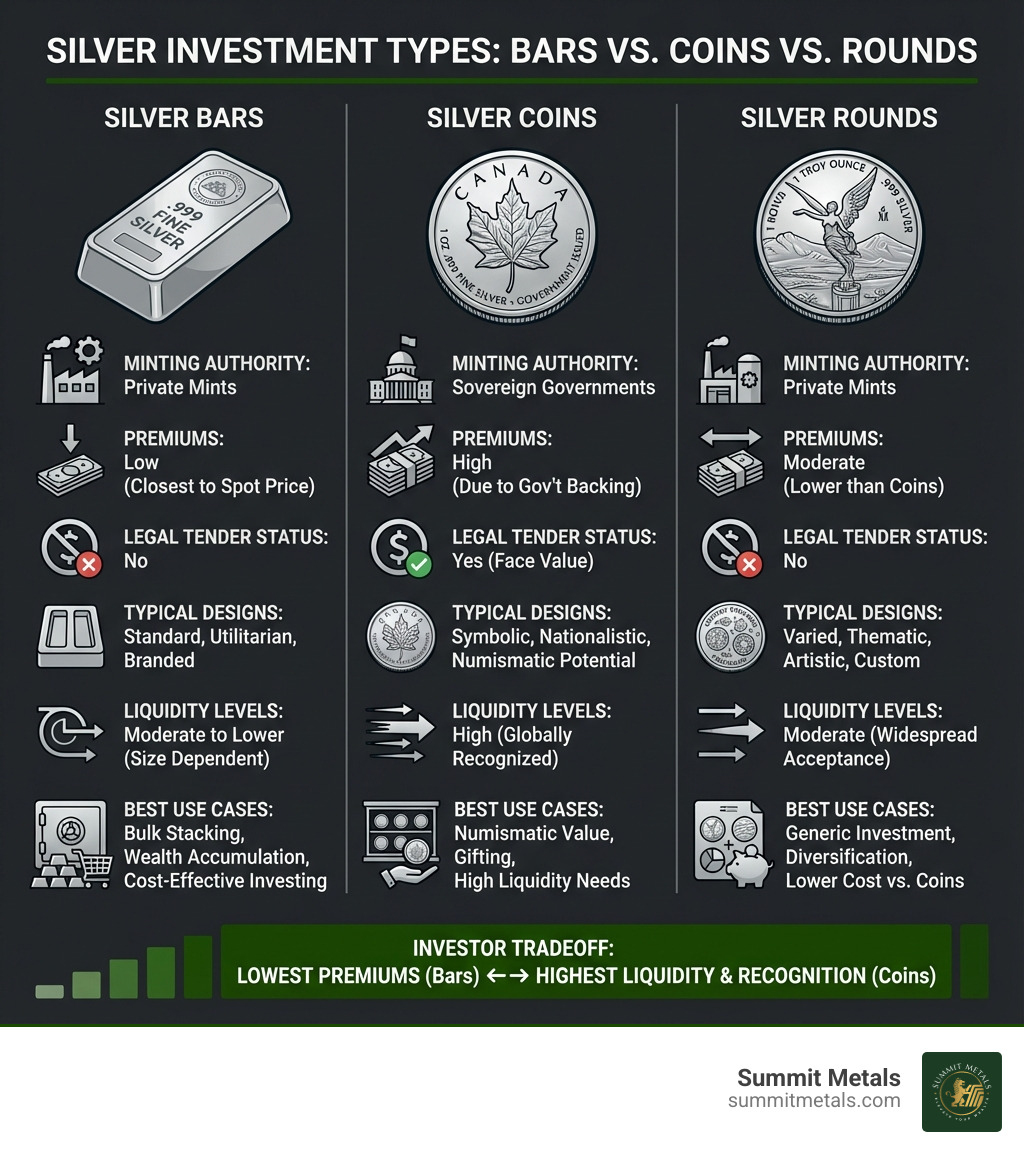
Simple guide to investing silver bars:
Understanding the Forms of Silver Bullion
Silver bullion is physical silver valued for its metal content, not its artistic qualities. The benefit of physical ownership is clear: it's a tangible asset you control, free from counterparty risk or digital system failures. This direct ownership is comforting in uncertain times.
Physical silver comes in three main forms: bars, coins, and rounds. Each has unique characteristics and ideal use cases.
| Attribute | Silver Bars | Silver Coins | Silver Rounds |
|---|---|---|---|
| Minting Authority | Private Mints (e.g., PAMP, Asahi) | Government Mints (e.g., US Mint, Royal Canadian Mint) | Private Mints |
| Legal Tender | No | Yes (with a face value) | No |
| Typical Premium | Lowest (especially for larger sizes) | Highest (due to government backing, collectibility) | Moderate (lower than coins, higher than large bars) |
| Design | Simple, utilitarian (logo, weight, purity) | Intricate, often annual designs | Diverse, often artistic or commemorative |
| Best For | Maximizing silver ounces, bulk storage | Liquidity, collectibility, smaller purchases | Affordability, design variety |
For a deeper dive into these options, explore more info about the bars vs coins debate.
Silver Bars (Ingots)
Silver bars, or ingots, are the workhorses of silver investing. Produced by private mints, they are valued almost exclusively for their weight and .999 purity. Their simple designs (logo, weight, purity) contribute to their cost-effectiveness, making them ideal for bulk stacking. They come in sizes from 1 oz to 100 oz and beyond, and their uniform shape is incredibly efficient for storage.
Silver Coins
Silver coins are the celebrities of the silver world. These government-minted products, like the American Silver Eagle, carry a legal tender face value. While symbolic, this offers a government guarantee and protection against counterfeiting. Their intricate designs contribute to higher premiums but also improve liquidity, as they are universally recognized and easy to trade.
Silver Rounds
Silver rounds fall between bars and coins. Like bars, they are privately minted and have no legal tender status. They are essentially coin-shaped bullion. Without government backing or numismatic appeal, they have lower premiums than coins, making them a cost-effective way to accumulate silver. They also offer a vast variety of designs, adding a fun element for stackers. For a closer look, check out a guide to silver rounds vs coins.
The Core Advantages of Investing Silver Bars
When investing silver bars, many are drawn to their straightforward appeal. There's satisfaction in holding a solid block of pure silver, knowing its value is tied directly to the global market price.
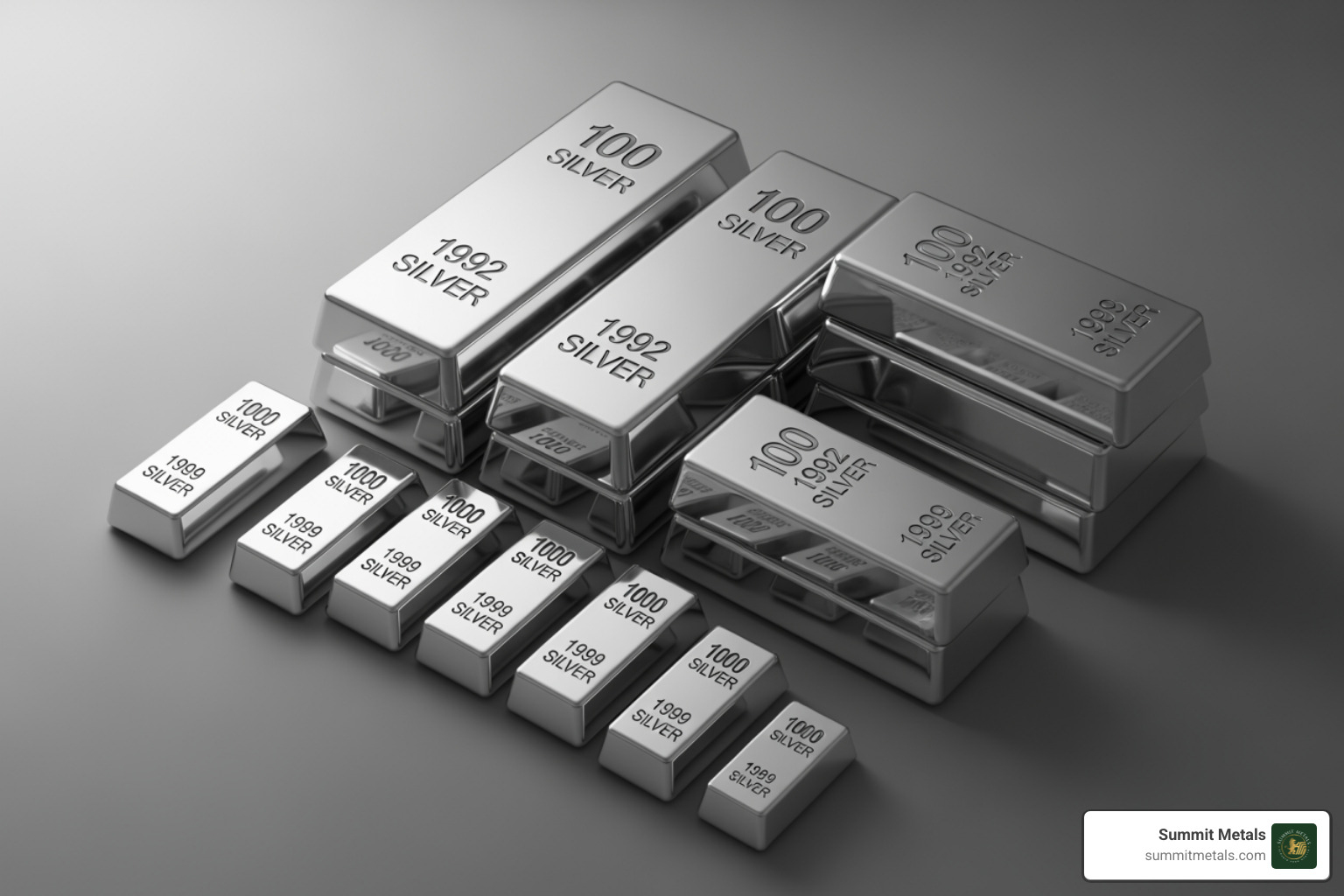
This section focuses on why many stackers, including our clients in Utah and Wyoming, prefer bars for accumulating wealth.
Maximizing Your Investment with Lower Premiums
A compelling reason to choose silver bars is their lower premium—the cost above silver's spot price covering manufacturing, distribution, and dealer overhead. Simply put, the bigger the bar, the smaller the premium, giving you more silver for your dollar. This is crucial for serious investors, as silver bars have lower premiums than coins due to simpler designs and no legal tender status, reducing production costs. Understanding how precious metal pricing works is key to smart purchases.
Purity, Simplicity, and Efficient Storage
Silver bars are almost always minted with .999 fineness (99.9% pure silver). This consistent purity simplifies verification. Their uniform, rectangular shape is also a dream for storage, as they stack neatly and efficiently in a safe or vault. This practicality is a significant part of their appeal for long-term holders. For more guidance, explore our tips for storing your precious metals.
Choosing the Right Size for Your Strategy
Silver bars come in various sizes for different strategies:
- 1 oz and 5 oz bars: These smaller sizes offer great accessibility for new investors to start with manageable amounts and build their holdings over time.
- 10 oz bars: Often a sweet spot, 10 oz bars balance a lower per-ounce premium with reasonable liquidity. They're versatile for accumulating and selling.
- Kilo (32.15 oz) and 100 oz bars: These appeal to serious investors seeking bulk and efficiency. They offer the lowest premiums, making them the most economical choice for significant wealth preservation, though their size can impact liquidity. For substantial purchases, our guide to buying large silver bars offers valuable insights.
Risks and Key Considerations for Silver Bar Investors
While investing silver bars has many advantages, it's wise to understand the potential downsides and how to mitigate them for a balanced approach to protecting your wealth.
The Liquidity and Divisibility Trade-Off
Compared to coins, silver bars have lower liquidity and divisibility. A large bar isn't easily divisible; you can't sell a small portion if you only need a little cash, which limits flexibility. Furthermore, larger bars may have a smaller pool of buyers than universally recognized silver coins, making them slower to sell. Understanding why liquidity matters for your investment is critical.
Ensuring Authenticity and Finding Reputable Dealers
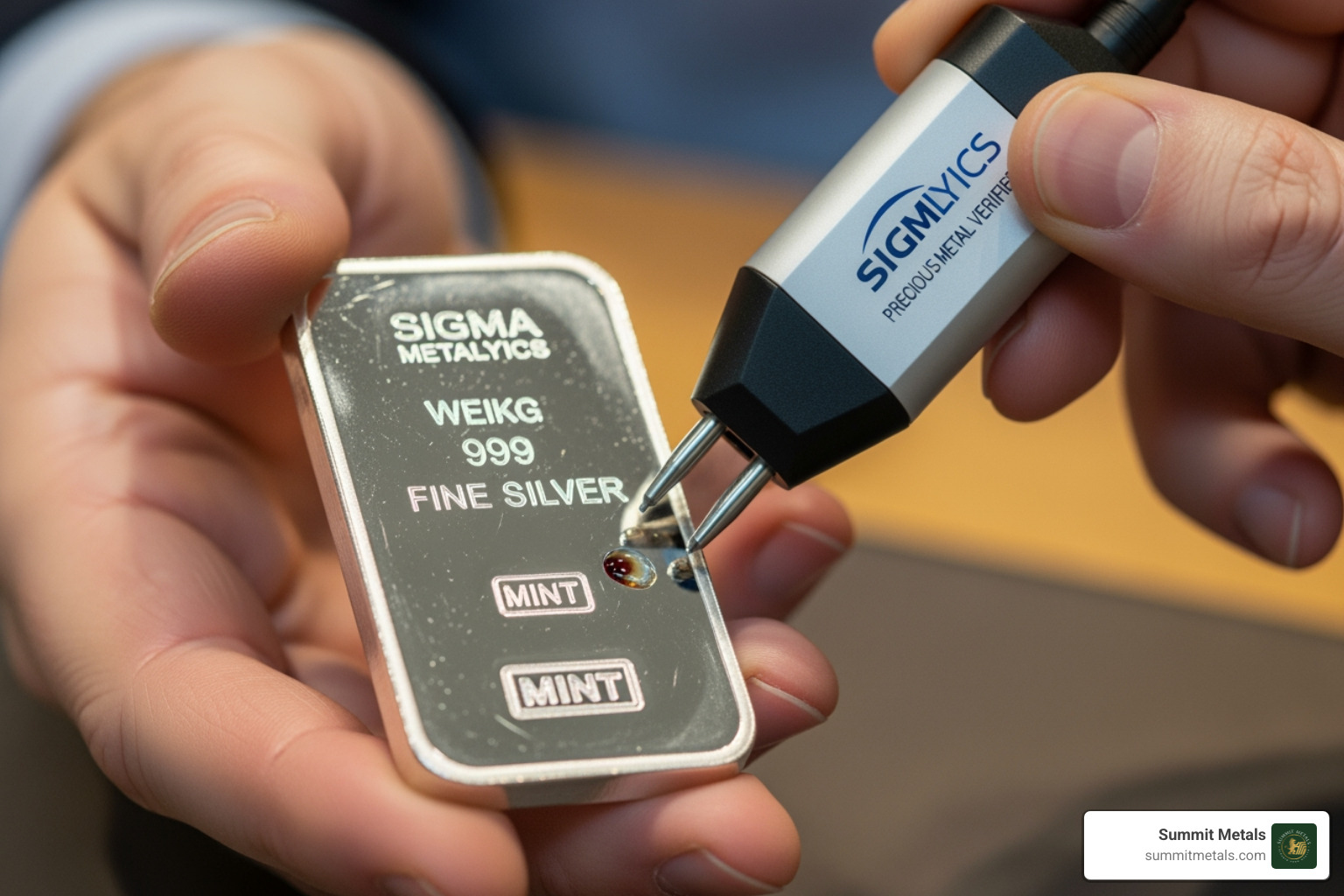
Authenticity is paramount. Verifying a bar's purity and origin is crucial, especially with private mints. Reputable refiners like PAMP Suisse and Asahi produce widely trusted bars, often with serial numbers and assay certificates. The risk of counterfeits is real, and it's easier to fake a bar than a government-minted coin. This highlights the importance of buying from a reputable dealer. We advise our clients in Utah and Wyoming to research dealers, read reviews, and check ratings. Resources like the NFA's Background Affiliation Status Information Center can help vet sellers.
Secure Storage for Your Physical Assets
Securing your silver bars protects them from theft and damage. Options include:
- Home Safes: Offer immediate access but require robust security. Be discreet and check your insurance coverage.
- Bank Safety Deposit Boxes: Secure, but access is limited to bank hours.
- Professional Vault Services: For significant holdings, these offer high-level security and insurance.
Investigate your homeowners insurance, as a separate rider is often needed for precious metals. For a comprehensive look, explore your precious metals storage options.
Strategic Approaches to Your First Silver Bar Purchase
Making your first purchase when investing silver bars can feel like a big step, but a strategic approach makes it a smooth, rewarding experience. We're here to help you build your stack intelligently.
How to Approach Investing in Silver Bars
Timing the market is difficult. Instead, we recommend these proven strategies:
- Dollar-Cost Averaging: Invest a fixed amount at regular intervals, regardless of price. This averages out your purchase cost over time and reduces the impact of volatility.
- Buying Dips: Watch price charts and buy when prices temporarily decline. These dips often provide excellent buying opportunities.
- Buying in Bulk: As discussed, larger bars have lower per-ounce premiums, reducing your average cost when your budget allows.
To simplify this, we highly recommend our Autoinvest program at Summit Metals. You can automatically buy silver bars monthly, just like a 401k investment. This disciplined approach leverages dollar-cost averaging with minimal effort. Learn how to buy silver automatically and set yourself up for long-term success.
Where to Buy and What to Look For
Selecting a reputable dealer is your first step. You have options:
- Online Dealers: Companies like Summit Metals offer transparent, real-time pricing and competitive rates. Online shopping is often more affordable due to lower overhead, and we offer insured shipping to your door.
- Local Coin Shops: Shops in Salt Lake City or elsewhere in Utah and Wyoming are good for face-to-face transactions but may have higher premiums.
When choosing a dealer, look for:
- Price Transparency: Clear display of spot price, premiums, and total cost.
- Reputation: Check customer reviews, BBB ratings, and industry affiliations.
- Insured Shipping: Ensure your purchase is insured during transit.
For a detailed comparison, check out the best places to buy silver bars compared.
Tax Considerations When Investing Silver Bars
Understanding tax implications is crucial for your overall return.
- Capital Gains Tax: Profits from selling silver are typically subject to capital gains tax.
- State Sales Tax: This varies by state. Utah and Wyoming offer exemptions for investment-grade bullion, but always confirm current regulations.
- Reporting Requirements: Large transactions may trigger reporting requirements to the IRS.
We always recommend consulting a tax professional for personalized advice.
Comparison Charts to Help You Decide
When it comes to investing silver bars, coins, or rounds, the choice often boils down to your specific goals and preferences. To help clarify, let's look at how silver bars stack up against their counterparts.
Silver Bars vs. Silver Coins:
| Feature | Silver Bars | Silver Coins |
|---|---|---|
| Premiums | Lower (best for maximizing ounces) | Higher (due to government backing, intricate designs, potential numismatic value) |
| Purpose | Bulk stacking, efficient storage, pure silver weight accumulation | Collectibility, smaller purchases, gifts, legal tender protection |
| Storage Efficiency | High (uniform shape, stackable) | Moderate (often require protective capsules, irregular shapes) |
| Legal Tender Status | No | Yes (face value offers additional protection against fraud) |
| Liquidity | Lower for very large bars, can be slower for generic bars | Higher due to universal recognition and government backing |
| Authentication Ease | Relies on reputable mints, assay certificates, serial numbers; can be harder for generic | Easier due to sovereign mint marks, recognized designs, and government guarantee |
Silver Bars vs. Silver Rounds:
| Feature | Silver Bars | Silver Rounds |
|---|---|---|
| Premiums | Lowest (especially for larger sizes, best for maximizing ounces) | Slightly higher than bars, but lower than coins |
| Purpose | Maximizing silver weight, bulk storage | Design variety, more affordable than coins, easy to sell in small quantities |
| Storage Efficiency | High (uniform, stackable) | Moderate (round shape can be less efficient than bars for bulk) |
| Legal Tender Status | No | No |
| Design Variety | Limited (mostly utilitarian with mint logo) | High (wide range of artistic and commemorative designs) |
| Authentication Ease | Relies on reputable mints, assay certificates, serial numbers | Relies on reputable private mints, less formal authentication than coins |
The Role of Silver Bars in a Diversified Portfolio
Many clients ask, "Why silver, and why bars, in my portfolio?" The answer lies in silver's unique role as a hedge and diversifier.
Silver as a Hedge and a Diversifier
Precious metals are traditional safe havens during economic or geopolitical uncertainty. Silver, like gold, acts as a hedge against inflation and currency devaluation. Its value is inherent, unlike fiat currencies that governments can devalue. Furthermore, silver often has a low correlation to stocks and bonds, meaning it can perform well when other assets struggle, smoothing out portfolio volatility. The Silver Institute highlights silver's role in a multi-asset portfolio, noting its ability to improve returns and reduce risk. While personal, many analysts suggest a 10-15% allocation to tangible assets like gold and silver. See our guide on how much of your net worth should be in precious metals?.
Industrial Demand: A Key Value Driver
What sets silver apart from gold is its dual appeal as a monetary metal and an industrial commodity. With the highest electrical conductivity of any metal, it's indispensable in solar panels, electric vehicles, and electronics. This growing demand from green technologies provides an additional layer of support to silver's long-term price potential.
Physical Bars vs. "Paper" Silver (ETFs & Stocks)
"Paper" silver options like ETFs or mining stocks offer convenience but differ fundamentally from investing silver bars:
- Direct Ownership vs. Counterparty Risk: Physical bars give you direct ownership of a tangible asset. ETFs and stocks introduce counterparty risk, as you own a share in a fund or company, not the metal itself.
- Storage Costs vs. Management Fees: Physical silver has storage costs, while paper assets have management and brokerage fees.
- Tangibility vs. Digital Convenience: Physical silver is a finite, tangible store of wealth, less vulnerable to depreciation from money printing. Paper silver offers digital convenience but carries risks that physical ownership avoids.
For true diversification against systemic risks, making your move into physical silver offers security that paper assets cannot match.
Frequently Asked Questions about Investing in Silver Bars
Here are answers to common questions we hear from clients in Utah and Wyoming about investing silver bars.
Which size silver bar is best for a beginner?
For beginners, we recommend 1 oz or 10 oz silver bars. They have a lower entry price, are easier to sell (liquidate), and let you build your holdings incrementally. The 10 oz bar is a sweet spot, balancing a manageable size with a better per-ounce premium than 1 oz bars.
Are my silver bar investments taxable?
Yes, profits from selling silver bars are typically subject to capital gains tax. Sales tax on purchases varies by state; many, including Utah and Wyoming, offer exemptions for investment-grade bullion. Always confirm local laws and consult a tax professional for personalized advice.
How can I be sure my silver bar is real?
Ensuring authenticity is crucial. Follow these steps:
- Buy from Reputable Dealers: This is the most important step. A reputable dealer like Summit Metals guarantees the authenticity and purity of their products.
- Look for Renowned Mints and Assay Certificates: Bars from recognized refiners like PAMP Suisse or Asahi often come in a sealed, tamper-evident assay card with a matching serial number, verifying weight and purity.
- Perform Non-Destructive Tests: You can check a bar's dimensions and weight, use a magnetic slide test (silver is not magnetic), or perform a ping test (pure silver has a distinct ring). Specialized electronic testers can also verify the metal's composition.
By using these methods and buying from trusted sources, you can invest with confidence.
Conclusion
Choosing between silver bars, coins, or rounds depends on your investment goals. For many, investing silver bars is the most cost-effective way to accumulate silver, making them a top choice for investors focused on maximizing weight. This value comes with a trade-off in liquidity and divisibility compared to coins.
At Summit Metals, we understand these nuances. We provide authenticated silver bars with transparent, real-time pricing for investors in Utah, Wyoming, and beyond. Whether you're a seasoned stacker or just starting, our Autoinvest program helps you build your stack automatically and efficiently through dollar-cost averaging, just like a 401k.
Ready to explore your options? Learn about the best precious metals to buy and why liquidity is crucial for your portfolio. We're here to guide you.