Why More Investors Are Choosing to Purchase Copper Bars in 2026

If you want to purchase copper bars, here is what you need to know right away:
| What to Know | Quick Answer |
|---|---|
| Minimum purity to look for | .999 fine copper (99.9% pure) |
| Common sizes available | 1 oz, 1 lb, 1 kilo, 10 lb, and larger bulk lots |
| Where to buy | Specialty bullion dealers, online platforms, local coin shops |
| Price benchmark | Copper spot price plus a fabrication premium |
| Key uses | Investing, collecting, gifting, industrial crafting |
| Exit strategy | Sell back to a trusted dealer or store in a private vault |
Copper is having a moment. As green energy infrastructure expands, electric vehicles multiply, and global demand for this industrial metal outpaces supply, more investors and collectors are turning to physical copper bullion as an affordable and tangible way to get exposure to one of the world's most essential metals.
Unlike gold or silver, copper lets you start small. A single bar can cost just a few dollars, making it one of the most accessible entry points into physical metal ownership. Yet copper is no throwaway asset — with global copper demand projected to reach 28 million tons while annual supply hovers around 21 million tons, the supply-demand story is compelling.
Whether you are a first-time buyer curious about diversifying beyond stocks, a seasoned stacker adding weight to your collection, or someone looking for a unique and meaningful gift, copper bars offer something real, durable, and grounded in industrial necessity.
Eric Roach — a former Wall Street investment banker and M&A advisor who has helped clients structure defensive, tangible-asset strategies for over a decade. My experience guiding investors on how to purchase copper bars and other physical metals as part of a balanced, inflation-resistant portfolio is what drives the guidance you will find throughout this article.
Purchase copper bars word roundup:
Why Investors and Collectors Choose to Purchase Copper Bars
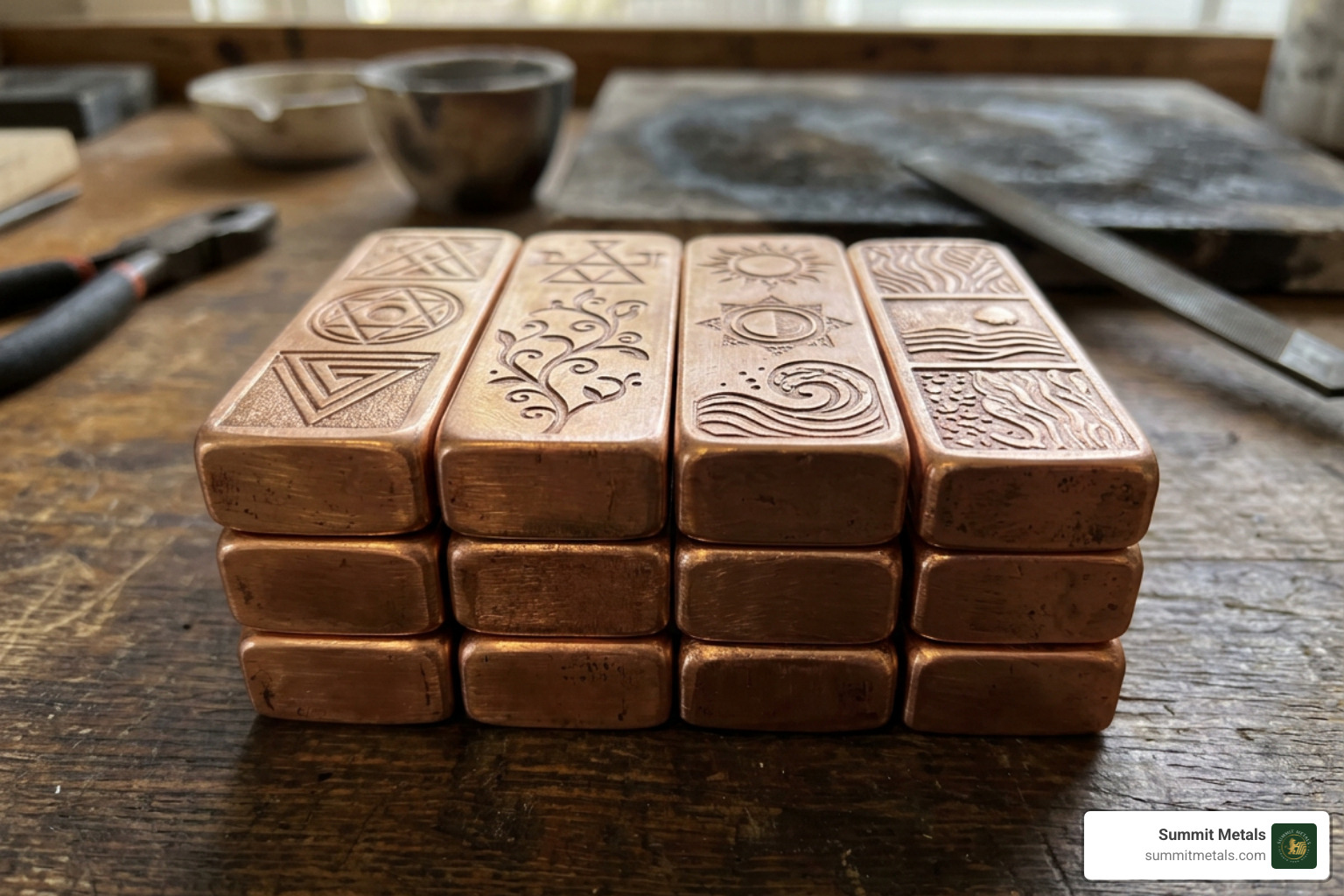
For decades, physical metal investing was dominated by the "big two": gold and silver. However, savvy market participants are increasingly looking down the periodic table to find value. When you choose to purchase copper bars, you are not just buying a piece of metal; you are securing a tangible asset with a dual identity.
To understand why this asset is capturing so much attention, we must look at how it helps protect wealth. Physical copper serves as an excellent hedge against currency debasement. Unlike paper currencies or digital assets that can be created with the stroke of a keyboard, physical copper requires real energy, labor, and capital to extract and refine.
Furthermore, having physical possession of your wealth removes counterparty risk. If you want to learn more about the intrinsic properties of this metal, read our breakdown of The Shiny Truth Unpacking What Copper Bullion Really Is.
By keeping a portion of your portfolio in physical assets, you build a defensive wall around your wealth. If you are wondering how this fits into a broader financial strategy, explore our Copper Investment Complete Guide to map out your stacking journey.
Industrial Demand vs. Precious Metals
The primary difference between copper and precious metals like gold lies in how they are consumed. While gold sits securely in bank vaults as a store of value, copper is actively consumed by global industry.
You cannot build an electric vehicle, construct a wind turbine, or upgrade an electrical grid without massive amounts of copper. It is the second-most conductive element on earth, surpassed only by silver. This massive industrial footprint creates a unique pricing dynamic. While gold prices are heavily influenced by investor sentiment and central bank policies, copper prices are directly tied to global economic expansion and technological breakthroughs.
To help you decide how to balance your metal holdings, we have put together a comparison table of their investment profiles:
| Investment Characteristic | Copper Bars | Silver Bullion | Gold Bullion |
|---|---|---|---|
| Primary Price Driver | Industrial usage & green tech | Split industrial & monetary | Monetary hedge & safety |
| Affordability | Extremely high (lowest entry cost) | Moderate | Low (high cost per ounce) |
| Storage Density | Low (requires more physical space) | Moderate | Extremely high |
| Volatility | High (tied to economic cycles) | Moderate to High | Low to Moderate |
| Liquidity | High in industrial/scrap; moderate in bullion | Extremely high | Extremely high |
When we analyze Copper Silver and Gold Prices, we see that copper offers a highly accessible entry point. It allows you to accumulate substantial physical weight without committing the massive capital required for gold.
Copper Bullion Bars vs. Copper Rounds
Once you decide to enter the market, you will face a choice between copper bars and copper rounds.
Copper rounds look like coins and often feature beautiful, intricate designs replica-minted from historical American coinage. While rounds are highly collectible, they typically carry higher fabrication costs per ounce because of the detailed stamping process.
Copper bars, on the other hand, are the workhorses of the copper stacking world. Because their shapes are simpler to cast or mint, they carry lower premiums over the spot price. This makes bars the most cost-effective choice if your goal is to accumulate pure weight. For a deeper dive into the shapes and styles available to you, read our guide on Copper Bar Types 101.
Understanding Copper Purity, Weights, and Market Pricing
Before you search for where to purchase copper bars, you must understand how this metal is measured and priced. It is easy for beginners to get tripped up by the units of measurement used in the bullion industry.
Precious metals like gold and silver are measured in troy ounces (approximately 31.1 grams). Base metals like copper, however, are measured using the standard avoirdupois (AVDP) system—the everyday ounces and pounds we use in the United States (where one AVDP ounce is approximately 28.3 grams).
Always double-check the product description to ensure you know exactly how many grams or ounces you are receiving. Understanding these units is essential for calculating the Cost of Copper Per Ounce and determining the fair Price of Copper Ingots Per Pound.
How Purity and Weight Affect Your Decision to Purchase Copper Bars
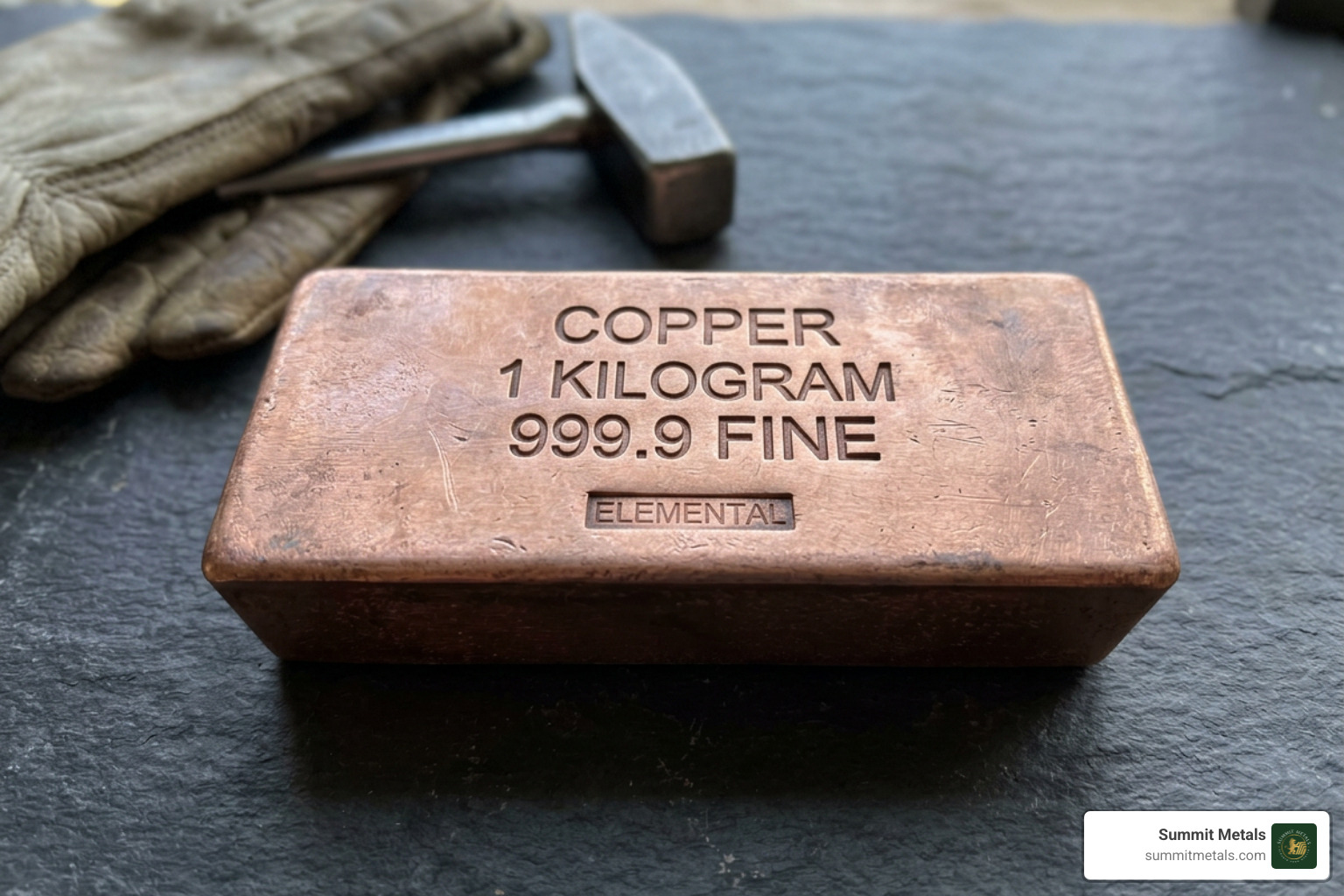
When purchasing copper for investment or collection, look for .999 fine copper (99.9% pure). This level of purity ensures that you are buying investment-grade bullion rather than industrial scrap or alloyed copper.
Pure copper bars are manufactured to strict standards, often featuring elemental stamps that display their atomic number, symbol (Cu), and melting point. If you want to build a serious position, you can find bars ranging from 1 ounce up to heavy 10-pound blocks or bulk lots.
To explore what makes high-purity bars unique, read about 999 Fine Copper Bars. If you are contemplating a larger purchase, ask yourself: Is a 1kg Copper Bar Your Next Long-Term Investment?
It is also worth noting that industrial-grade copper used in manufacturing has different specifications. For comparison, you can view the technical standards for commercial alloys via Commercially Pure Copper Bars | McMaster-Carr.
Spot Price vs. Premium Costs in 2026
The "spot price" of copper is the current market price for raw, unfinished copper traded on global exchanges like the London Metal Exchange (LME). However, you cannot buy physical copper bars at spot price.
Every bar carries a "premium," which is the additional cost added to cover:
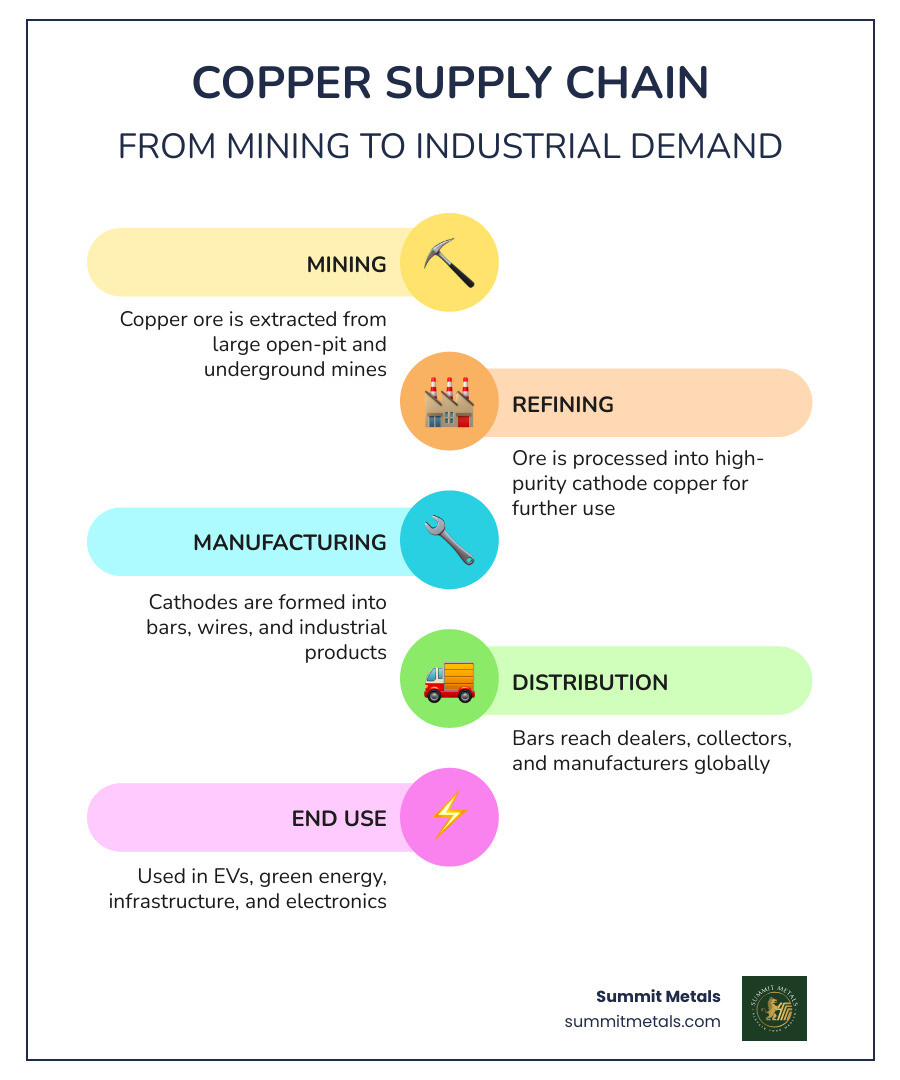
- Refining raw ore into .999 fine copper
- Minting, casting, and stamping the bars
- Packaging, shipping, and dealer operations
Because copper has a lower value per ounce than gold or silver, the fabrication costs make up a much larger percentage of the retail price. To get the best value, we recommend buying in larger weights. A 10-pound or 1-kilogram bar will always have a lower premium per ounce than a 1-ounce bar.
To keep track of these dynamics, monitor the Copper Bar Cost and use resources like Pure Copper Pure Value Navigating 1kg Ingot Prices to time your purchases. For advanced collectors, specialty manufacturers even offer ultra-high purity options, which you can see at Copper Bars | High Purity 99%–99.9999% | CAS 7440-50-8 | AMERICAN ELEMENTS ®.
Where to Buy Physical Copper Bullion
Now that you know what to look for, the next step is finding a safe, reputable source. The physical metal market requires caution; working with established, trusted dealers is the best way to safeguard your capital.
Whether you are buying gold, silver, or copper, learning How to Buy Metal Online safely is a critical skill for any investor.
Where to Safely Purchase Copper Bars Online and Locally
For local buyers in our home region, visiting an established local coin shop is a fantastic option. If you are in our area, you can research local options in Salt Lake City, Utah, to find dealers carrying physical inventory.
Buying locally allows you to inspect the metal in person and take immediate physical custody. However, local shops may have limited copper inventory, as they often focus primarily on gold and silver.
Online bullion dealers offer a much wider selection of weights, brands, and designs. When buying online, look for dealers that offer secure, insured shipping and have transparent return policies.
Specialty Bullion Dealers vs. General Retailers
You will often find copper bars listed on general e-commerce platforms like Amazon, sometimes marketed as novelty paperweights or science gifts. While these can be fun purchases, they often carry highly inflated retail markups.
For investment purposes, stick to specialty bullion dealers. Specialty dealers price their inventory relative to the physical metal market and offer bulk discounts that general retailers cannot match.
If you are looking to purchase larger quantities to lower your average cost, consider looking into a 100 Oz Copper Bar or checking out options for Bulk Copper Bars. You can also compare commercial bulk options to see how industrial-scale lots are packaged and sold by major distributors.
Storage, Handling, and Your Long-Term Exit Strategy
Once you take delivery of your copper bars, you must care for them properly. Unlike gold, which is chemically inert, copper reacts with oxygen, moisture, and the oils on your skin.
Over time, exposed copper will naturally tarnish, developing a dark brown or green layer known as a patina. While many stackers love the rustic look of a natural patina, others prefer to keep their bars bright and shiny. To prevent tarnishing:
- Store your bars in a cool, dry place.
- Use silica gel packs to absorb humidity in your storage container.
- Handle your bars using clean cotton gloves.
- Keep your bars sealed in their original protective plastic sleeves.
Equally important is planning your exit strategy. Before you buy, you should know exactly how and where you plan to liquidate your metal when the time comes to take profits.
Developing Your Investment Strategy
If you want to build a serious metal portfolio over time without trying to "time" the market, we highly recommend utilizing a Dollar-Cost Averaging (DCA) strategy. With our Autoinvest program, you can set up automated monthly purchases. Just like contributing to a 401(k), this systematic approach helps you build your physical holdings steadily while smoothing out market volatility.
Additionally, we believe that a great investment plan must include a clear way to sell. That is why we encourage our clients to use our Sell to Us program.
By storing your metals securely—or utilizing a private vault storage partner—you ensure your assets remain in pristine, verifiable condition. This preservation makes them instantly liquid when you decide to sell them back to us. To learn more about this process, read From Bar to Bank Your Guide to Selling Copper Bullion.
Frequently Asked Questions About Copper Bullion
What is the difference between troy ounces and avoirdupois ounces for copper?
Troy ounces are the traditional weight standard used for precious metals like gold, silver, and platinum. One troy ounce equals approximately 31.1 grams. Avoirdupois (AVDP) ounces are the standard ounces used in the United States for everyday items and base metals like copper. One AVDP ounce equals approximately 28.3 grams. Always check which unit a seller is using so you can accurately calculate your cost per gram.
Will my copper bars tarnish or develop a patina over time?
Yes. Copper is a highly reactive base metal. When exposed to oxygen, moisture, and oils from human skin, it will undergo oxidation. This process creates a natural protective layer called a patina, which changes the color of the bar over time. To prevent this, store your copper in airtight containers with desiccants and handle them with gloves.
How do I verify the authenticity of a copper bar?
To ensure your copper bar is authentic, only buy from trusted dealers who stand behind their inventory. You can verify a bar's authenticity by checking its physical dimensions and weight against the manufacturer's specifications. Because copper is non-magnetic, you can also use a strong magnet; if the magnet sticks flat to the bar, it contains iron or steel and is counterfeit.
Conclusion
When you choose to purchase copper bars, you are adding a versatile, high-demand industrial asset to your physical holdings. Whether you are buying a 1-ounce bar as an educational gift or stacking 10-pound bars as a long-term economic hedge, physical copper offers a satisfying weight and tangible security that digital assets simply cannot match.
At Summit Metals, based in Salt Lake City, Utah, we specialize in helping investors secure their financial future with authenticated physical metals. While copper is an excellent entry point, we also provide premium, fully verified options for those looking to expand into precious metals.
Gold Coins vs. Gold Bars: Which is Right for You?
As you expand your portfolio from copper into precious metals, you will face the choice between gold coins and gold bars. Here is a quick comparison to help you decide:
| Feature | Gold Coins | Gold Bars |
|---|---|---|
| Legal Tender Status | Yes (has official face value) | No (bullion only) |
| Fraud Protection | High — government-issued coins carry official legal-tender status, recognizable designs, and stronger anti-counterfeiting enforcement | Standard — rely on refinery reputation, assay packaging, serial numbers, and dealer verification |
| Premium Over Spot | Slightly higher due to intricate minting and official-coin demand | Lower in many cases, helping investors accumulate more gold weight per dollar |
| Liquidity | Extremely high because popular coins are widely recognized by dealers and investors | High, though larger bars may require more careful verification or assay |
| Best For | Investors seeking legal-tender recognition, collectibility, and easier resale confidence | Investors focused on accumulating maximum gold weight at the lowest practical premium |
To ensure maximum security and convenience, all of our orders are shipped using secure FedEx Express shipping after undergoing strict fraud verification. We also invite you to subscribe to our educational YouTube channel, where we share weekly market updates, coin reviews, and expert tips to help you navigate the bullion markets with confidence.
Ready to take your physical metal portfolio to the next level? Explore our curated selection of Fractional Gold to find highly liquid, smaller-weight gold options, or dive into our premium Silver Collections to add classic monetary metal to your vault today.