Why Tracking Copper Silver and Gold Prices Is Essential in April 2026
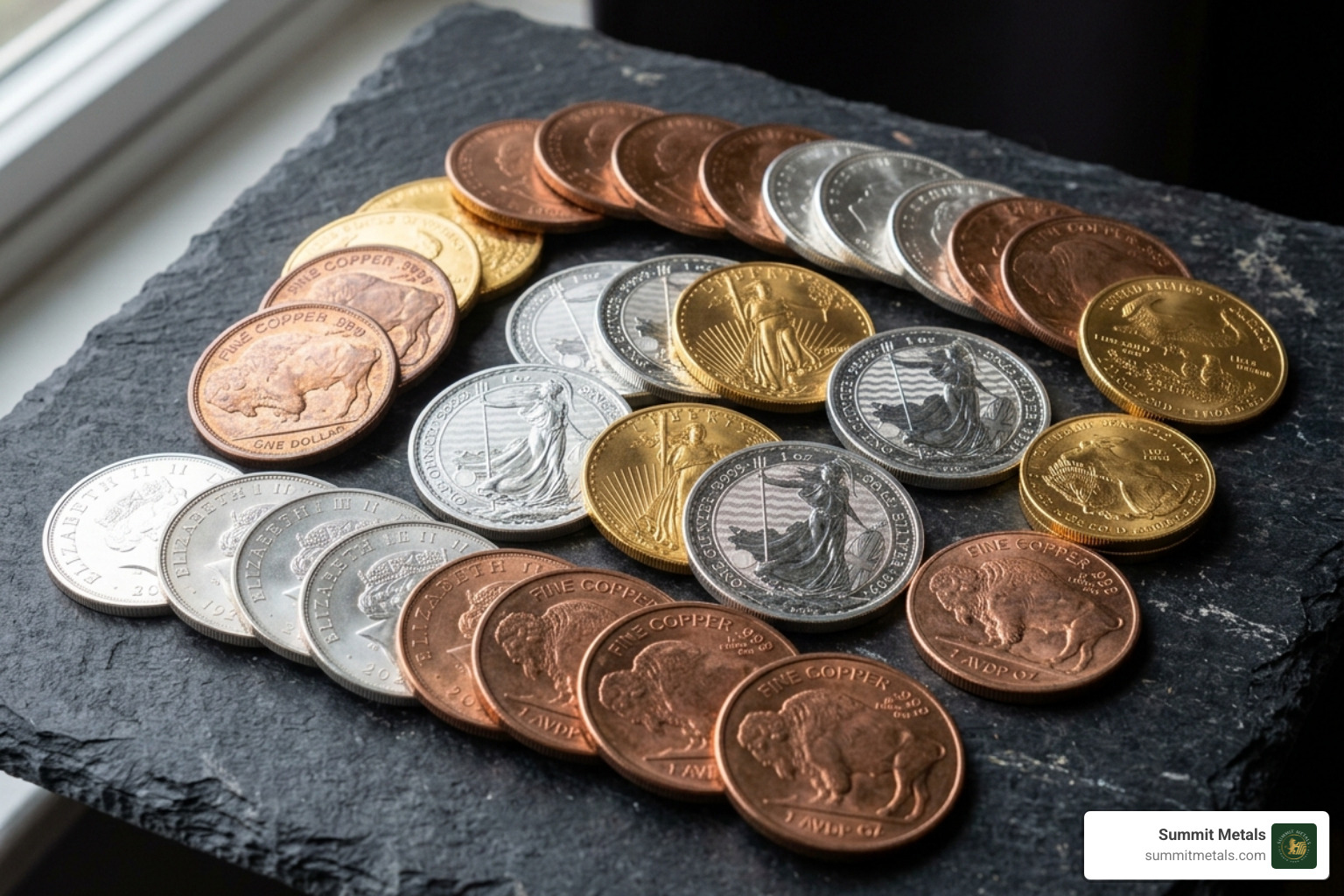
Copper silver and gold prices are moving fast right now — and knowing where they stand can make a real difference for your portfolio.
Here is a quick snapshot of current spot prices (at the time of this publication):
| Metal | Spot Price | 24-Hour Change |
|---|---|---|
| Gold | $4,763.40 / oz | -0.48% |
| Silver | $76.20 / oz | -0.32% |
| Copper (COMEX) | $5.37 / lb | Active |
These prices shift constantly across exchanges like COMEX, the London Metal Exchange (LME), and dealer platforms like Kitco and JM Bullion. Even small moves matter when you are buying or selling physical metal.
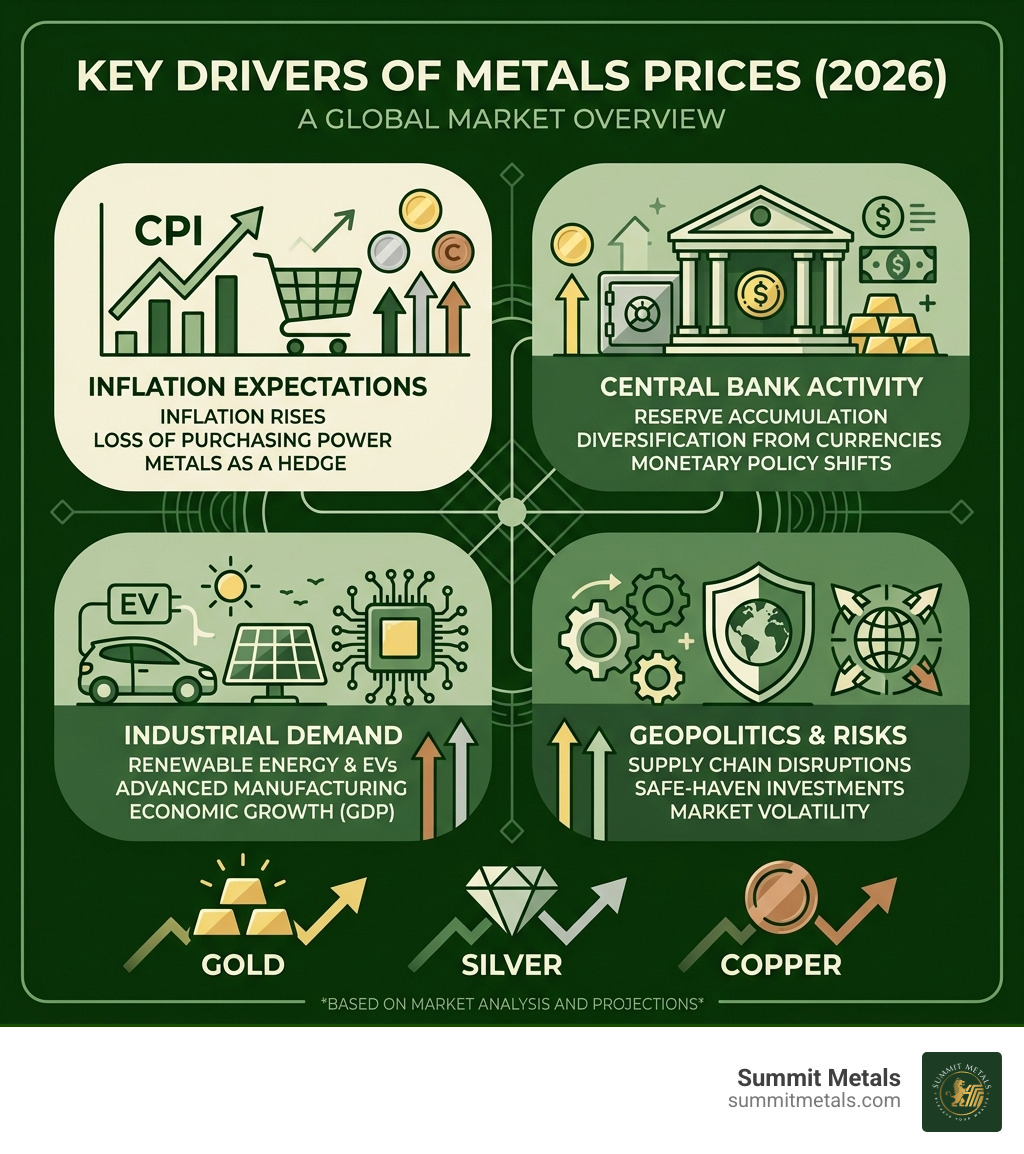
Why are prices so volatile right now? A mix of forces is at play:
- Geopolitical tension — including the recent U.S.-Iran ceasefire and its ripple effects across safe-haven assets
- Inflation expectations — one-year inflation projections recently shot up to 4.8%
- Central bank activity — countries like China and Turkey are actively adjusting their gold reserves
- Industrial demand — copper and silver are critical to EV manufacturing and solar energy infrastructure
Whether you are a first-time buyer or a seasoned investor, understanding these price drivers helps you act with confidence rather than react with anxiety.
I'm Eric Roach — a former Wall Street investment banker who spent over a decade advising Fortune 500 clients on M&A, hedging, and market risk before turning that expertise toward helping everyday investors navigate copper silver and gold prices. In this guide, I'll walk you through everything you need to monitor live prices, understand what moves markets, and build a strategy that works for the long term.
Simple copper silver and gold prices word guide:
Real-Time Analysis of Copper Silver and Gold Prices

Understanding how copper silver and gold prices are calculated is the first step to mastering the market. The "spot price" you see on financial news sites isn't just a random number; it is the result of a global, non-stop price discovery process. This process happens across major exchanges like the COMEX in New York, the LBMA in London, and the Shanghai Gold Exchange.
At its core, the spot price represents the current market value for immediate delivery of the metal. However, as an investor, you will encounter two specific numbers: the Bid and the Ask.
- Bid Price: This is the highest price a buyer (like a dealer) is willing to pay you for your metal.
- Ask Price: This is the lowest price a seller is willing to accept. When you buy, you pay the "Ask" plus a small premium.
- Spread: The difference between the two. A narrow spread usually means high market liquidity, making it easier for you to enter and exit positions without losing too much value to "friction."
For those of us here in Salt Lake City, keeping an eye on Live Gold and Silver Prices | Historical Price Charts - Monex or Unlocking today’s value: What is the current price of gold and silver provides the clarity needed to spot trends before they become headlines.
Current Market Benchmarks for Copper Silver and Gold Prices
To give you a sense of where we stand in April 2026, let's look at the benchmarks across different sources. While prices are generally uniform, slight variations occur based on which exchange or dealer feed you are viewing.
| Source | Gold Spot | Silver Spot | Copper (May '26) |
|---|---|---|---|
| COMEX/Global | $4,763.40 | $76.20 | $5.37/lb |
| Kitco (Bid/Ask) | $4,747.20 / $4,749.20 | $75.76 / $76.01 | $5.41/lb |
| Monex | $4,762.00 | $76.02 | N/A |
As of today, gold is seeing a slight intraday dip of about 0.48%, while silver has remained relatively resilient despite a minor 0.32% decline. Copper continues to hold strong, trading near $5.37 per pound (or roughly $11,929 per metric ton on the LME). You can track these movements in real-time at Gold Price Live Today | Silver, Platinum, Palladium & Copper Charts.
Understanding Exchange Variations and Premiums
You might wonder why the price you pay for a physical silver round in Utah is higher than the "spot" price on your screen. This is due to premiums. The spot price tracks "paper" contracts—massive futures orders on the COMEX or LME. When you buy physical metal, you are paying for the mining, refining, minting, and the dealer's operational costs.
Furthermore, different exchanges have different focus areas. The COMEX is the primary hub for gold and silver futures, while the London Metal Exchange (LME) is the king of base metals like copper. If you see a sudden spike in copper but gold stays flat, it’s often an industrial signal rather than a monetary one. For a deeper look at how these per-ounce prices are settled, check out The Midas touch: What are gold and silver prices per ounce today.
Key Drivers Behind Copper Silver and Gold Prices Today
What actually moves the needle for copper silver and gold prices? In April 2026, the answer is a cocktail of geopolitics and macroeconomics.
The biggest recent headline is the U.S.-Iran ceasefire. Typically, war drives investors into "safe havens" like gold. When a ceasefire is announced, that "fear premium" often evaporates, leading to short-term price drops. However, we are seeing gold hold its ground remarkably well. Why? Because other factors, like the debasement of the U.S. Dollar and massive central bank purchasing, are providing a high floor for prices.
Inflation also remains a primary concern. With one-year inflation expectations hitting 4.8%, investors are flocking to metals to preserve their purchasing power. You can stay updated on these shifts via Live Gold Prices | Gold News And Analysis | Mining News | KITCO or by reading The daily shine: Unpacking today’s gold price in the USA.
Industrial Demand and the "Dr. Copper" Indicator
Copper has earned the nickname "Dr. Copper" because it is said to have a Ph.D. in economics. Because copper is used in everything from home wiring to microchips, its price is a leading indicator of global economic health. If copper prices are rising, it usually means the world is building things.
In 2026, the "Green Revolution" is the primary engine for copper. An electric vehicle (EV) uses about 83kg of copper—nearly four times as much as a traditional gasoline car. Solar panels and wind turbines are similarly copper-heavy. This massive industrial pull creates supply deficits that keep copper silver and gold prices in a state of constant tension. To learn more about the physical side of this market, see Pure copper, pure value: Navigating 1kg ingot prices and The shiny truth: Unpacking what copper bullion really is.
Central Bank Activity and Currency Fluctuations
We are currently witnessing a historic shift in how nations hold wealth. The BRICS+ nations (Brazil, Russia, India, China, South Africa, and their new partners) are actively diversifying away from U.S. Dollar reserves.
China recently added another 5 tonnes of gold to its reserves, while Turkey monetized 118 tonnes in a single month to manage its own economic pressures. When central banks buy gold, they aren't looking for a quick trade; they are looking for long-term stability. This institutional demand is a massive driver for Unlocking value: Understanding gold and silver’s current worth.
Strategic Investing: Coins, Bars, and the Gold-to-Silver Ratio
Once you understand the prices, the next question is: What should I actually buy? The choice between coins and bars is more than just an aesthetic one; it’s a strategic decision.
| Feature | Gold/Silver Coins | Gold/Silver Bars |
|---|---|---|
| Issuer | Sovereign Mints (e.g., US Mint) | Private Mints |
| Legal Tender | Yes (Face Value) | No |
| Counterfeit Protection | High (Federal protections) | Moderate |
| Premium | Higher | Lower |
| Best For | Security & Resale Ease | Bulk Wealth Storage |
We often recommend sovereign coins for those concerned about fraud. Because these coins have a face value (like the $50 on a Gold Eagle), tampering with them is a federal offense, providing an extra layer of protection. However, if you are looking for the cheapest silver prices online, bars often offer a lower "price per ounce" because they are cheaper to manufacture.
Understanding the Gold-to-Silver Ratio in Copper Silver and Gold Prices
The gold-to-silver ratio tells you how many ounces of silver it takes to buy one ounce of gold. Historically, this ratio has averaged around 60:1. Currently, in April 2026, the ratio is hovering around 62:1 ($4,763 / $76.20).
- High Ratio: Indicates silver is "cheap" relative to gold. Many investors trade their gold for silver at this stage.
- Low Ratio: Indicates gold is "cheap" relative to silver. This is often when investors move back into gold.
Tracking this ratio via a historical price of silver graph is one of the most effective ways to decide which metal to buy today.
Choosing the Right Bullion Format
For our copper enthusiasts, the market is a bit different. While you won't find "legal tender" copper coins from the U.S. Mint, copper bars and rounds are becoming popular for those who want to bet on industrial growth. Copper is bulky—remember, it's priced by the pound, not the ounce—so storage becomes a real consideration. Whether you are looking at copper bar types or high-purity gold, the goal is always the same: authenticated quality at a fair price.
Mastering Your Exit Strategy and Long-Term Growth
Many people spend all their time worrying about the entry price and zero time thinking about the exit. At Summit Metals, we believe a successful investor is one who has a plan for both.
The biggest mistake new investors make is trying to "time the market." They wait for a dip that never comes, or they panic-sell during a 24-hour correction. Instead of gambling, we recommend a "set it and forget it" approach.
The Autoinvest Advantage for Consistent Wealth
We call this Autoinvest. It’s essentially dollar-cost averaging (DCA) for physical metals. Just like you contribute to a 401k every month regardless of what the stock market is doing, Autoinvest allows you to buy a set dollar amount of gold or silver every month.
- When prices are high: Your monthly budget buys fewer ounces.
- When prices are low: Your monthly budget buys more ounces.
Over time, this averages out your cost basis and removes the emotional stress of watching gold prices today. It is the most efficient way to build a significant physical portfolio without needing to be a full-time day trader. For more on this, see Spot on: Your live silver price per ounce guide.
Liquidity and the "Sell to Us" Exit Strategy
What happens when you are ready to turn that metal back into cash? This is where your storage choice matters. If you store your metal in a private, high-security vault, you maintain instant liquidity.
When you are ready to sell, you don't have to worry about packing heavy boxes and shipping them across the country. You can simply use our "Sell to Us" feature. Because we know exactly where the metal has been (in a secure, audited vault), we can offer transparent bid prices and immediate payouts. This turns a clunky physical asset into something as liquid as a stock. You can monitor these institutional-grade movements at Real-Time Global Precious & Base Metals Prices | COMEX Futures | MetalPrices.live.
Frequently Asked Questions about Metal Markets
Why is copper considered an economic bellwether?
As "Dr. Copper," the metal's price is tightly correlated with global GDP. Since it is essential for infrastructure, construction, and electronics, a rising copper price suggests a healthy, expanding economy. Conversely, falling copper prices often signal a looming recession before it shows up in official government data.
What is the difference between bid and ask prices?
The Bid is what a dealer will pay you to buy your metal (the "exit" price). The Ask is what the dealer charges you to buy the metal (the "entry" price). The difference between them is the spread. In a healthy market with high liquidity, this spread is small.
How do central bank actions affect gold prices?
Central banks are the "whales" of the gold market. When they buy gold to diversify away from fiat currencies (like the USD or Euro), they create massive upward pressure on prices. Their actions often signal a lack of confidence in the traditional financial system, driving individual investors to seek the safety of gold as well.
Conclusion
Mastering the market for copper silver and gold prices doesn't require a Ph.D. in finance—it just requires the right tools and a disciplined strategy. By understanding the drivers of spot prices, utilizing the gold-to-silver ratio, and committing to a long-term Autoinvest plan, you can protect your wealth against the volatility of the modern world.
At Summit Metals, we are proud to be your Wyoming-based partner in this journey. We provide authenticated gold and silver with the transparent, real-time pricing you need to invest with confidence. Whether you are in Salt Lake City or anywhere else in the region, our bulk purchasing power ensures you get competitive rates and the trust that comes with a secure exit strategy.
Start building your physical metal portfolio today and take control of your financial future.