Why Gold and Silver Prices Today Per Ounce Matter for Your Financial Security
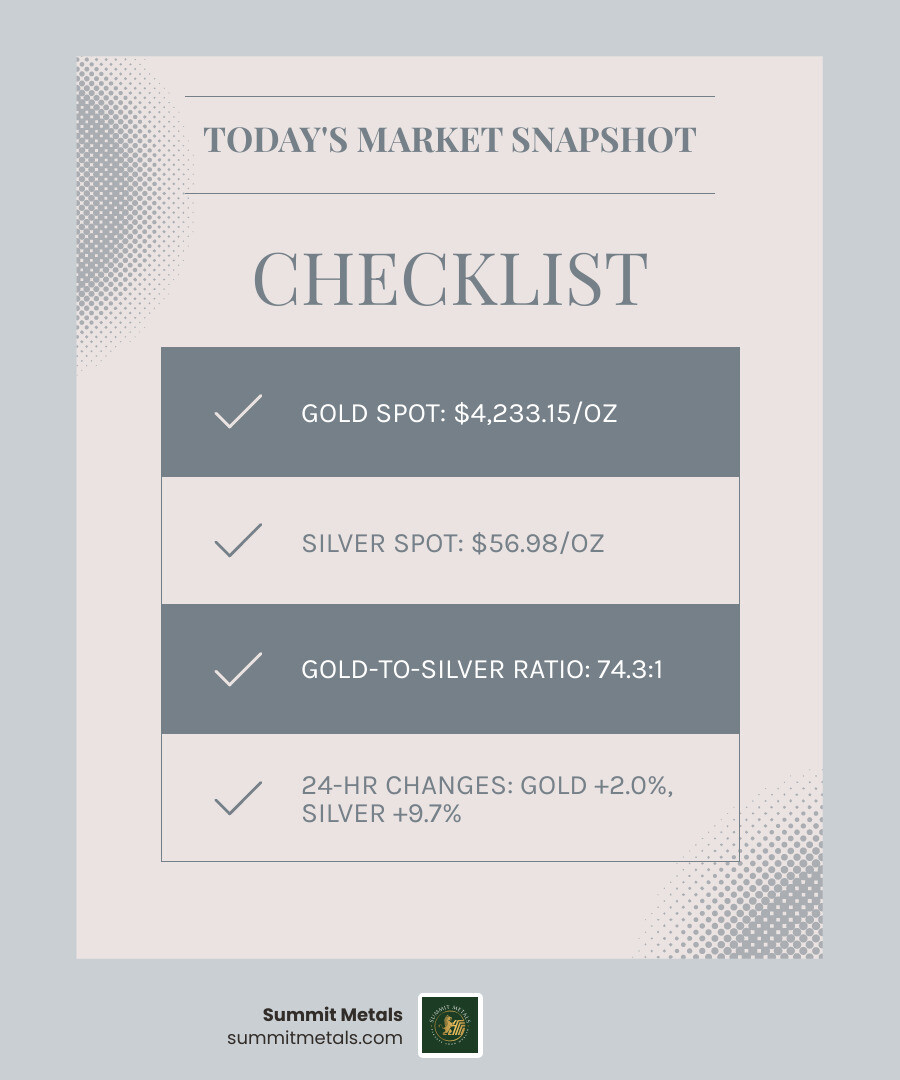
Gold and silver prices today per ounce are critical benchmarks for protecting your wealth. In an uncertain economy, these metals offer stability. Based on current market data, here's a snapshot:
| Metal | Spot Price (per oz) | 24-Hour Change |
|---|---|---|
| Gold | $4,233.15 | +$83.64 (+2.0%) |
| Silver | $56.98 | +$5.02 (+9.7%) |
Gold-to-Silver Ratio: 74.3:1
Prices shown are at the time of publication and fluctuate based on global supply, demand, and economic conditions.
Understanding gold and silver prices today per ounce is the first step toward making informed investment decisions. The spot price—the live, wholesale rate—is the foundation for every transaction. However, the final price you pay includes a premium covering manufacturing, shipping, and dealer costs. Knowing how to interpret these numbers can save you significantly.
I'm Eric Roach, and for over a decade, I've translated complex Wall Street strategies into actionable guidance for everyday investors. My experience now powers the transparent, real-time pricing approach at Summit Metals, helping you build a resilient portfolio.
Live Gold and Silver Prices Today Per Ounce
Understanding gold and silver prices today per ounce begins with the spot price—the real-time wholesale value for raw metal. As of publication, gold is at $4,233.15 and silver is at $56.98. These prices are dynamic, constantly reacting to global events.
Beyond the spot price, you need to know the bid and ask prices. The bid is what a dealer pays to buy from you; the ask is what you pay to buy from them. The gap between them, the spread, reflects market liquidity. A tight spread, like gold's recent $2 spread ($4,190.90 bid / $4,192.90 ask), indicates a healthy, active market.
Today's Gold Price Per Ounce
The current gold spot price of $4,233.15 per ounce reflects a +$83.64 (+2.0%) gain over the last 24 hours, signaling strong buyer interest. While daily changes are important, smart investors analyze weekly and monthly trends to distinguish market signals from short-term noise. For institutional-grade data, you can track live prices on platforms like Live Gold Prices from Bloomberg.
Worried about timing the market? Summit Metals' Autoinvest program allows you to dollar-cost average by making automated monthly purchases. This 401(k)-style approach smooths out volatility and builds your holdings consistently over time, removing the stress of trying to predict price swings.
Today's Silver Price Per Ounce
Silver is often more volatile, as shown by its recent +$5.02 (+9.7%) jump to $56.98 per ounce. This volatility attracts both traders and long-term investors. Like gold, silver has a bid/ask spread, which may be slightly wider due to its smaller market size. Weekly and monthly trends are crucial for silver, as steady gains often reflect a combination of growing industrial demand (for solar panels, electronics) and investment buying. For a deeper dive, see our Spot On: Your Live Silver Price Per Ounce Guide.
Understanding what these numbers are telling you about market sentiment and the global economy is key to identifying your next smart investment.
Understanding the Numbers: Spot Price, Premiums, and Ratios
The retail price you pay for bullion is different from the spot price you see on charts. The final price is the spot price plus a "premium." Understanding this is key to smart buying.
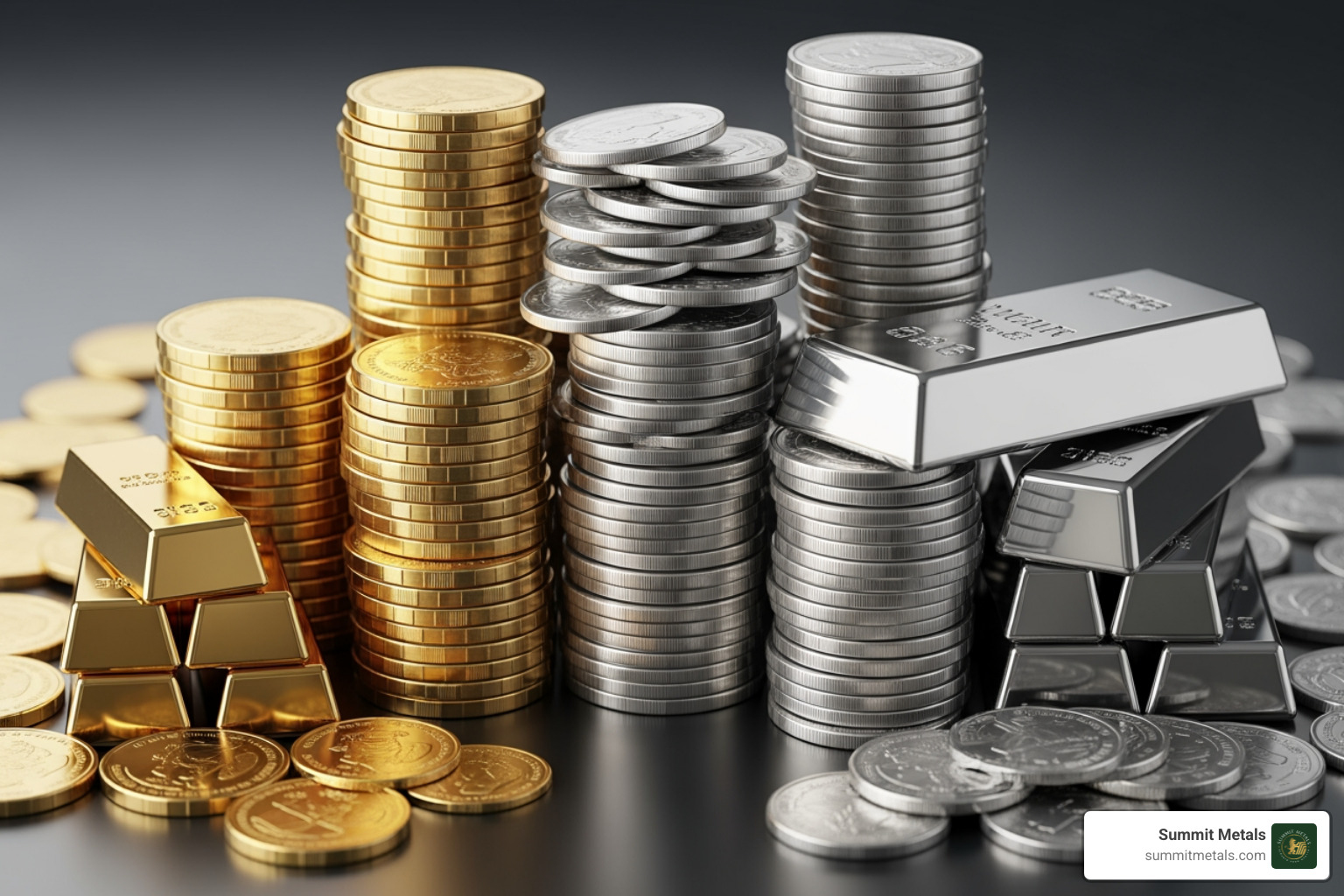
At Summit Metals, we leverage our bulk purchasing power to keep premiums competitive, ensuring you get more metal for your money.
What is the Difference Between Spot Price and Premium?
The spot price is the live market value for one troy ounce of raw metal traded on commodity exchanges. You can't buy physical bullion at this wholesale price. Instead, you pay the spot price plus a premium.
This premium covers the real costs of changing raw metal into a finished product and delivering it to you, including:
- Fabrication: Minting, stamping, and quality control.
- Logistics: Packaging, insured shipping, and distribution.
- Operational Costs: Dealer expenses and profit.
- Market Demand: Premiums can rise during periods of high demand and tight supply.
Pro Tip: Smaller items, like 1-gram bars, have higher percentage premiums than larger 1-ounce bars because fixed manufacturing costs are spread over less metal. Learn more in The Price of Shine: Understanding Your Bullion's Premium.
The Gold-to-Silver Ratio Explained
The gold-to-silver ratio tells you how many ounces of silver it takes to buy one ounce of gold. To calculate it, divide the gold price by the silver price. With gold at $4,233.15 and silver at $56.98, the current ratio is 74.3:1.
Investors use this ratio as a timing signal. A high ratio may suggest silver is undervalued relative to gold, while a low ratio may indicate the opposite. Historically, the average has hovered between 50:1 and 70:1. While not a perfect predictor, it's a useful tool for deciding which metal to add to your portfolio. Dive deeper with our guide, The Gold and Silver Ratio: A Timeless Measure for Precious Metals Investors.
What's Driving the Market? Key Factors Influencing Precious Metal Prices
Gold and silver prices today per ounce are sensitive to global events, acting as a barometer for economic and geopolitical stability. The core driver is supply and demand, influenced by a mix of complex factors.
Economic and Geopolitical Influences
Several key factors send ripples through precious metals prices:
- Inflation: As the purchasing power of currencies like the dollar declines, investors turn to gold and silver as a traditional hedge, driving prices up.
- Interest Rates: Higher rates can make interest-bearing assets like bonds more attractive than non-yielding gold. Conversely, expected rate cuts often boost gold prices.
- U.S. Dollar Strength: A strong dollar makes gold more expensive for foreign buyers, which can cool demand. A weak dollar typically has the opposite effect.
- Central Bank Policies: When central banks buy gold, it signals a lack of confidence in fiat currencies and creates sustained demand.
- Geopolitical Instability: Wars, trade disputes, and political turmoil increase uncertainty, pushing investors toward the safe haven of precious metals.
- Silver's Industrial Demand: Unlike gold, silver is a critical component in electronics, solar panels, and medical devices. A surge in industrial use can significantly impact its price.
These factors often intertwine, creating a dynamic market. Learn more about Key Factors Influencing Gold & Silver Prices.
Analyzing Historical Price Trends
To understand where prices might be headed, you must look at where they've been. Historical charts provide crucial context:
- Short-term charts (daily/weekly): Show immediate reactions and volatility but can be misleading for long-term decisions.
- Long-term charts (yearly/multi-year): Reveal major market cycles, sustained trends, and how metals perform in different economic climates.
Zooming out from daily fluctuations helps you see the bigger picture and stick to your strategy, especially if you use a disciplined approach like our Autoinvest program. For tools to analyze price movements, see our guide on Gold Prices Today: Live Gold Price Chart & Historical Data.
Smart Investment Strategies for Gold and Silver
Investing in gold and silver is about portfolio diversification, risk management, and long-term wealth protection. Precious metals act as a tangible hedge against inflation and market volatility, providing stability when traditional assets falter. Understanding The Strategic Role of Gold in Long-Term Portfolio Management is essential for building a resilient financial future.
Dollar-Cost Averaging with Autoinvest
Trying to time the market is a losing game. A more effective, stress-free strategy is dollar-cost averaging. By investing a fixed amount at regular intervals, you buy more ounces when prices are low and fewer when they are high. This averages out your purchase price over time, mitigating volatility.
This is the same disciplined principle behind 401(k) contributions. Summit Metals makes it easy with our Autoinvest program. You can set up automated monthly purchases to consistently build your gold and silver holdings without the stress of daily price monitoring. It's a smart, hands-off approach to long-term wealth building. Set Up Your Autoinvest Plan today.
Choosing Your Bullion: Coins vs. Bars
When buying physical metal, you'll choose between coins and bars. Both are excellent investments, but they serve different goals. Here's a comparison to help you decide:
Gold and Silver Coins Coins like the American Eagle or Canadian Maple Leaf offer unique advantages. They are government-backed, which provides a high level of trust and recognizability. Many include sophisticated anti-counterfeiting features and carry a legal tender face value. While this face value is symbolic, it guarantees the coin's authenticity and provides a government-backed floor of value. Coins are highly liquid, easy to trade in small quantities, and may acquire numismatic (collector) value over time.
Gold and Silver Bars Bars are the workhorses of bullion investing, ideal for accumulating the maximum amount of metal for your money. They typically carry lower premiums over the spot price compared to coins, especially in larger sizes. Their uniform, stackable shape makes them highly efficient for storage. The design is simple—focused on weight, purity, and the mint's mark—appealing to investors who prioritize pure metal content over collectibility.
Which is right for you? Many investors own both. A balanced strategy might involve holding coins for liquidity and potential appreciation, while using bars as the cost-effective foundation of your core holdings. At Summit Metals, we offer a wide selection of both with transparent pricing.
Frequently Asked Questions about Gold and Silver Prices
Navigating precious metals can bring up questions. Here are plain-English answers to some of the most common ones we hear about gold and silver prices today per ounce.
What is the difference between the 'bid' and 'ask' price?
The bid price is what a dealer will pay to buy metal from you. The ask price is what you will pay to buy metal from them. The difference, called the spread, covers the dealer's costs and profit. A tight spread indicates a liquid, healthy market. At Summit Metals, we work to keep our spreads competitive, ensuring you get fair value.
Why are retail prices for gold and silver higher than the spot price?
The spot price is the wholesale rate for large quantities of raw metal. The retail price includes the spot price plus a premium. This premium covers the costs of turning raw metal into a finished product (a coin or bar) and getting it to you. This includes fabrication, insurance, shipping, and dealer operations. Premiums are also influenced by market demand. For a full breakdown, see The Price of Shine: Understanding Your Bullion's Premium.
Where can I find reliable real-time data for gold and silver prices?
For trustworthy data on gold and silver prices today per ounce, stick to reputable sources. Financial news leaders like Bloomberg and Reuters provide institutional-grade market data. Many major bullion dealer websites, including ours at Summit Metals, display live spot prices pulled from global market feeds. For a hands-off approach, our Autoinvest program lets you invest consistently without needing to watch charts all day, building your position through market fluctuations.
Your Next Move in Precious Metals
You now have the knowledge to understand gold and silver prices today per ounce and how they impact your financial security. You've learned about spot prices, premiums, market drivers, and smart investment strategies like dollar-cost averaging.
What matters most isn't timing the market perfectly, but having a consistent strategy. That's where Summit Metals can help. As a Wyoming-based company, we are built on transparency and trust. Our real-time pricing and competitive rates, achieved through bulk purchasing, ensure you always receive fair value on authenticated gold and silver.
Ready to take action? Our Autoinvest program allows you to build your holdings gradually, removing the stress of market timing. Month by month, you can accumulate real, tangible wealth.
For a complete overview to help you start, read our Investing in Gold and Silver: A Decision Guide for Savvy Investors. The best time to protect your wealth was yesterday. The second-best time is now. Welcome to Summit Metals—where your financial security is our mission.