Why Copper Bar Cost Matters for Your Investment Portfolio
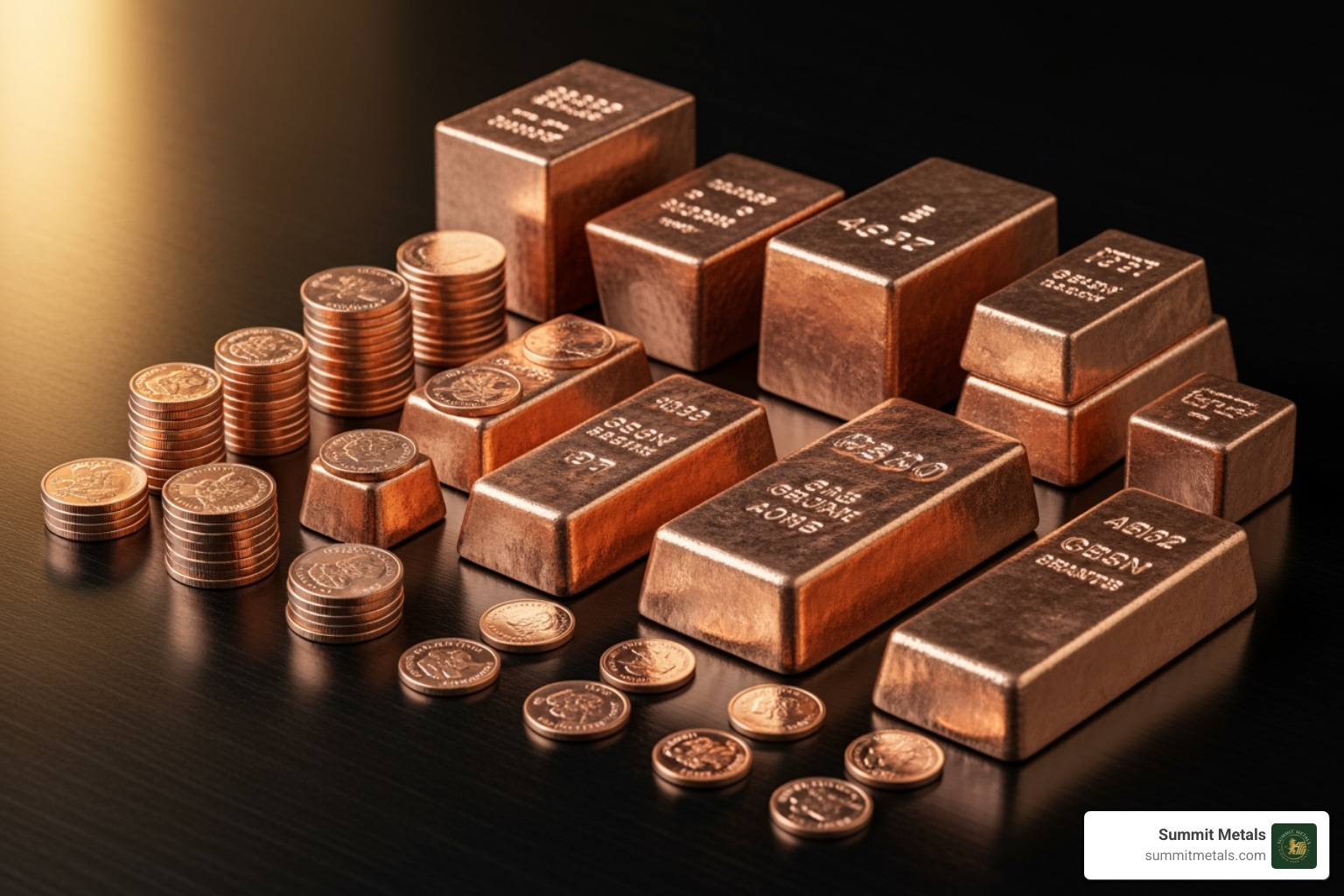
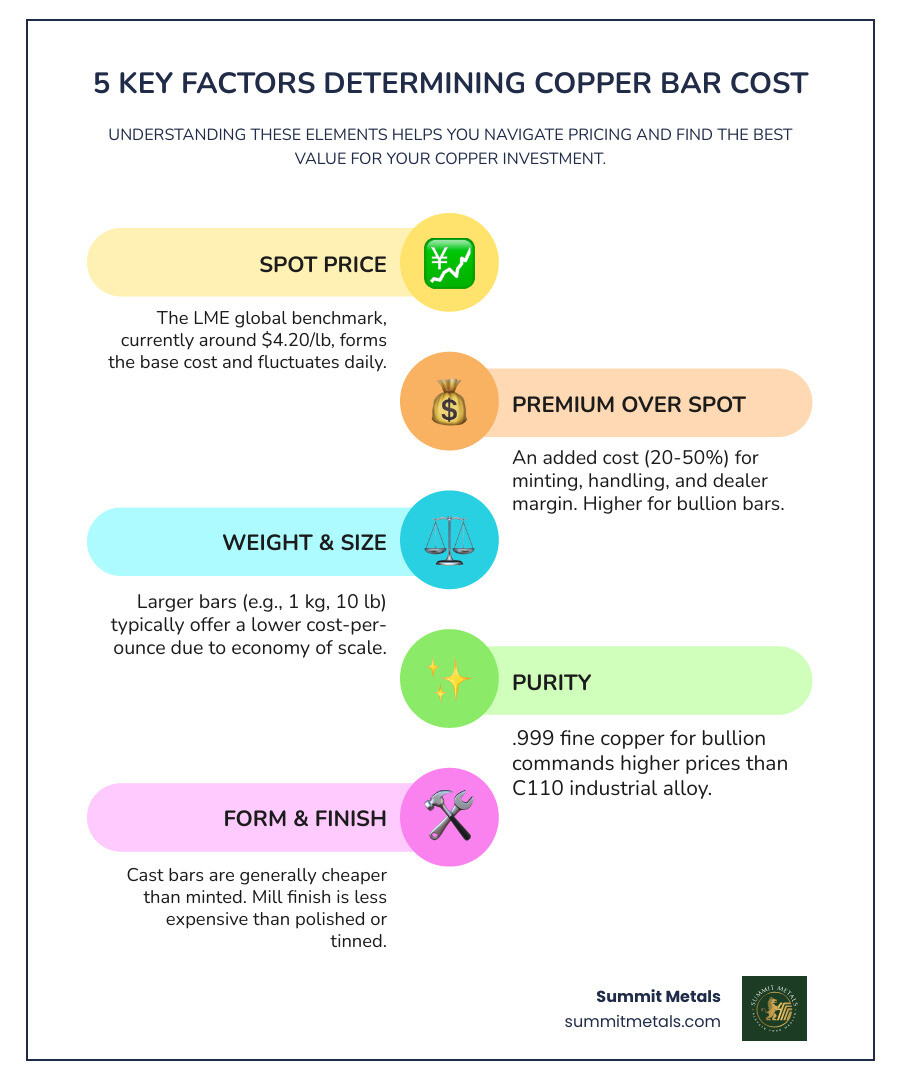
Copper bar cost varies based on weight, purity, form, and where you buy, but you can expect to pay roughly $1 per ounce for small bullion rounds and $4–$25 for industrial-grade bars depending on dimensions and finish. The key price drivers are:
- Spot Price: The London Metal Exchange (LME) sets the global benchmark (around $4.20/lb as of this publication)
- Premium Over Spot: Bullion bars typically add 20–50% for minting and distribution
- Weight & Size: Larger bars (1 kg, 5 lb, 10 lb) usually offer better cost-per-ounce
- Form & Finish: Cast bars are cheaper than minted; mill finish costs less than polished
- Purity: .999 fine copper commands higher premiums than C110 industrial alloy
Copper may not carry the prestige of gold or silver, but it has become a serious tool for portfolio diversification. It is affordable, increasingly liquid, and backed by durable industrial demand from construction, electronics, and renewable energy infrastructure.
This guide decodes the pricing you will encounter—from collectible elemental bars to industrial flat stock—and shows you where to find the best value. Whether you are looking to hedge inflation, diversify beyond traditional assets, or simply own a piece of history's oldest metal, understanding copper bar cost is the first step toward smarter buying decisions.
From institutional approaches to commodities, Summit Metals applies the same disciplined mindset blue-chip treasuries use to protect their balance sheets. One of the most effective tools is dollar-cost averaging—and you do not need a 401(k) to use it. With Summit Metals' Autoinvest program, you can schedule recurring monthly copper purchases, smoothing out price swings and turning market volatility into a systematic wealth-building strategy.
Relevant articles related to Copper bar cost:
Understanding the Core Factors of Copper Bar Cost
This section breaks down the "why" behind the prices.
The Base: Copper Spot Price vs. Physical Cost
At the heart of every copper bar cost is the global spot price, primarily set by the London Metal Exchange (LME). This is the base price for raw copper, fluctuating constantly based on supply and demand, geopolitical events, and economic indicators. As of this publication, the LME spot price is around $4.20 per pound.
Copper has seen significant price swings over the past two decades, starting the 21st century under $1 per pound and spending long stretches between $3 and $4.50. These trends directly influence the copper bar cost you see today.
However, the price you pay for a physical copper bar includes a premium over spot. This premium covers mining, refining, manufacturing, minting, transportation, and dealer margins. For bullion bars, this premium ranges from 20–50% over spot. Industrial bars are priced based on specific dimensions and alloy rather than a simple percentage.
Understanding this distinction is crucial for making informed purchases and for planning recurring buys through Summit Metals' Autoinvest program, where consistent monthly purchases help average out both spot and premium over time.
How Size, Weight, and Form Impact Your Price
One of the most significant factors influencing copper bar cost is size and weight. Generally, the larger the bar, the lower the cost per ounce due to economies of scale.
For investment bars, common weights include 1 ounce, 10 ounces, 1 kilogram, 5 pounds, and 10 pounds. A 1-ounce copper bar might cost $1.00–$1.50, while a 1-kilogram bar often carries a lower per-ounce cost despite the higher total price.
Industrial copper bars are priced by dimensions rather than weight. The form factor matters too: cast bars are generally less expensive than minted bars, which require more precise machining.
| Bar Size | Approximate Total Price | Approximate Cost Per Ounce |
|---|---|---|
| 1 oz | $1.00 - $1.50 | $1.00 - $1.50 |
| 10 oz | $9.00 - $12.00 | $0.90 - $1.20 |
| 1 kg (35.27 oz) | $30.00 - $45.00 | $0.85 - $1.27 |
| 5 lbs (80 oz) | $65.00 - $80.00 | $0.81 - $1.00 |
| 10 lbs (160 oz) | $120.00 - $150.00 | $0.75 - $0.94 |
This logic applies when using Autoinvest at Summit Metals. You can schedule a fixed dollar amount monthly and let the program allocate it into cost-effective bar sizes.
The Influence of Purity, Alloy, and Finish
The composition and surface treatment of a copper bar significantly impact its copper bar cost.
Investment-grade copper bullion typically features .999 fine copper purity. In industrial uses, C110 copper alloy is the "workhorse," offering excellent electrical and thermal conductivity for:
- Electrical bus bars and connectors
- Plumbing components
- Heat exchangers
Finish also affects price:
- Mill finish: Standard, economical finish
- Polished: Additional processing for smooth surface
- Tinned: Thin coatings for improved conductivity
Decision Guide: Copper Bars vs. Other Metal Forms
| Feature | Coins (e.g., gold or silver) | Bars (e.g., gold, silver, or copper) |
|---|---|---|
| Face Value | Legal-tender value provides fraud protection | No face value; purely metal content |
| Recognition | Widely recognized designs | Requires attention to hallmarks |
| Premium Over Spot | Higher premium for detailed minting | Lower premiums in larger sizes |
| Liquidity | Easy to sell small amounts | May require selling larger amounts |
| Storage | Less space-efficient | More compact and stackable |
Many Summit Metals clients use Autoinvest to accumulate lower-premium bars monthly, then complement with select coins for their recognition and fraud-protection benefits.
A Roundup of Copper Bar Types and Their Prices
From investment-grade bullion to industrial stock, the type of bar you choose dramatically affects its price.
Investment & Bullion Bars (Priced by Weight)
Investment and bullion copper bars are designed for stacking, collecting, and holding as a tangible asset. These are typically made from .999 fine copper and come in various weights, from small 1-ounce pieces to substantial 10-pound ingots. The copper bar cost for these items is primarily driven by the spot price of copper plus a premium for manufacturing and design.
You will find two main types:
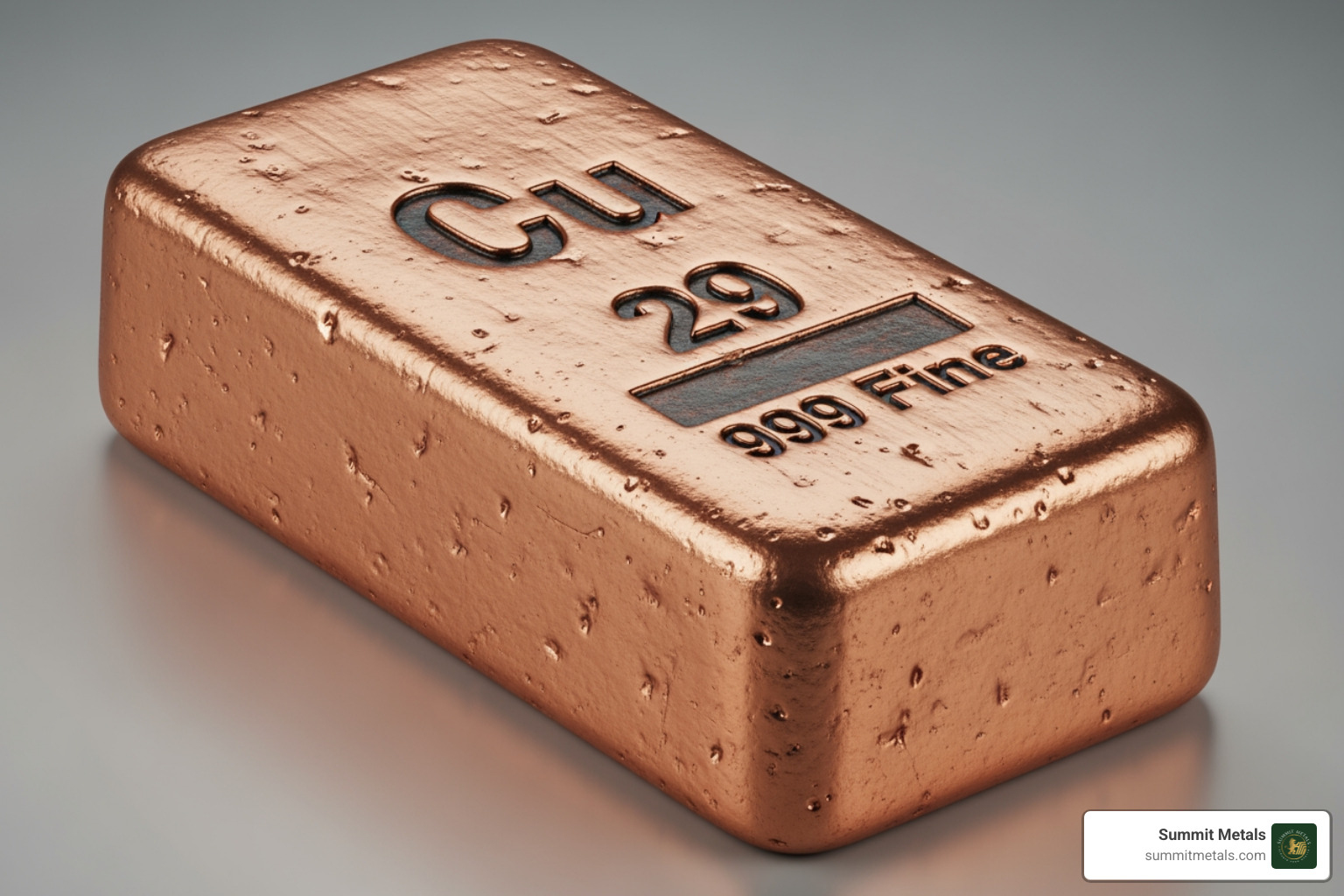
- Cast Bars: Produced by melting copper and pouring it into a mold. They often have a more rustic, textured appearance, sometimes with elemental designs featuring the periodic table symbol (Cu), atomic number (29), weight, and purity. Cast bars are generally more affordable than minted bars because the production process is simpler.
- Minted Bars: Start as copper blanks that are then struck with a die, similar to how coins are made. They feature sharper details, smoother surfaces, and often more intricate designs. Minted bars tend to carry a higher premium due to the precision involved in their creation.
To help you decide, here is a quick comparison:
| Feature | Cast Copper Bars | Minted Copper Bars |
|---|---|---|
| Appearance | Rustic, textured, unique markings | Polished, sharp details, intricate designs |
| Production | Molten copper poured into molds | Stamped from copper blanks with a die |
| Cost | Lower premium, more affordable | Higher premium due to precision manufacturing |
| Best For | Bulk stacking, cost-effective investing | Collectors, gifts, aesthetic appeal |
Popular weights include 1 oz, 10 oz, 1 kg (approximately 35.27 oz), 5 lbs (80 oz), and 10 lbs (160 oz). While a 1 oz copper bar might cost around $1.00–$1.50, a 5-pound elemental cast copper bar could range from about $65–$80, depending on the dealer and current market. This generally translates to a per-ounce cost significantly lower than that of smaller bars.
For long-term investors, these bars offer a straightforward way to diversify a precious-metals stack with a lower-priced metal. They also work well with Summit Metals' Autoinvest program: you can set a fixed dollar amount each month and gradually build a position in the bar sizes that currently offer the best value. To better understand bullion's role in your holdings, take a look at The Shiny Truth: Unpacking What Copper Bullion Really Is.
Industrial & Custom-Cut Bars (Priced by Dimension)
Beyond investment, copper bars are fundamental to countless industries. These are typically sold as raw stock, cut to specific dimensions for manufacturing and construction. The copper bar cost for industrial applications is determined by factors like alloy, temper, exact dimensions, and whether it is a standard length or a custom cut.
The most common alloy you will encounter is C110 copper (also known as 110 copper or ETP copper), often referred to as the "workhorse" of copper alloys. Its exceptional electrical and thermal conductivity makes it indispensable for:
- Electrical applications (such as bus bars and grounding)
- Plumbing components
- Construction and infrastructure
- Machinery parts requiring strong conductivity or thermal transfer
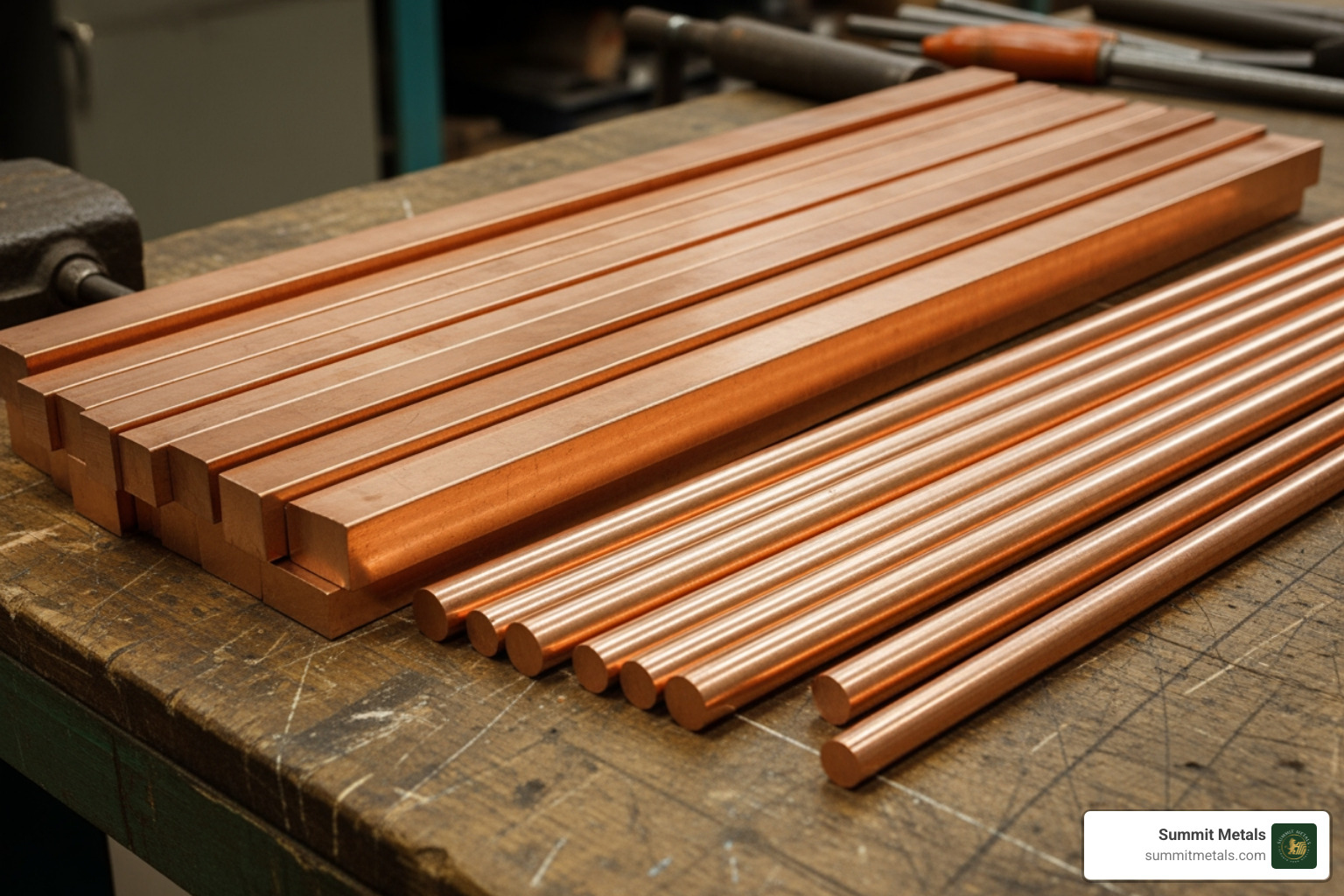
Industrial copper bars come in various shapes, including round bars, flat bars, and square bars. You will find them in standard lengths (for example, 1 foot, 3 feet, 6 feet, 12 feet) or as custom-cut pieces. A 12-inch length of a small C110 copper rectangle might start around a few dollars and scale up with size and thickness. Many online suppliers also provide bulk discounts for multiple pieces.
You can explore standard industrial copper bar options and their specifications through online suppliers, or check with local providers in Salt Lake City, Utah, to get an idea of what is available.
Collectible & Artistic Bars (Priced by Rarity & Design)
While most copper bars are valued for their metal content or industrial utility, a segment of the market exists for collectible and artistic copper bars. These pieces often command a higher premium over their melt value due to unique designs, limited mintage, or historical themes.
Many collectible copper bars feature intricate designs modeled after well-known coinage, historical figures, or artistic motifs. These are often produced by private mints that specialize in visually appealing bullion products. The artistry, the detail, and sometimes the story behind these designs contribute significantly to their copper bar cost.
Limited editions or bars from well-known private mints can also fetch higher prices from collectors. The historical connection between copper and coinage makes bullion with coin-inspired designs particularly attractive to some buyers. These items are ideal for those who appreciate the beauty and history of metal alongside its inherent value.
Decision Guide: Bullion Copper Bars vs. Collectible Copper Pieces
| Feature | Bullion Copper Bars | Collectible / Artistic Copper Bars |
|---|---|---|
| Primary Value Driver | Metal content and weight | Design, rarity, and mintage |
| Premium Over Spot | Generally lower, especially in larger bars | Higher, can be several times melt value |
| Best Use Case | Long-term stacking and diversification | Collecting, gifting, display |
| Price Volatility | Closely tracks copper market | Influenced by collector demand as well as copper |
| Fit With Autoinvest | Excellent for systematic monthly purchases | Better for occasional, hand-picked additions |
Many Summit Metals clients use Autoinvest primarily for consistent bullion accumulation, then selectively add collectible copper pieces when a particular design or theme resonates with them.
Where to Buy Copper Bars and How to Save Money
Knowing where to look can lead to significant savings on your copper bar cost.
Comparing Your Purchasing Options
When looking to acquire copper bars, you have several avenues:
- Online Bullion Dealers: Excellent sources for investment-grade copper bars with competitive pricing and insured shipping. Summit Metals offers transparent pricing for precious metals based on current spot prices.
- Industrial Metal Suppliers: For specific dimensions of C110 copper for projects, these suppliers offer various shapes and custom cuts with bulk discounts.
- Local Scrap Yards: In Salt Lake City, Utah, local recyclers can be useful for raw copper or selling scrap. While not investment-grade, they help understand local copper value by weight.
Choosing the right vendor depends on your needs: investing in bullion, sourcing for projects, or acquiring raw material.
Smart Strategies to Reduce Your Copper Bar Cost
Practical ways to minimize your copper bar cost:
- Buy in Bulk: Larger bars reduce per-ounce cost. Industrial suppliers offer significant bulk discounts and promotional "offcut bins" up to 80% off.
- Compare Payment Methods: Bank wire, eCheck, or paper check often results in lower prices than credit cards. Avoiding 3–4% card fees makes a noticeable difference on large orders.
- Factor In Shipping: Check shipping and insurance policies. Reputable dealers fully insure shipments. Some offer free shipping above certain values (e.g., $199+).
- Use Dollar-Cost Averaging: Summit Metals' Autoinvest program lets you schedule recurring monthly purchases like a 401(k). When prices are higher, you buy fewer ounces; when lower, you buy more, smoothing volatility over time.
Decision Guide: One-Time Bulk vs. Monthly Autoinvest
| Approach | One-Time Bulk Purchase | Monthly Autoinvest at Summit Metals |
|---|---|---|
| Timing Risk | Higher: depends on single market moment | Lower: spreads across many points |
| Average Cost | Good if timing perfect | Designed for stable long-term average |
| Cash Flow | Large upfront outlay | Predictable monthly amount |
| Emotional Pressure | Worry about "wrong" time | Rules-based, reduces stress |
| Best For | Investors with lump-sum ready | Steady, disciplined accumulation |
Many investors blend both: making an initial bulk purchase, then using Autoinvest for disciplined monthly additions in a 401(k)-style pattern.
Frequently Asked Questions about Copper Bar Costs
Quick answers to the most common questions about buying copper bars.
Is investing in copper bars a good idea?
Investing in copper bars can be a smart move, especially for those looking to diversify their portfolio.
- Affordability: Copper has a significantly lower price point than traditional precious metals like gold and silver. This makes it an accessible entry point for new investors or those on a tighter budget, allowing you to acquire tangible assets without a large upfront investment. You can often purchase copper bullion bars and rounds at around $1 per ounce (over spot), a fraction of what you would pay for other metals.
- Diversification: While not a precious metal, copper offers a unique opportunity to diversify your holdings. Its price movements are often influenced by different factors (industrial demand, global economic growth) than those affecting gold or silver.
- High Industrial Demand: Copper is essential to modern infrastructure and technology. It is used in construction, electronics, electric vehicles, renewable energy systems, and medical devices. This constant, growing industrial demand provides a strong fundamental underpinning for its value.
- Tangible Asset: Like other physical metals, copper bars are tangible assets you can hold directly. They are not subject to the same counterparty risks as paper assets and can offer a sense of security during economic uncertainty.
Because copper is an industrial metal, its price can be more closely tied to business cycles than that of precious metals. Many Summit Metals clients address this by using the Autoinvest program to buy monthly, so they are not overexposed to any single point in the cycle.
How much does a 1 lb or 1 kg copper bar cost?
The copper bar cost for a 1 lb or 1 kg bar is variable, depending on the current spot price of copper, the premium charged by the seller, and the specific form (bullion vs. industrial).
For bullion bars:
- 1 lb (16 oz) copper bar: Assuming a spot price of $4.20/lb (or about $0.26/oz) and a premium that brings the per-ounce cost closer to $1, a 1 lb bar might cost roughly $16–$20.
- 1 kg (approximately 2.2 lbs or 35.27 oz) copper bar: Using a similar per-ounce estimate, a 1 kg bar could cost around $30–$45.
For industrial bars:
- The price for a 1 lb or 1 kg industrial copper bar is harder to generalize because it is typically sold by specific dimensions (thickness, width, length) and alloy rather than a simple weight-based price. A small piece of C110 copper might cost only a few dollars, while a larger, heavier piece could be significantly more, even if the weight is similar to a bullion bar.
These prices are illustrative and subject to change with market fluctuations. If you are building a position over time, Summit Metals' Autoinvest program allows you to focus on a monthly dollar amount rather than constantly recalculating bar counts as prices move. To learn more about assessing value, see Unearthing Value: A Seller's Handbook for Copper Ingots.
What are the hidden factors in the final copper bar cost?
When calculating your total copper bar cost, it is important to look beyond the advertised price per bar. Several additional costs can affect your final number:
- Shipping Fees: Unless you are picking up locally in Salt Lake City, Utah, or qualify for free shipping, you will incur shipping charges. These vary based on weight, destination, and shipping speed.
- Transit Insurance: Reputable dealers insure your shipment against loss or damage while in transit. Sometimes this cost is built into shipping fees, but it is a key part of protecting your purchase.
- Payment Processing Fees: Using credit cards or certain other payment methods can incur a surcharge (often around 3–4%). Opting for eCheck, ACH, or bank wire can help you avoid these fees, saving you money, especially on larger purchases.
- Applicable Sales Tax: Depending on your location and local regulations, you may be subject to sales tax on your copper bar purchase. Some states offer exemptions for certain investment metals, but the rules vary and may not always extend to copper. Confirm with your seller or local tax authority.
One benefit of using a structured plan like Autoinvest is that shipping, insurance, and payment choices can be standardized, making your overall cost more predictable month after month.
Decision Guide: Copper Bars vs. Gold/Silver Coins in a Portfolio
While your focus here is copper, many investors hold copper alongside gold and silver. The comparison below highlights how coins and bars across metals play different roles in an overall strategy.
| Feature | Gold/Silver Coins | Gold/Silver or Copper Bars |
|---|---|---|
| Face Value | Often have legal-tender face value, which aids recognition and adds an extra layer of protection against obvious fraud. | No face value; value is purely based on metal content and market price. |
| Premium Over Spot | Typically higher due to detailed minting and legal status | Typically lower per ounce, especially at larger sizes |
| Authentication Ease | Familiar designs make visual checks easier for beginners | Requires more attention to hallmarks and reputable sourcing |
| Storage Efficiency | Less space-efficient per ounce | Highly stackable and compact |
| Best Use in Portfolio | Liquidity, recognizability, and smaller denominations | Cost-efficient core holdings for long-term stacking |
Many Summit Metals clients use coins (especially in gold or silver) for their face value and fraud-resistance benefits, while relying on bars—including copper bars—for efficient, low-premium accumulation, often automated through Autoinvest.
Conclusion: Making a Smart Copper Investment
As we have explored, copper bar cost is a dynamic figure influenced by global spot prices, bar size and form, purity and finish, and where you choose to buy. From 1-ounce bullion pieces to heavy industrial stock, copper offers a tangible asset with both utility and investment potential. It is an accessible entry point into physical metal investing, allowing you to diversify your portfolio without the higher capital requirements of gold or silver.
Summit Metals emphasizes transparent, real-time pricing and competitive rates, helping you see exactly what you are paying for and why. Whether you are a seasoned metals investor or just beginning, understanding these cost drivers is essential to making confident decisions.
Building wealth with metals is rarely about catching the perfect moment. It is more often about consistency. That is why Summit Metals champions the power of dollar-cost averaging. With the Autoinvest program, you can set up recurring monthly purchases—much like contributing to a 401(k)—and steadily build your copper and other metal holdings. When prices are high you buy fewer ounces; when they are low you buy more, smoothing out volatility into a disciplined, long-term strategy.
So, whether you are eyeing a unique collectible, a robust industrial bar, or a stack of investment bullion, you now have the framework to evaluate copper bar cost and choose the option that best matches your goals. Put a simple, rules-based plan in place, let Autoinvest do the heavy lifting each month, and allow time and consistency to work in your favor.
For more guidance on buying metal online, including copper and other metals, explore this guide: Don't Get Bent Out of Shape: How to Buy Metal Online.