Selling Silver Coins for Cash: What You Need to Know Before You Start
If you're looking to sell silver coins for cash, here's the quick answer:
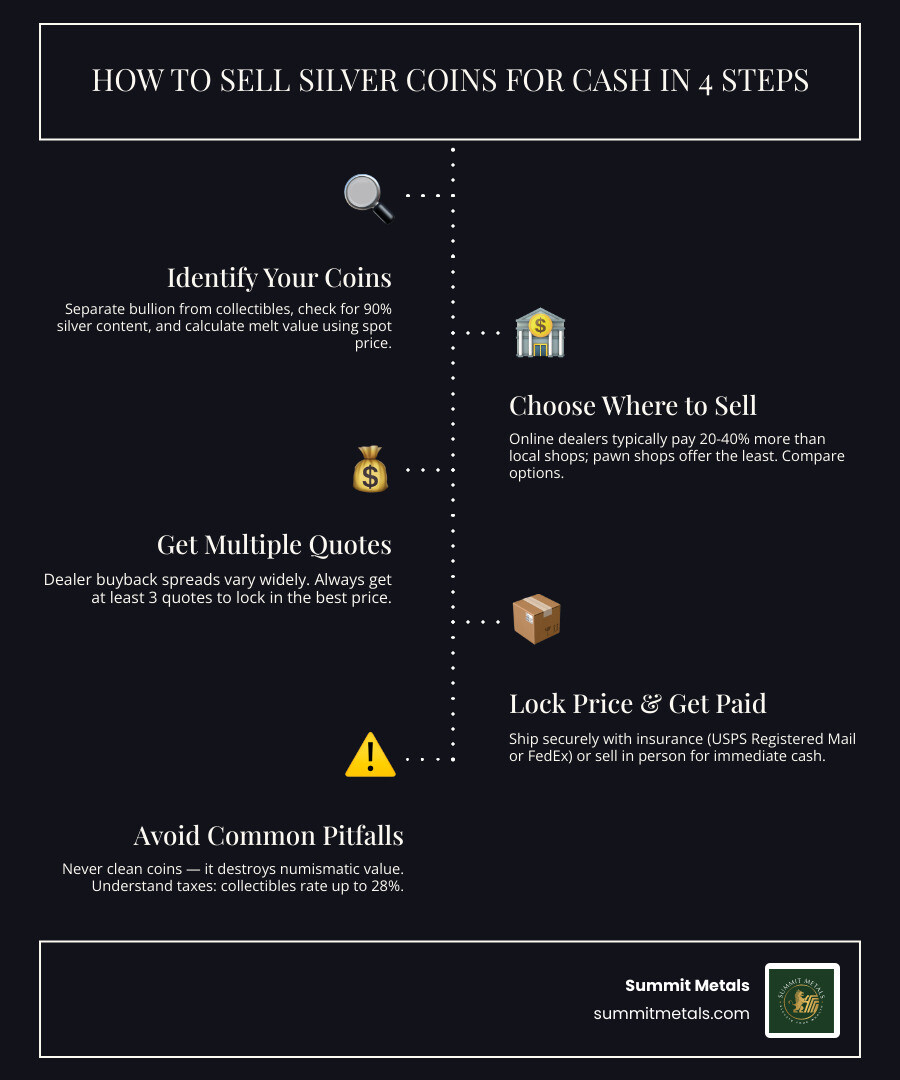
- Identify your coins — separate bullion from collectibles and calculate melt value.
- Choose where to sell — online dealers typically pay the most; local coin shops offer immediate cash.
- Get multiple quotes — dealer buy prices for the same coin can vary by 20–40%.
- Lock in your price and get paid — ship securely with insurance, or sell in person.
Silver has had a remarkable run. As of July 2026, spot prices are sitting near levels that would have seemed extraordinary just a few years ago — meaning many holders are sitting on significant gains right now. Whether you inherited a jar of old quarters, built a stack over years, or are rebalancing a larger portfolio, knowing how to convert those coins into cash — without leaving money on the table — matters more than ever.
The challenge? Most people spend years learning how to buy silver at a low premium, then walk into a coin shop with no idea what their metal is worth on the sell side. Dealers know this. Pawn shops count on it. and "cash for gold" storefronts on street corners are built around it.
This guide closes that information gap — step by step.
I'm Eric Roach, a former Wall Street investment banker and M&A advisor who now helps everyday investors navigate the precious metals market. I've guided clients through everything from multi-million-dollar portfolio rebalances to liquidating silver coin collections at peak market prices, and I created this guide to help you sell silver coins for cash with the same disciplined, informed approach institutional investors use. In the sections below, I'll walk you through exactly went to do — from identifying what you own to locking in the best possible price.
How to sell silver coins for cash helpful reading:
Step 1 & 2: Identify Your Coins and Choose Your Selling Channel
Before you walk into any shop or click a single "Sell to Us" button online, you must understand exactly what you have in your possession. Precious metals generally fall into two distinct categories: bullion and numismatics.
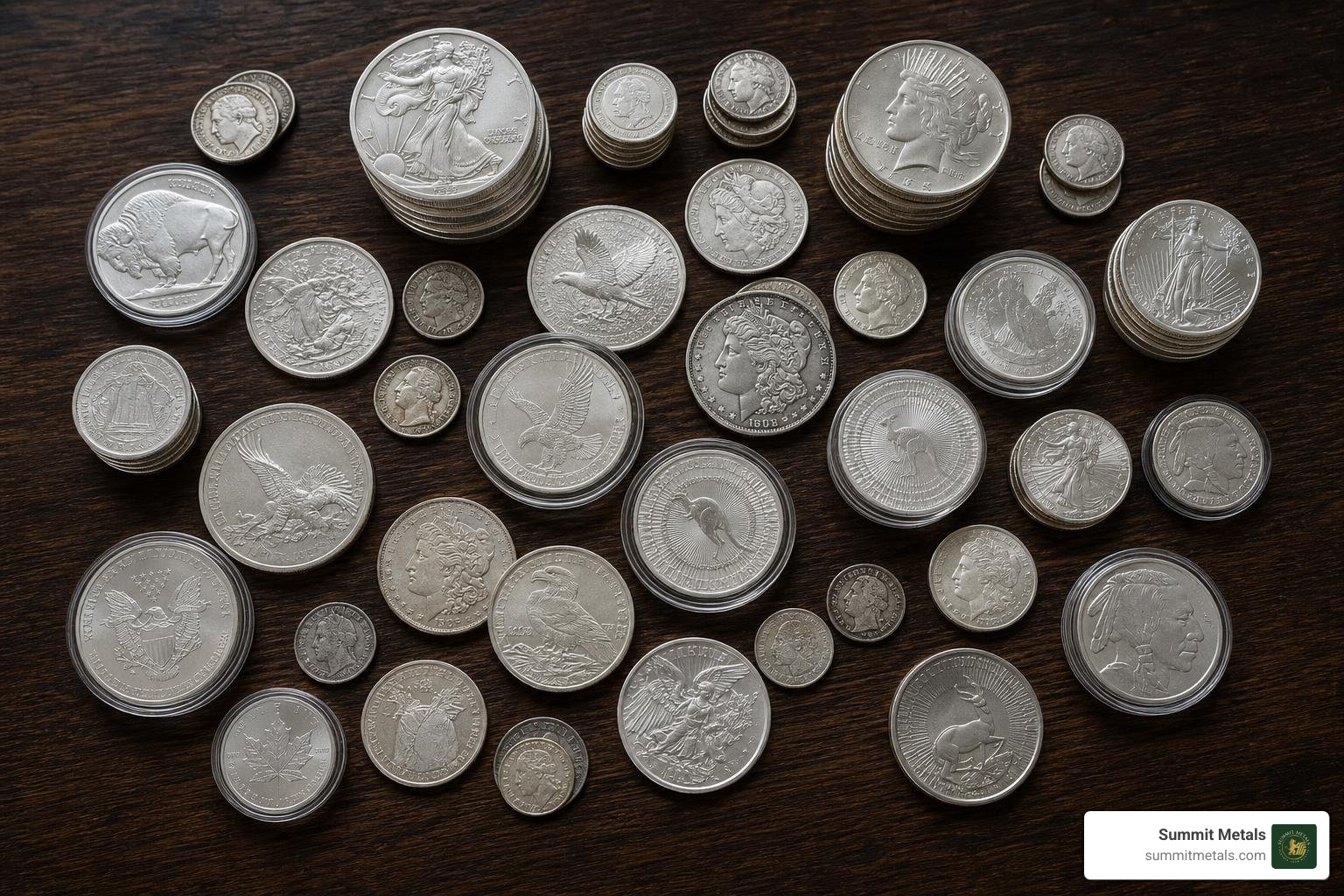
Bullion coins are valued almost entirely for their raw metal content. For example, a modern American Silver Eagle or a Canadian Silver Maple Leaf contains exactly one troy ounce of .999 fine silver. Their value tracks the global spot price of silver directly, plus or minus a small dealer premium.
Numismatic coins, on the other hand, are historical or rare coins whose collector value far exceeds the melt value of the physical silver they contain. If you try to sell a highly collectible, graded Morgan Silver Dollar at scrap melt value, you are leaving a massive amount of cash on the table.
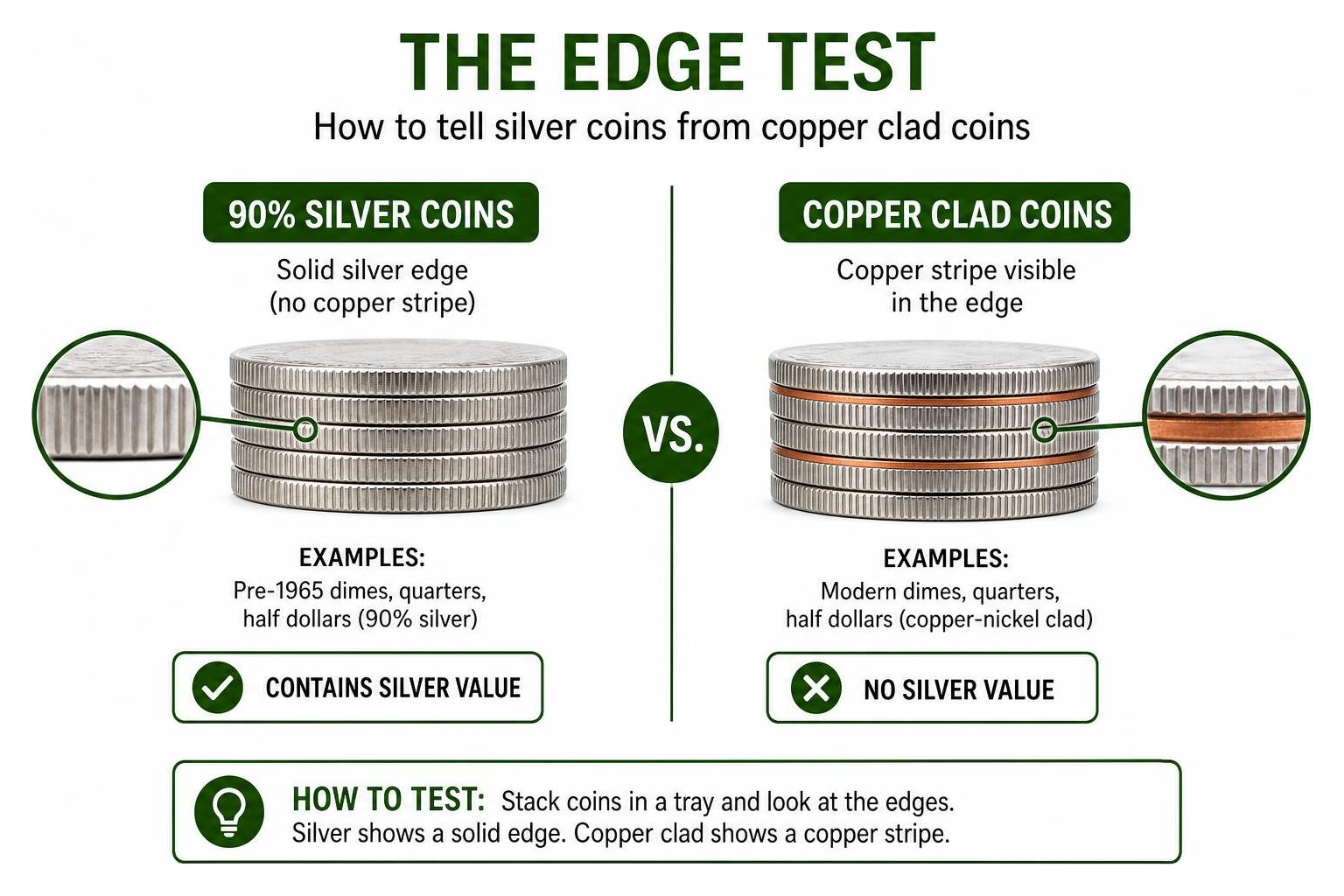
One of the most common types of silver you will encounter is pre-1965 U.S. "junk silver." These are circulated dimes, quarters, and half dollars minted in 1964 or earlier, which feature a 90% silver content.
To quickly identify if your old dimes or quarters are silver without checking every date, you can perform a simple "edge test." Stack the coins in a tray and look at their edges. A solid silver stripe running along the edge indicates a 90% silver coin. If you see a distinct copper stripe, it is a modern copper-nickel clad coin with no precious metal value.
For circulated 90% silver coins, the industry uses the "0.715 rule." This rule states that every $1.00 of face value in circulated U.S. junk silver contains approximately 0.715 troy ounces of pure silver. (Uncirculated coins contain slightly more, about 0.7238 ounces, but the 0.715 figure is the standard baseline used by dealers).
If your coins are rare or in exceptional condition, their value is determined by coin grading using the Sheldon scale—a 70-point grading system where a higher score indicates a more pristine state. For highly valuable coins, professional certification from third-party grading services like PCGS or NGC is essential to verify authenticity and secure top-tier market pricing.
When planning your physical precious metals portfolio, it is also helpful to understand how silver coins compare to silver bars. While both are excellent ways to accumulate physical metal, they serve slightly different purposes.
Silver Coins vs. Silver Bars
| Feature | Silver Coins | Silver Bars |
|---|---|---|
| Purity | Typically .999 or .9999 fine silver | Typically .999 fine silver |
| Legal Tender | Yes, carries a government-backed face value | No, strictly bullion |
| Fraud Protection | High; counterfeiting sovereign currency carries severe federal penalties | Moderate; requires testing via Sigma scanners or XRF |
| Premiums | Higher initial premium over spot price | Lower premium over spot price |
| Best For | Liquidity, security, and small-increment transactions | Bulk physical storage and maximizing ounces per dollar |
To learn more about maximizing the value of your physical holdings, explore our comprehensive resource on Selling Gold and Silver to build a solid foundation.
How to Sell Silver Coins for Cash by Calculating Melt Value
Calculating the melt value of your silver coins is the ultimate protection against getting lowballed. To find the baseline melt value of a 90% junk silver coin, multiply its face value by 0.715, and then multiply that total by the current spot price of silver.
For instance, if you have $10.00 in face value of pre-1965 quarters, you have roughly 7.15 ounces of pure silver. If the spot price of silver is $60.31 per troy ounce, your melt value baseline is:
$$\text{Melt Value} = 7.15 \text{ oz} \times \$60.31 = \$431.22$$
Before entering negotiations, utilize a silver calculator online to get real-time math based on current spot prices. Always check the purity stamps on your coins or rounds. Sovereign coins will state their weight and purity clearly on the face, while private mint rounds will be stamped with ".999 Fine Silver."
If you are liquidating common coins, read our guide on how to Sell Coins for Melt Value to ensure you are getting a fair offer. It is also wise to research How Much Do Coin Shops Pay for Junk Silver so you can spot the difference between a fair dealer buyback rate and a predatory lowball bid.
Local Coin Shops vs. Online Precious Metals Dealers
Once you know what you have, you must decide where to sell. You essentially have two main options: local coin shops and online precious metals dealers.
Local coin shops offer unmatched convenience and speed. If you live in the Salt Lake City area, you can walk into established physical local coin shops and walk out with cash or a paper check in minutes. Local shops are ideal for smaller transactions under $1,000 where you want immediate payment without shipping logistics. However, physical shops have high overhead costs, meaning they typically pay 2 to 5 percentage points below the buyback rates offered by large online dealers.
Online dealers operate at massive scale with lower overhead, allowing them to offer the highest payout rates — often 95% to 100% of the spot price for highly liquid sovereign coins like American Silver Eagles. The downside is that you must package and ship your metals, and wait 3 to 10 business days for authentication and payment. Many online dealers also enforce strict minimum transaction limits (often $1,000) for buyback orders.
To weigh these options further, review our detailed analysis on Online vs Local Where to Sell Silver to find the perfect fit for your timeline and portfolio size. For additional tips on securing maximum value, you can also consult the AARP guide on how to Get the Most Cash When Selling Your Gold and Silver.
Step 3 & 4: Get Quotes, Package Securely, and Lock in Your Price
Once you have chosen your preferred selling channel, it is time to execute the transaction. The golden rule of selling precious metals is to never accept the first offer. Because dealer buyback rates can vary by 20% to 40% depending on their current inventory needs and local market knowledge, you should always obtain multiple written quotes on the same day.
When selling to an online dealer, you will use their platform to lock in your price. Price locking is a binding contract that protects you from market fluctuations while your silver is in transit. Once you lock in a price, you are legally obligated to ship the metals, and the dealer is legally obligated to pay you that locked-in rate, regardless of whether the spot price drops or surges while the package is in the mail.
Always document your inventory and keep a detailed log before shipping. To protect your hard-earned assets, review our expert advice on Don't Get Shortchanged Selling Your Silver Coins Wisely to learn how to navigate the price-locking process like a pro.
Why You Should Never Clean Your Silver Coins
If there is one absolute rule in the coin collecting world, it is this: never clean your silver coins.
Many beginners make the mistake of trying to polish old, dusty silver coins to make them look shiny and brand new before taking them to a dealer. This is a catastrophic mistake that can instantly destroy up to 90% of a coin's numismatic value.
Polishing or washing a coin with abrasive chemicals removes its natural "patina" — the oxidized layer that forms naturally over decades and proves a coin's age and authenticity. Cleaning also leaves microscopic hairline scratches on the coin's surface. Professional coin graders and experienced dealers can spot a cleaned coin instantly, and they will immediately downgrade its value to raw scrap melt weight.
Whether you are looking to Sell Morgan Silver Dollars or old Walking Liberty half dollars, leave them in their original, tarnished condition. The dirt and toning are part of the coin's history, and collectors will happily pay a premium for honest, untouched wear.
How to Sell Silver Coins for Cash Safely Online
If you choose to sell online for a higher payout, physical security and proper logistics are paramount.
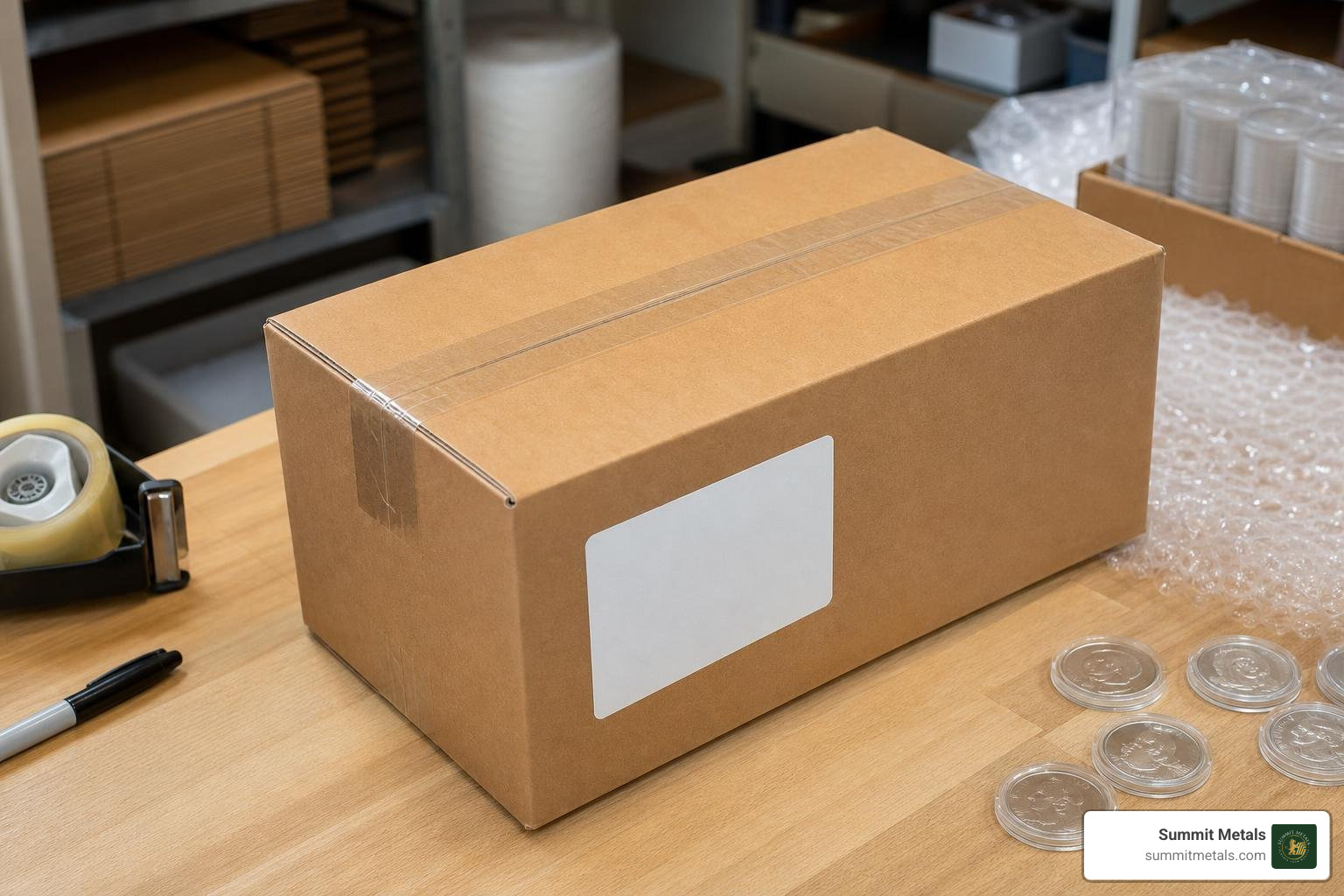
First, package your coins securely. Silver is incredibly heavy, and loose coins will easily tear through standard paper envelopes or thin cardboard boxes during transit. Use heavy-duty, double-walled boxes. Wrap your coin tubes or rolls tightly in bubble wrap, and fill all empty space with packing peanuts or tightly crumpled paper so nothing rattles. If a shipping box makes noise when shaken, postal workers and potential thieves will know exactly what is inside.
Second, never use return addresses or labels that mention words like "Gold," "Silver," "Coins," or "Precious Metals." Use generic abbreviations instead (e.g., write "S. Metals" instead of "Summit Metals").
Third, utilize high-security shipping methods with full insurance coverage. For massive shipments, USPS Registered Mail is the gold standard of safety, requiring every postal employee who handles the package to sign for it in a locked logbook.
At Summit Metals, we make the online liquidation process seamless. When you use our Sell to Us program, we provide secure, fully insured FedEx Express shipping options after your order is verified, utilizing real-time pricing to ensure you get maximum value for your liquidation.
For a step-by-step breakdown of how to prepare your first shipment, read our beginner-friendly tutorial on How to Sell Silver Coins Even If You've Never Tried It Before.
How to Sell Silver Coins for Cash: Taxes, Fees, and Spreads
Liquidating precious metals is a financial transaction, which means you must understand the underlying mechanics of dealer fees, spreads, and tax obligations to keep your transaction fully compliant and profitable.
Understanding Dealer Buyback Spreads
Dealers do not buy and sell precious metals at spot price. They make their living on the "spread"—the difference between their buy price (bid) and their sell price (ask).
The spot price serves as the wholesale baseline for the global market. When you sell, a fair buyback price for common silver bullion is typically within a few percentage points of the spot price. Highly recognizable sovereign coins like American Silver Eagles command the strongest buyback bids (often right at or slightly above spot), while generic private mint rounds and large, obscure silver bars typically trade slightly below spot.
Dealers adjust their buyback spreads daily based on real-time market volatility and their physical inventory needs. If a dealer is overstocked on silver bars, their buyback bid for bars will soften. If they are short on sovereign coins, their bid will rise.
To master these pricing structures, read our Selling Gold Silver Cash Complete Guide to understand exactly how spreads impact your net proceeds.
Tax Implications and IRS Reporting Rules
In the United States, physical precious metals are classified by the IRS as "collectibles." This means that any profits you realize from selling silver coins are subject to a maximum federal capital gains tax rate of 28% if held for more than one year. Short-term gains (on metals held for one year or less) are taxed at your ordinary income tax rate.
Additionally, professional bullion dealers are legally required to file an IRS Form 1099-B under specific transaction criteria. For silver, these reporting thresholds are triggered when a client sells:
- Any combination of 90% silver U.S. coins with a total face value exceeding $1,000.
- .9999 fine silver bars totaling more than 1,000 troy ounces in a single transaction.
It is crucial to note that while sovereign coins like American Silver Eagles are highly liquid, they are explicitly exempt from dealer 1099-B reporting requirements, regardless of the quantity sold. However, even if a transaction does not trigger an automatic dealer 1099-B filing, you are still legally obligated to report all capital gains on your personal tax return.
If you inherited silver coins, you benefit from a "stepped-up basis." This means your cost basis resets to the fair market value of the silver on the exact date of the original owner's death, significantly reducing your taxable gain upon sale.
For an in-depth breakdown of tax laws, consult our guide on Selling Precious Metals Taxes, and explore our tips in A Practical Guide Sell Gold Silver Tax Free to learn how to legally minimize your tax liabilities.
Frequently Asked Questions About Selling Silver Coins
Is now a good time to sell silver coins in 2026?
Yes, July 2026 is an exceptionally strong time to liquidate silver coins. After trading in a tight band for nearly a decade, silver experienced a massive breakout in early 2026, trading in the $70 to $90 per troy ounce range and briefly heading over $100. While the spot price has consolidated to $60.31 per troy ounce as of July 10, 2026, these prices represent historic highs that allow long-term holders to secure incredible gains. To help time your exit, read our analysis on When Is the Best Time to Sell Your Silver Gold.
How do I know if my silver coins are worth more than melt value?
Your coins carry numismatic value above melt if they are "key date" coins (low mintage years), feature rare mint marks (like the "CC" mark on Carson City Morgan Dollars), or are in flawless, uncirculated condition. You can research coin mintages and values using official price guides like the Red Book, or online databases hosted by PCGS and NGC. For a detailed roadmap on identifying rare pieces, review our Silver Dollar Coins Selling Guide 2026.
What is the safest way to ship silver coins to an online buyer?
The safest method is double-boxing. Place your securely wrapped coins inside a small, sturdy cardboard box, tape it shut, and place that box inside a larger shipping box filled with packing material. Secure all seams with heavy-duty packing tape. Always use a trackable shipping service, require a signature upon delivery, and purchase shipping insurance for the full replacement value of the metals. Learn more about secure transit options in our guide on Where Can I Sell Gold Bullion Finding Trustworthy Buyers.
Conclusion
When it comes to building physical wealth, buying is only half the battle. Successful precious metals investing requires a clear, disciplined exit strategy.
One of the most effective ways to manage your physical portfolio is to store your metals securely in a private, allocated vault. By keeping your assets in professional storage, you eliminate the risks of home storage, maintain complete insurance coverage, and ensure your silver remains highly liquid. When you are ready to sell, Summit Metals' Sell to Us program helps you turn those holdings into cash through a secure buyback process without the hassle of arranging your own shipment from home.
If you are looking to rebuild or expand your holdings after a successful sale, consider using a dollar-cost averaging strategy. Summit Metals' Autoinvest program lets you buy gold and silver every month by shopping with Summit Metals on a recurring schedule — a simple, disciplined habit similar to contributing to a 401k.
Whether you are ready to execute an exit strategy today through our Sell to Us program or want to browse our fully authenticated Silver Collection, Summit Metals is here to provide the transparency, security, and competitive rates you deserve. Reach out to our team of specialists in Salt Lake City, Utah, or visit our educational YouTube channel to learn how we help investors protect and grow their wealth.