What You Need to Know Before Selling Silver Dollar Coins
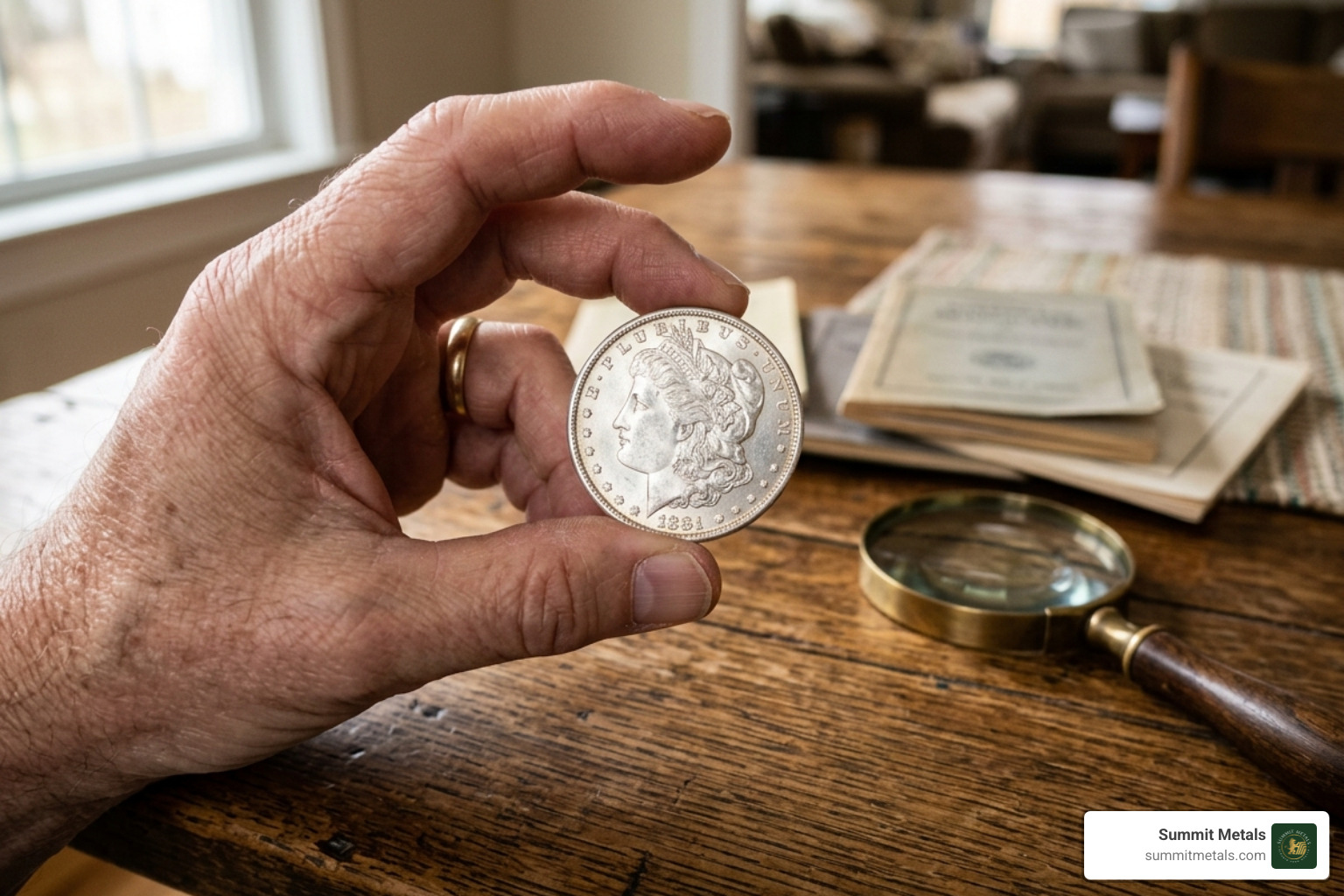
Selling silver dollar coins can mean the difference between walking away with $30 for a common worn piece - or thousands for a rare date in excellent condition. Here is a quick overview of the process:
- Identify your coin - type (Morgan, Peace, Eisenhower, American Silver Eagle), date, and mint mark
- Determine its value - calculate the silver melt value first, then check for numismatic (collector) premium
- Check condition - uncirculated coins command significantly higher prices than circulated ones
- Never clean your coins - cleaning can cut value by more than 50%
- Get multiple offers - compare local coin shops, online dealers, and specialized buyers
- Ask the right questions - will you be paid by weight or per coin? Does condition affect the offer? Are premiums paid for rare dates?
- Understand taxes - profits may be subject to capital gains tax, up to 28% for collectibles held over a year
Most silver dollars minted before 1936 carry at least some value above their silver content. A handful are worth far more. Knowing which category yours falls into before you sell is the single most important step you can take.
I'm Eric Roach, a former Wall Street investment banker and M&A advisor who has spent over a decade helping everyday investors build and protect wealth through precious metals. I guide clients on selling silver dollar coins as part of a broader exit strategy, often utilizing tools like Autoinvest to build positions and our Sell to Us program for seamless liquidation. That institutional experience shapes every insight in this guide, so you can approach your sale with the same discipline a seasoned investor would.
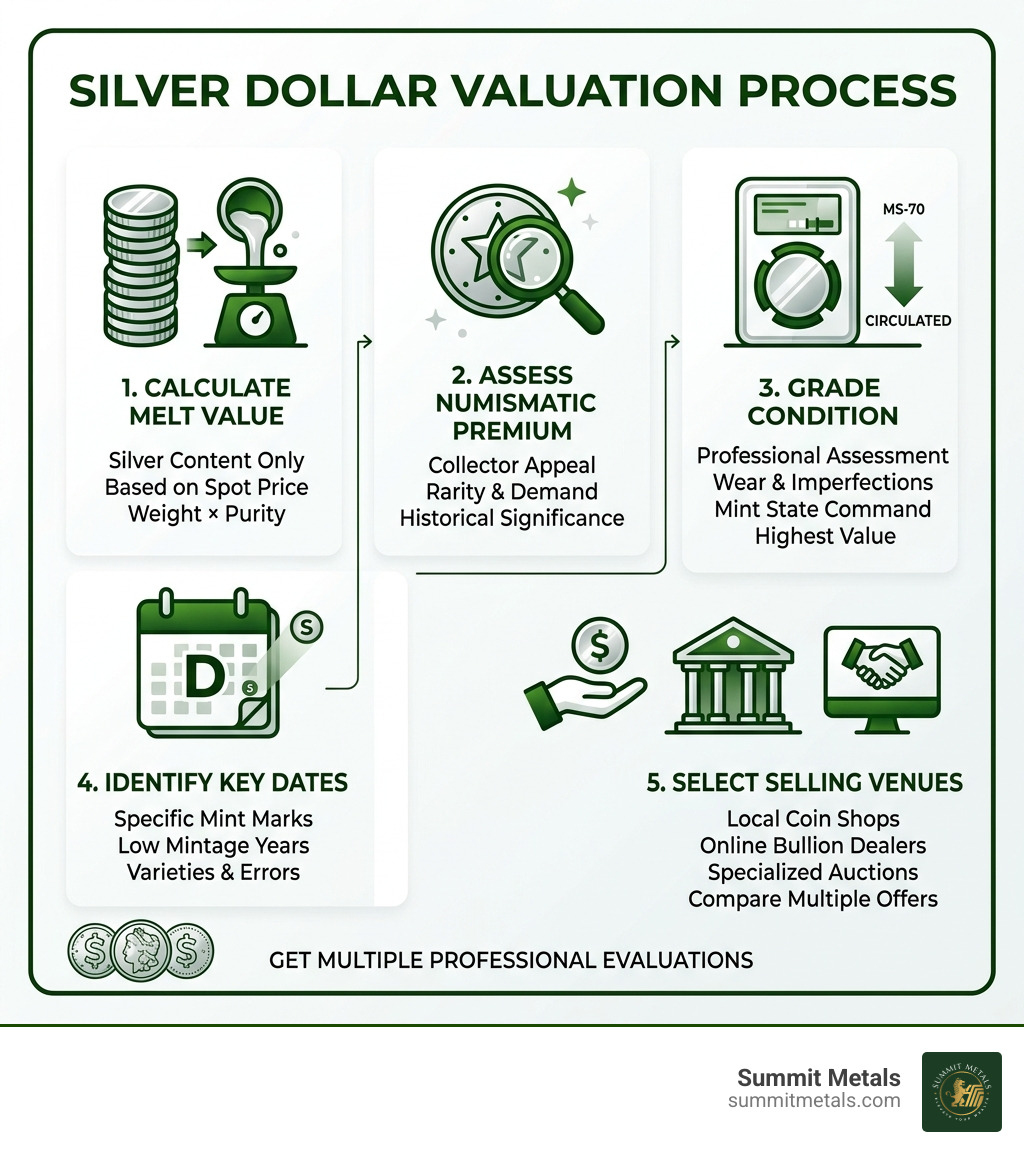
Simple selling silver dollar coins glossary:
Identifying Your Assets Before Selling Silver Dollar Coins
Before you walk into a shop or ship your collection, you need to know exactly what you have. Not all silver dollars are created equal. Some were meant for circulation in everyday commerce, while others were struck primarily for collectors and investors.
The Heavy Hitters: Morgan and Peace Dollars
The most common vintage coins you'll encounter are Morgan Dollars (1878-1921) and Peace Dollars (1921-1935).
- Morgan Dollars: These are the iconic coins featuring Lady Liberty on the front and an eagle on the back. Every Morgan dollar contains 0.7734 ounces of pure silver.
- Peace Dollars: Struck to commemorate the end of WWI, these feature a more Art Deco Liberty design. Like the Morgans, they contain 0.7734 ounces of silver.
The Tricky Ones: Eisenhower Dollars
Issued from 1971 to 1978, most "Ikes" found in circulation are copper-nickel and have no meaningful silver value. However, the U.S. Mint produced 40% silver versions for collectors (1971-1974 and 1976). To tell the difference, look for an "S" mint mark. If it has one, weigh it: a silver Eisenhower weighs 24.59 grams, while the copper-nickel version is lighter.
Modern Bullion: American Silver Eagles
Since 1986, the U.S. has minted the American Silver Eagle. These are 99.9% pure silver and contain exactly one troy ounce. While these are often sold for a premium over the spot price, certain years - like a 1994 BU (Brilliant Uncirculated) - can be worth significantly more if they are professionally certified.
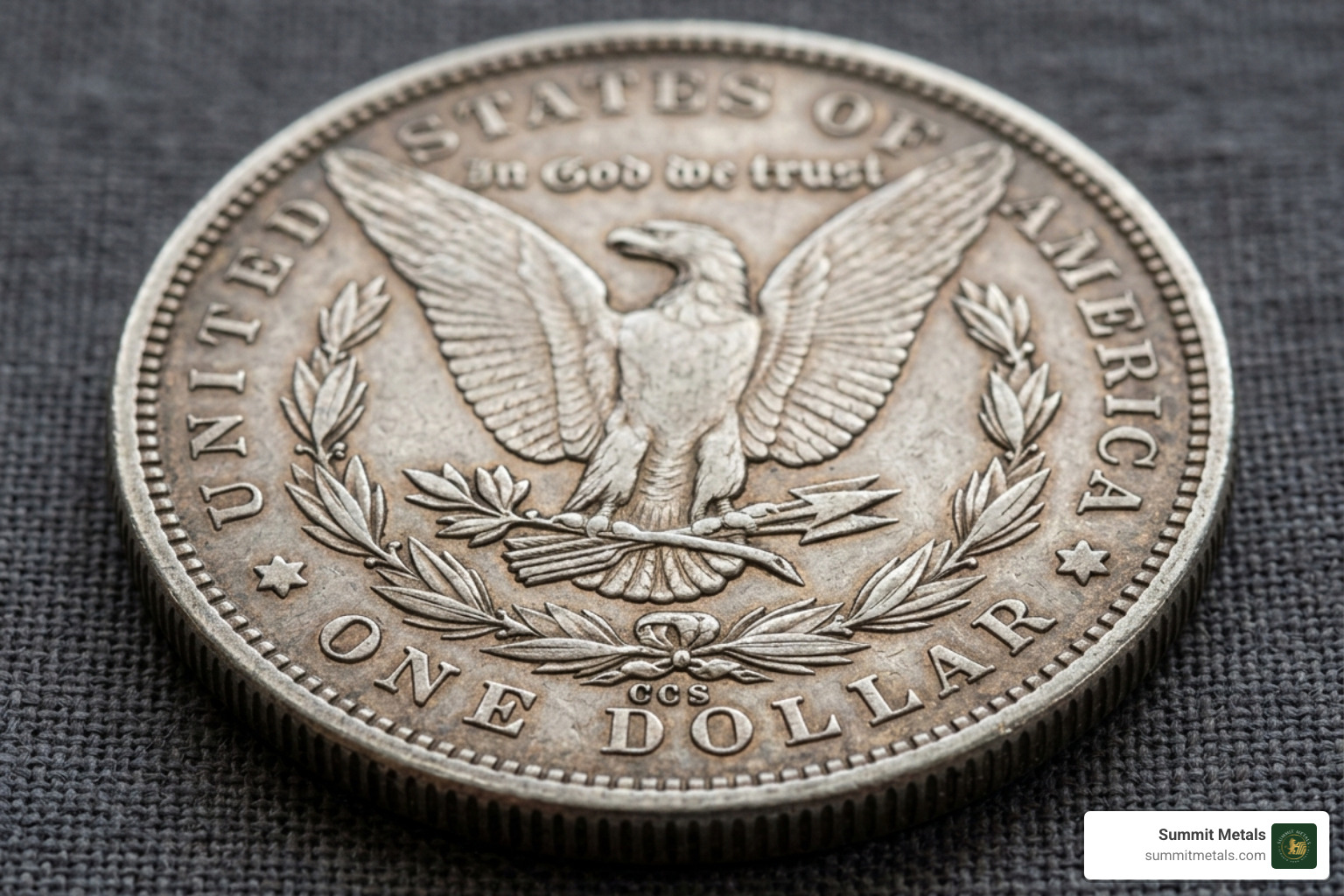
Mint Marks and Dates
The value of your coin often hinges on a tiny letter. For Morgan dollars, check the reverse side, just above the "D" and "O" in "DOLLAR."
- CC: Carson City (Highly desirable!)
- S: San Francisco
- O: New Orleans
- D: Denver
- No Mark: Philadelphia
Identifying these details is the first step in maximizing your profit when Selling Morgan Silver Dollars. If you find a "CC" mark or a date like 1893-S, you aren't just selling a coin; you are handling a piece of history that could be worth thousands.
Quick Comparison Chart: Common Silver Dollar Types
| Coin Type | Years | Silver Content | What Matters Most When Selling |
|---|---|---|---|
| Morgan Dollar | 1878-1921 | 0.7734 troy oz | Date, mint mark, condition, key dates |
| Peace Dollar | 1921-1935 | 0.7734 troy oz | Condition, better dates, eye appeal |
| Eisenhower Dollar (40% silver) | 1971-1974, 1976-S | 40% silver | Mint mark, weight, packaging, condition |
| American Silver Eagle | 1986-present | 1.0 troy oz | Bullion premium, year, certification |
If you are still building your holdings rather than selling immediately, Summit Metals' Autoinvest program lets you dollar-cost average by shopping with Summit Metals every month - similar in spirit to contributing to a 401k over time. That kind of disciplined accumulation can make your future exit strategy easier to manage.
Determining Value: Melt vs. Numismatic Premium
When selling silver dollar coins, you will hear two terms constantly: "melt value" and "numismatic value."
Melt Value is the raw value of the silver metal. If you took a common, heavily worn 1921 Morgan and valued it only for metal, the silver would be worth the current spot price multiplied by 0.7734. You can learn more about this in our guide on how to Sell Coins For Melt Value.
Numismatic Value is the collector premium. This is based on rarity, historical significance, and condition. For example, an 1893-S Morgan had a mintage of only 100,000 coins. Even in poor condition, it is worth thousands. In Mint State, it can exceed $1 million.
Comparison: Silver Coins vs. Silver Bars
Choosing between coins and bars often depends on your goals for liquidity, recognizability, and resale flexibility.
| Feature | Silver Dollar Coins | Silver Bars |
|---|---|---|
| Face Value | Yes (government-backed legal tender for many sovereign coins) | No |
| Liquidity | Extremely High | High |
| Fraud Resistance | High | Moderate |
| Legal Tender Status | Yes for sovereign coinage | No |
| Collector Premium | Often High | Usually None |
| Counterfeit Risk | Lower for widely recognized government coins | Higher than sovereign coins in many cases |
| Best For | Flexibility, resale options, collector upside | Low-premium bulk silver exposure |
As shown in the table, coins can offer advantages bars do not - especially when collector demand, easier recognition, and legal tender status matter. When you value or Sell Silver, silver dollars should be evaluated individually, not just tossed on a scale.
Comparison: Melt Value vs. Numismatic Value
| Factor | Melt Value | Numismatic Value |
|---|---|---|
| Based On | Silver content and spot price | Rarity, demand, condition, history |
| Applies Most To | Common, damaged, or bulk coins | Better dates, rare mint marks, high grades |
| Changes With | Metals market | Collector market and grading standards |
| Typical Buyer | Bullion buyer | Coin dealer or collector |
| Potential Upside | Limited to metal value | Can far exceed silver content |
If your goal is long-term wealth building before an eventual sale, a disciplined accumulation plan can help. Summit Metals' Autoinvest program allows investors to dollar-cost average by shopping with Summit Metals every month, much like contributing regularly to a 401k-style investment habit. And when it is time to liquidate, a defined exit strategy matters just as much as the entry point.
Where and How to Sell for Maximum Profit
Your exit strategy is just as important as your initial investment. You wouldn't sell a vintage Ferrari at a scrap yard, and you shouldn't sell rare silver dollars to a buyer who only pays for junk silver.
Professional Grading
If you suspect you have a high-value coin (like an 1895 Proof Morgan, of which only 880 were made), consider professional grading. Services like PCGS or NGC slab the coin in a protective case and assign it a grade. A 1994 American Silver Eagle might sell for $40 raw, but an MS-70 certified version has sold for up to $8,000.
Evaluating Your Options
- Local coin shops: Great for immediate cash and face-to-face service.
- Online dealers: Offer convenience and can be effective for bulk bullion, though shipping and insurance must be considered.
- Specialized auctions: Often the best venue for truly elite rarities.
Whether you are looking for a reputable dealer or an online platform, always check the Online Vs Local Where To Sell Silver dynamics to see which fits your timeline. For the Best Price, transparency is key.
Three Questions to Ask When Selling Silver Dollar Coins
Don't be afraid to question the buyer. A reputable dealer will welcome these questions:
- "Are you paying by weight or by the coin?" Silver dollars should almost always be evaluated by the coin. Paying strictly by weight can be a red flag that numismatic value is being ignored.
- "How does the condition affect your offer?" Uncirculated coins should command a premium, even for common dates.
- "Do you pay extra for key dates, and how do you determine that price?" They should be able to explain their pricing method and, when appropriate, reference recognized market guides.
Educating yourself is the best way to Sell Silver Coins Even If Youve Never Tried It Before.
Comparison Chart: Best Selling Venue by Coin Type
| Selling Venue | Best For | Pros | Cons |
|---|---|---|---|
| Local Dealer | Common silver dollars, small collections | Fast payment, in-person review | Offers vary by dealer |
| Online Dealer | Bullion-heavy lots, convenience | Broader market reach, simple process | Requires shipping and waiting |
| Auction House | Rare, certified, high-end coins | Best exposure for key dates | Fees and longer timelines |
| Summit Metals Sell to Us | Investors who want transparent pricing and a smooth liquidation path | Real-time pricing, competitive rates, exit-strategy focus | Best fit for sellers who want a professional precious-metals buyer |
Choosing the Right Venue for Selling Silver Dollar Coins
Avoid pawn shops if possible; they often lack the specialized knowledge to value rare coins correctly. For those with significant holdings, a Sell to Us strategy with Summit Metals helps ensure you are not just getting a quick offer, but a fair market rate based on transparent pricing.
If you've used private vault storage as part of your precious metals strategy, your liquidity can be even higher because chain of custody and verification are already established. This can simplify liquidation and reduce friction at the time of sale. That is a key part of a Complete Guide to Selling.
For investors still in accumulation mode, Autoinvest makes it easy to dollar-cost average by shopping with Summit Metals each month, similar to building a 401k-style habit. Then, when market conditions or personal goals change, your exit strategy is already in place.
Avoiding Common Pitfalls and Tax Implications
The biggest mistake we see? Cleaning. It is the cardinal sin of coin collecting.
The 50% Rule
Cleaning a coin with polish, baking soda, or even a soft cloth destroys the luster - the original mint frost. A cleaned coin is often valued as Cull or Damaged, which can strip 50% or more of its value instantly. Collectors want the original patina, even if it looks dark or toned.
Taxes and Records
In the eyes of the IRS, silver dollars are collectibles.
- Short-term: If you held the coin for less than a year, profit is taxed as regular income.
- Long-term: If held for over a year, the maximum capital gains rate is 28%.
Keeping meticulous records is vital. For more details, see our Practical Guide to Selling Tax Free (where applicable) and our general Sell Gold Silver Coins Guide.
Quick Decision Chart: What Not to Do Before Selling
| Mistake | Why It Hurts | Better Move |
|---|---|---|
| Cleaning the coin | Can destroy numismatic premium | Leave surfaces untouched |
| Selling by weight only | Rare dates may be undervalued | Have coins reviewed individually |
| Ignoring grading | High-end coins may sell too cheaply | Consider PCGS or NGC for valuable pieces |
| Poor record keeping | Makes taxes and cost basis harder to track | Save receipts, invoices, and notes |
| No exit strategy | Can lead to rushed sales | Plan liquidation options in advance |
A strong precious metals plan includes both accumulation and liquidation. Investors who use Summit Metals' Autoinvest program can build positions gradually by shopping monthly, much like a 401k-style investing rhythm. And with Sell to Us plus private vault storage considerations, you can think beyond buying and prepare for a smoother sale later.
Frequently Asked Questions about Silver Dollars
Should I clean my silver dollars before selling?
Absolutely not. As mentioned, cleaning removes the original surface of the metal and can devalue a rare coin by half. Leave them exactly as you found them.
How do I know if my Eisenhower dollar is actually silver?
Check the edge of the coin. If you see a solid silver color, it might be silver. If you see a copper stripe, it's a "clad" coin worth only one dollar. Also, look for the "S" mint mark and verify the weight is 24.59 grams.
What is the rarest silver dollar to look for?
The 1895 Philadelphia Morgan Dollar is often called the "King of Morgan Dollars" because only 880 proofs were struck and no circulation strikes are known to exist. Another "holy grail" is the 1893-S Morgan.
Conclusion
At Summit Metals, we believe that selling silver dollar coins should be as transparent as buying them. Whether you are liquidating a family heirloom or rotating your investment portfolio, our team in Salt Lake City is here to provide real-time, competitive rates.
If you aren't ready to sell yet, consider our Autoinvest program. Much like a 401k, it allows you to dollar-cost average into silver and gold every month by shopping with Summit Metals. This builds a "stack" that serves as a powerful hedge against inflation without requiring a massive upfront capital outlay. When the time comes to exit, our Sell to Us program ensures your assets remain liquid and your value is protected.
Ready to see what your collection is worth? Contact us today for a professional evaluation.