Introduction: Opening up the Value in Your Silver Coins
To sell silver coins effectively, you need to know what you have, where to sell, and how to avoid common pitfalls. Whether you inherited a collection, accumulated bullion, or found old coins in a drawer, you're likely sitting on real value that deserves fair compensation.
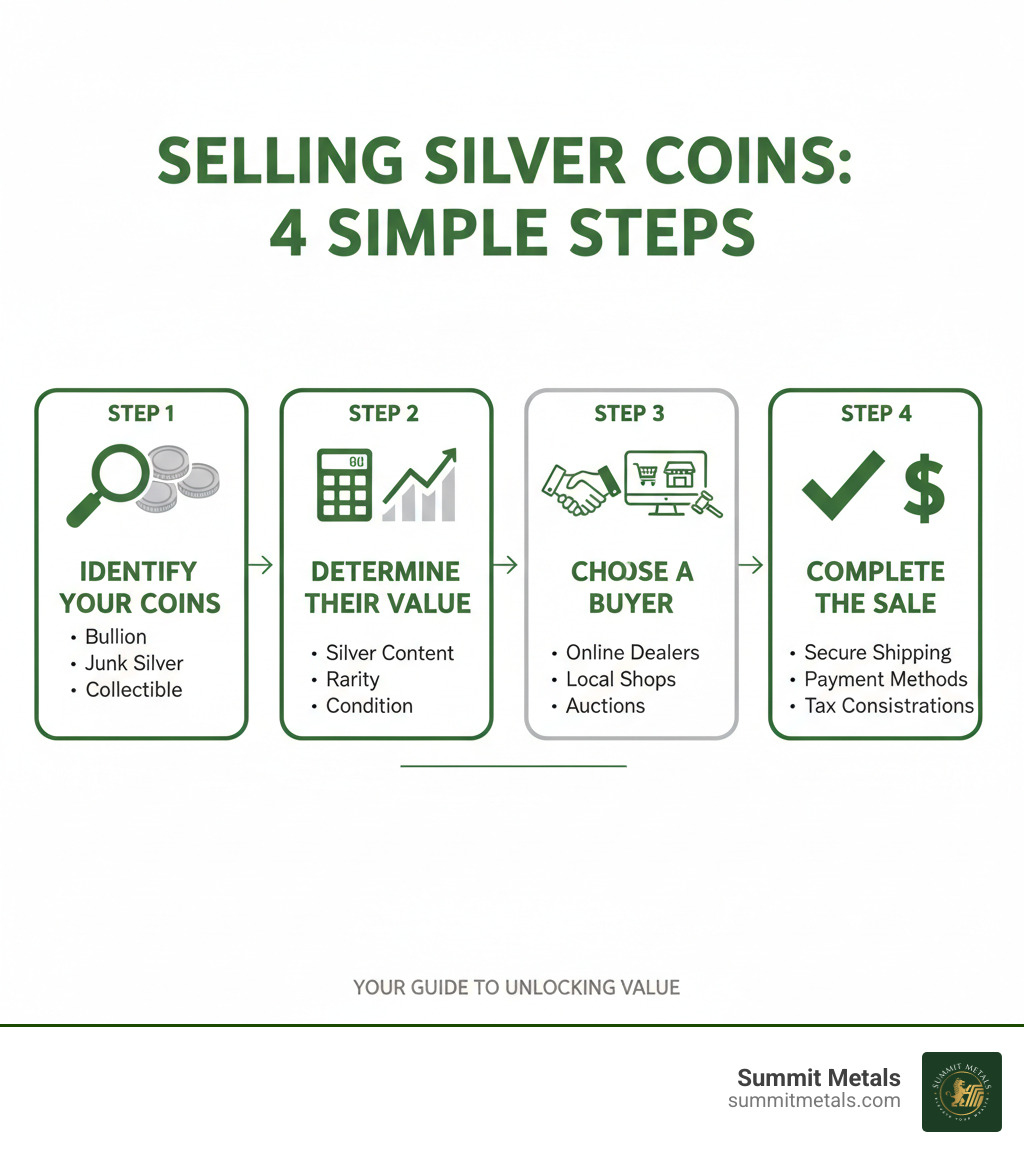
Quick Guide to Selling Silver Coins:
- Identify your coins – Determine if they're bullion, "junk silver," or collectibles.
- Assess their value – Check the current silver spot price and get appraisals for rare coins.
- Choose where to sell – Compare offers from online dealers, local coin shops, and auctions.
- Complete the transaction safely – Use insured shipping and understand tax requirements.
Common selling options:
| Method | Best For | Typical Timeline | Payment Speed |
|---|---|---|---|
| Online dealers | Larger quantities, competitive pricing | 3-7 days | 1-3 business days after receipt |
| Local coin shops | Immediate cash, smaller amounts | Same day | Instant |
| Auction sites | Rare collectibles, high numismatic value | 2-6 weeks | Varies |
The difference between a good sale and a great one often comes down to knowledge. Pre-1965 U.S. dimes, quarters, and half-dollars contain 90% silver and are valued by weight. Modern bullion like the American Silver Eagle contains 99.9% silver and trades close to the spot price. Collectible coins like Morgan Silver Dollars can command prices far above their silver content based on rarity and condition.
I'm Eric Roach. My decade on Wall Street guiding billion-dollar transactions taught me one thing: informed sellers get better outcomes. I now help everyday investors apply that same discipline to their precious metals decisions, ensuring you maximize value whether you're buying or selling.
Step 1: Identify and Understand Your Silver Coins
Before you can confidently sell silver coins, you need to know what you have. Some coins are valued for their metal content, while others are worth far more to collectors. Getting this right is the first step to a fair deal.
Types of Silver Coins You Can Sell
Silver coins generally fall into three categories. Understanding where your coins fit helps you set realistic expectations.
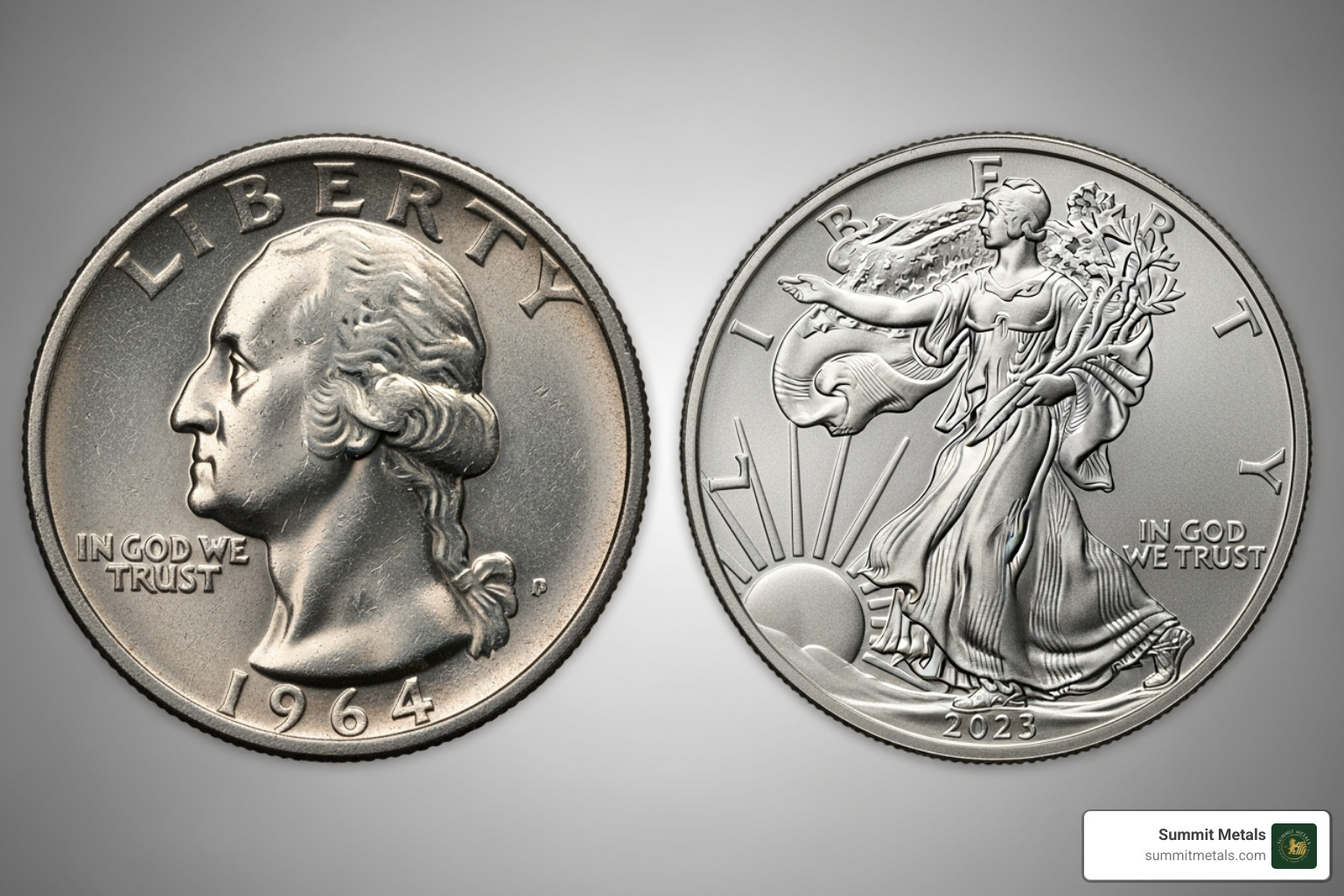
Bullion coins are modern coins minted for their precious metal content. Their value tracks the silver market. The American Silver Eagle is the most popular, containing 99.9% pure silver. Other examples include the Canadian Maple Leaf (.9999 fine) and coins from Austria, Britain, and Australia. These are simple investments that trade close to the spot price of silver.
Junk silver is a term for pre-1965 U.S. coins that contain silver but aren't rare. Every dime, quarter, and half-dollar minted before 1965 contains 90% silver. Half-dollars from 1965 to 1970 contain 40% silver. A notable exception is the "War Nickel" (1942-1945), which contains 35% silver.
Numismatic or collectible coins hold value beyond their silver content due to rarity, historical significance, and condition. Morgan Silver Dollars (1878-1921) and Peace Dollars (1921-1935) are classic examples. A common Morgan might sell near its silver value, but a rare date with a specific mint mark ('S' for San Francisco, 'CC' for Carson City) in pristine condition could be worth thousands.
How to tell if your silver coins are 'junk' silver or collectible
This distinction directly affects your payout. Treating a valuable collectible as common junk silver is a costly mistake.
Junk silver is valued almost entirely on its silver melt value, based on the current spot price and the coin's silver content. These are typically common-date, circulated coins with obvious wear.
Collectible coins command a numismatic premium that can dwarf their melt value. This premium is driven by scarcity (rarity, low mintage) and condition. A Morgan Dollar with $20 of silver might fetch $500 if it's a rare date in mint condition.
Here's a quick comparison:
| Feature | Junk Silver | Collectible Silver Coins |
|---|---|---|
| Key Characteristic | Common dates, circulated condition, pre-1965 US coinage | Rare dates, low mintage, unique varieties, excellent condition |
| Valuation Method | Based on silver melt value (spot price × silver content) | Numismatic value (rarity, condition, demand) + melt value |
| Common Examples | Pre-1965 Roosevelt Dimes, Washington Quarters, Franklin Half Dollars | Key date Morgan Dollars, high-grade Peace Dollars, specific mint error coins |
| Typical Purity | 90% (US coins pre-1965), 35% (War Nickels) | Varies, often 90% or 40% for older coins, 99.9% for modern numismatic issues |
When in doubt, a quick online search of the date and mint mark can reveal if you're holding something special. If you plan to reinvest proceeds from selling silver coins, consider Summit Metals' Autoinvest program. It lets you dollar-cost average into precious metals, building your investment steadily over time.
Step 2: Determining the Value of Your Collection
Now that you know your coin types, let's figure out what they're worth. Understanding the difference between silver content and collectible value is key to maximizing your return.
Key Factors That Influence Silver Coin Value
At Summit Metals, we evaluate every coin based on two main factors: its intrinsic metal worth and its collector appeal.
Silver Content (Melt Value) is the baseline value of the precious metal in your coin. It's determined by three things:
- Spot Price: The live market price of silver, which we track in real-time at Summit Metals.
- Purity: The percentage of silver in the coin. A pre-1965 U.S. quarter is 90% silver (.900), while a modern American Silver Eagle is 99.9% pure (.999).
- Weight: Silver is measured in troy ounces. A heavier coin contains more silver and has a higher melt value.
Numismatic Value is the premium collectors will pay above the melt value. This is driven by:
- Rarity: Coins with low mintage numbers are scarcer and more valuable.
- Condition: An "uncirculated" coin with sharp details and original luster can be worth many times more than the same coin with circulation wear.
- Mint Mark: A small letter ('S', 'D', 'P', 'CC') indicates where the coin was minted. Some mint marks are much rarer for certain years, creating significant value.
- Historical Demand: Coins like Morgan and Peace Dollars have sustained collector interest, which keeps their prices strong.
What is the best way to get an appraisal for my silver coins?
An accurate appraisal is crucial. Here’s how to get one.
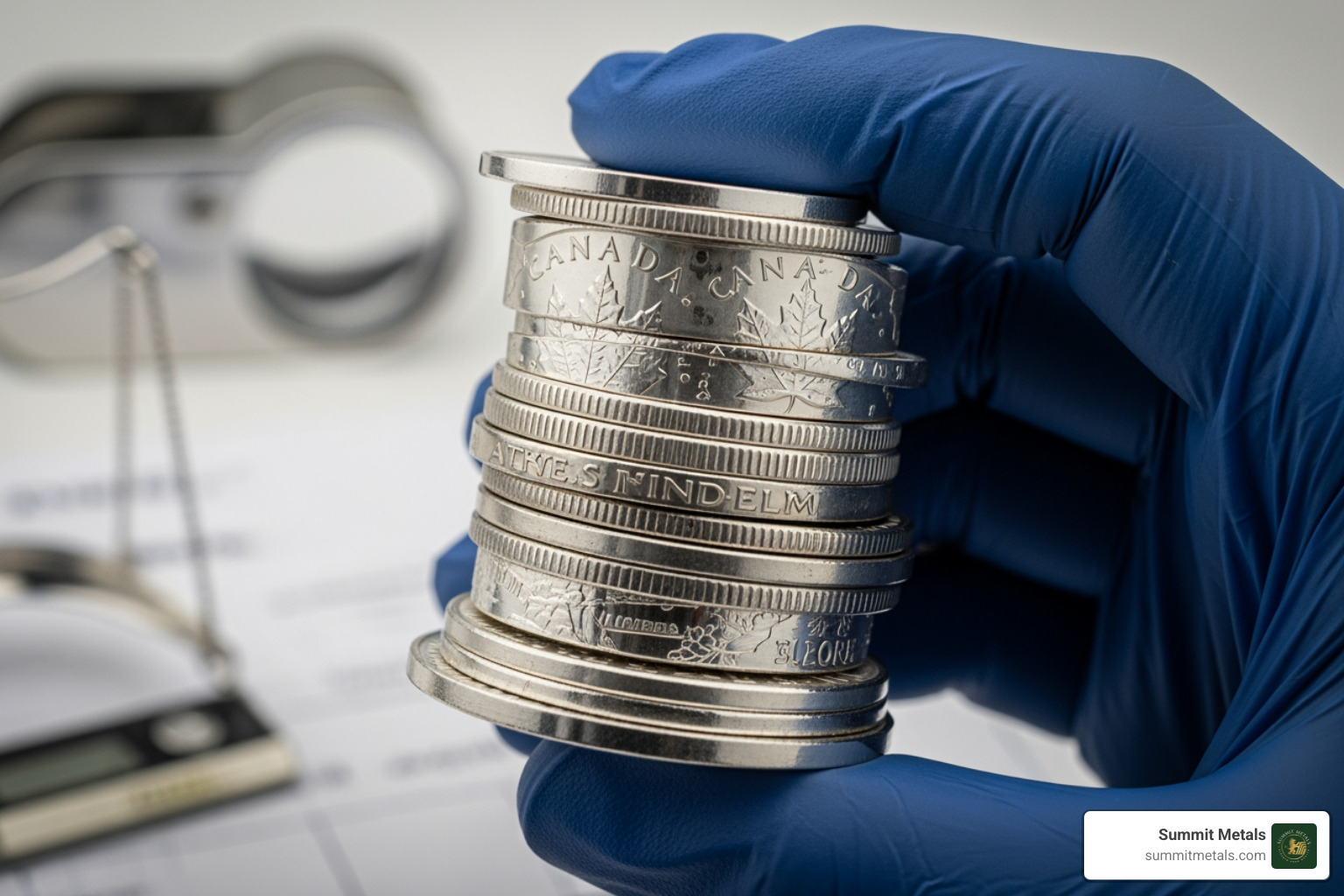
Self-Appraisal: Use online price guides from PCGS or NGC as a starting point. For a comprehensive reference, "A Guide Book of United States Coins" (The Official Red Book) is the industry standard, providing pricing across multiple grades for nearly every U.S. coin.
Professional Appraisals: For anything beyond common junk silver, a professional appraisal is essential. At Summit Metals, our experts evaluate both melt and numismatic value transparently. Other reputable dealers also offer this service; choose established businesses with trained numismatists.
Third-Party Grading: For potentially high-value coins, consider grading by the Numismatic Guaranty Corporation (NGC) or Professional Coin Grading Service (PCGS). They authenticate and grade your coin, sealing it in a protective holder. While there is a fee, a high grade from PCGS or NGC can dramatically increase a coin's market value.
Most importantly, get multiple offers. One dealer might focus on bullion and only offer melt value, while another may recognize a coin's numismatic potential and offer significantly more. Shopping your coins around isn't difficult—it's smart.
At Summit Metals, we believe in transparency. When you're ready, we provide clear, real-time valuations to help you make informed decisions.
Learn more about our transparent selling process
Step 3: Where and How to Sell Silver Coins for the Best Price
You've identified your coins and understand their value. Now it's time to sell. Your choice of where to sell silver coins can significantly impact your final payout.
Selling Silver Coins Online: Pros and Cons
The digital marketplace offers access to a national pool of buyers, which often works in your favor.
Pros: Online dealers like APMEX or JM Bullion often provide higher offers due to lower overhead and wider competition. The process is convenient, allowing you to get quotes and lock in prices from home, sometimes 24/7. You also get wider market access, which is ideal for rare coins that might attract collectors from across the country.
Cons: You must handle shipping logistics, which includes packaging and insuring your valuables. Payment isn't instant; it typically takes 1-3 business days after the dealer receives and authenticates your coins. Above all, you must vet your dealer carefully by checking BBB ratings and customer reviews to avoid scams.
| Factor | Online Selling | Local Selling |
|---|---|---|
| Price | Often higher, competitive due to lower overheads and wider market | Can be lower, especially for collectibles, as local shops may focus on melt value |
| Convenience | Sell from home, 24/7 price locking, national reach | Immediate transaction, no shipping, face-to-face interaction |
| Speed | Prices locked instantly, but payment 1-3 days after authentication/receipt | Instant cash payment or immediate trade |
| Security | Insured shipping, secure online platforms, but shipping risk | In-person verification, no shipping risk, but cash handling |
Selling Silver Coins Locally: Pros and Cons
For those who prefer a straightforward, in-person transaction, local selling is a great option.
Pros: The biggest advantage is instant payment. You can walk in with your coins and walk out with cash. There are no shipping hassles or anxieties. The in-person interaction also allows you to ask questions and gauge the buyer's expertise, providing peace of mind.
Cons: Offers are often lower because local shops have higher operating costs and a smaller customer base. Depending on your location (we're based in Wyoming and know how limited options can be), you may have few buyers to choose from. A major risk is that many local dealers, especially pawn shops or "We Buy Gold" stores, will only pay melt value, even for coins with significant numismatic premiums, potentially costing you hundreds or thousands of dollars.
Your local options include dedicated coin shops (your best bet), pawn shops (convenient but low offers), and refineries (good for bulk junk silver). Always get multiple quotes before committing to a sale.
If maximizing your return is the priority, online dealers typically offer better prices. If you need cash today and have common bullion or junk silver, a reputable local shop may be perfect.
At Summit Metals, we've built our business on transparent, real-time pricing. We believe you deserve to know exactly what your silver is worth, putting you in control of the sale.
Step 4: Ensuring a Safe and Successful Transaction
You've done the research and chosen a buyer. This final step is about completing the sale safely and getting paid fairly. Attention to detail here protects your investment.
How to Protect Yourself from Scams When Selling Silver Coins Online
When you sell silver coins online, trust but verify. Here’s how to protect yourself.
- Vet Your Buyer: Check the company's Better Business Bureau (BBB) rating. Read customer reviews on independent sites like Google. Ensure the dealer's website is secure (starts with "https://").
- Use Safe Shipping Practices: Always use tracking and insurance. Double-box your shipment for protection and use plain, unmarked packaging to avoid advertising the contents.
- Document Everything: Take detailed photos or video of your coins and the packing process. Follow the dealer's shipping instructions exactly to ensure your insurance remains valid.
- Recognize Red Flags: Be wary of high-pressure tactics, offers that seem too good to be true, or a buyer's refusal to provide a written quote before you ship.
Check a business's reputation on the BBB
The Selling Process: What to Expect
Understanding the typical process reduces anxiety. Here’s what generally happens when you sell to a reputable dealer like Summit Metals.
- Get a Quote: Provide clear photos and a description of your coins (type, quantity, condition).
- Lock In Your Price: Based on your information and the live market, the dealer will provide a quote. Reputable dealers let you lock in the price, protecting you from market drops while your coins are in transit.
- Ship and Authenticate: You ship your coins. Upon arrival, the dealer authenticates them, which typically takes 1-3 business days.
- Get Paid: After authentication, payment is issued. Common options include ACH direct deposit (1-2 days), a bank wire (often same-day, sometimes for a fee), or a mailed check (slower).
The entire timeline, from package arrival to payment, is usually 4-5 business days.
Are there any tax implications when selling silver coins?
Yes, selling silver can have tax implications. It's important to be prepared.
- Capital Gains Tax: If you sell silver for more than you paid, the profit may be subject to capital gains tax. The IRS classifies precious metals as "collectibles," meaning long-term gains (on assets held over a year) can be taxed at a rate of up to 28%.
- Reporting Requirements: Dealers are required to file a Form 1099-B with the IRS for certain transactions. Reportable sales include, for example, any combination of 90% silver U.S. coins with a face value over $1,000.
- Consult a Professional: Tax laws are complex. We always recommend consulting a qualified tax professional for advice specific to your situation.
For a deeper dive into selling precious metals and navigating taxes, explore our comprehensive guide.
Read our guide on selling precious metals
Frequently Asked Questions about Selling Silver Coins
Here are answers to some common inquiries you might have as you prepare to sell silver coins.
Is now a good time to sell my silver coins?
Timing the market is notoriously difficult. The "best time" to sell often depends more on your personal goals than on market predictions.
- Consider Current Spot Prices: If you hold bullion or junk silver, the current spot price is a major factor. Track market trends to see if they align with your price target.
- Evaluate Your Financial Goals: Are you selling to fund another investment, cover an expense, or rebalance your portfolio? Your personal financial needs are the most important driver.
- Numismatic Value: For collectible coins, value is less tied to daily market swings. Collector demand and rarity are more significant factors.
If the current price meets your financial objectives, it might be the right time for you to sell.
What's the difference between a silver coin and a silver round?
This is an important distinction for valuation.
Silver Coin: Issued by a sovereign government (e.g., U.S. Mint), has a legal tender face value, and features designs protected by law. This government backing often gives them a slightly higher premium and recognition.
Silver Round: Produced by a private mint, has no face value, and is not legal tender. Its value is based almost entirely on its silver content and the mint's reputation.
Similarly, a distinction exists between gold coins and bars:
| Feature | Gold Coin | Gold Bar |
|---|---|---|
| Issuing Authority | Government mints | Government or private mints/refiners |
| Legal Tender | Yes, with a symbolic face value | No |
| Fraud Protection | Government backing offers a layer of protection | Relies on refiner reputation and assay certificates |
| Premiums | Generally higher due to design and collectibility | Generally lower, closer to spot price |
| Liquidity | Highly liquid and recognized globally | Highly liquid, but may require verification |
Summit Metals deals exclusively in authenticated gold and silver precious metals, ensuring you receive genuine, high-quality products.
How much do dealers pay for silver coins?
Dealers operate on a "bid" vs. "ask" price spread. They buy from you at their "bid" price and sell to customers at their "ask" price. The bid price will always be lower than the spot price to cover their business costs and margin.
- Junk Silver: The offer will be very close to the melt value, with a small discount for the dealer.
- Bullion Coins: The offer will be slightly below the spot price, but typically with a better payout than junk silver due to higher purity and liquidity.
- Collectible Coins: The offer will incorporate both the melt value and a numismatic premium, which varies based on the coin's rarity, condition, and market demand.
Always compare offers from multiple reputable dealers to ensure you're getting a competitive price for your silver coins.
Conclusion: From Seller to Savvy Investor
You now have the knowledge to confidently sell silver coins and get the best possible return. By identifying what you have, understanding its true value, and choosing a reputable buyer, you are making informed decisions about your assets.
Selling your silver doesn't have to be the end of your precious metals journey. You've now freed up capital that can work for you in new ways.
Consider reinvesting your profits strategically. A smart approach is dollar-cost averaging through an Autoinvest program. Just like a 401(k), you can set up automatic purchases of gold or silver at regular intervals. This method helps you build wealth steadily by smoothing out market fluctuations, rather than trying to time the perfect moment to buy.
At Summit Metals, we're here for both sides of your investment journey. We provide transparent, real-time pricing and competitive rates whether you're buying or selling. Our Wyoming-based team is committed to ensuring trust and value for every investor. We don't use hidden fees or shifting prices—what you see is what you get.
Ready to turn your silver into cash? Or perhaps reinvest those proceeds into a strategic precious metals plan?
Get a competitive offer for your silver today!
Explore our Autoinvest options to grow your investment
Your financial future is in your hands, and we're here to help you make the most of it.