Introduction: Open uping the Value in Your Old Silver Dollars
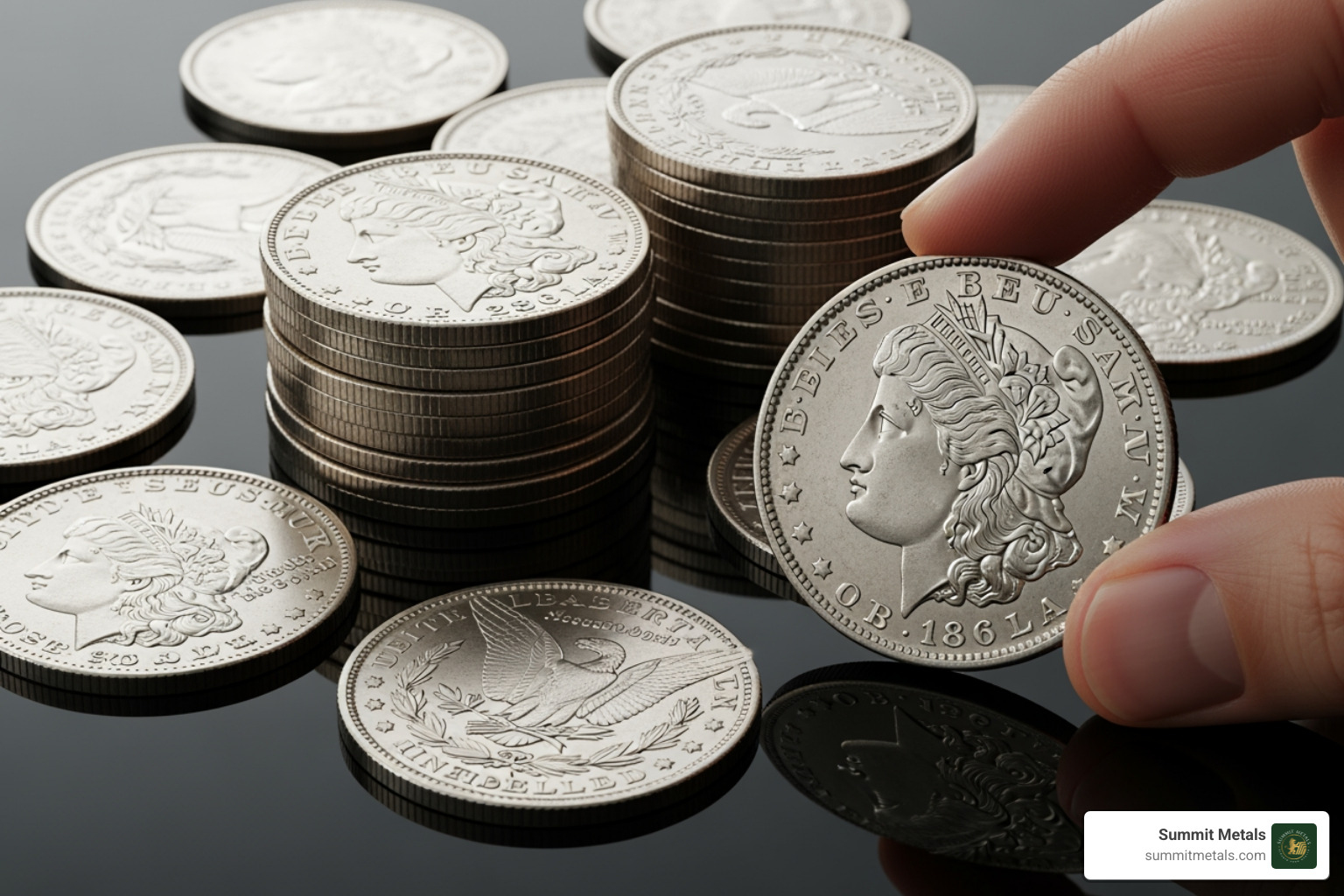
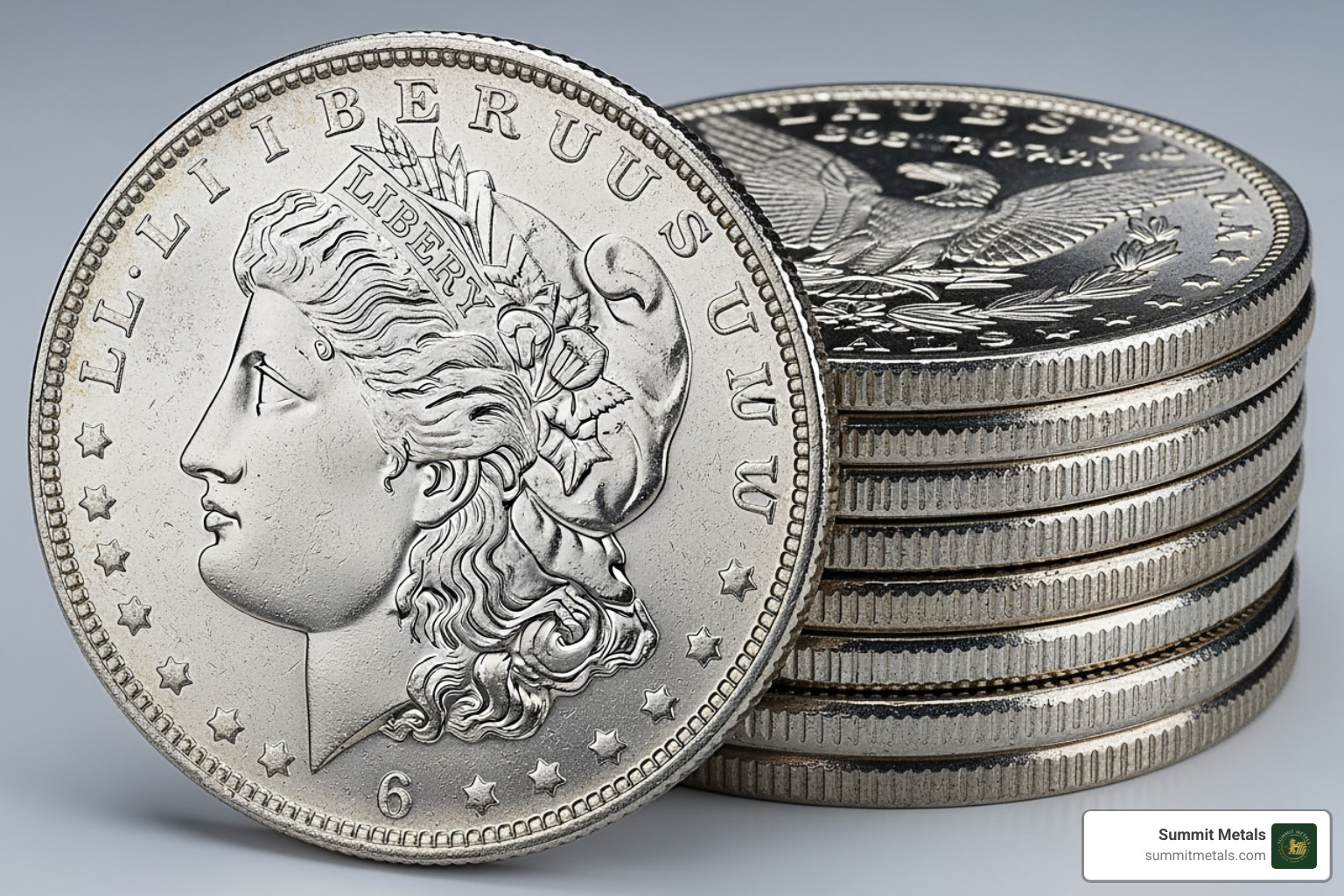
To sell Morgan silver dollars successfully, you need to identify your coin's date and mint mark, assess its condition, determine its rarity, and choose a reputable buyer. Following these steps can mean the difference between getting $30 for a common, worn coin and over $1 million for a pristine rarity like an 1893-S.
These iconic coins—struck from 1878 to 1904 and again in 1921—contain 0.7734 ounces of pure silver. However, their true value often comes from a numismatic premium based on three factors: date and mint mark, condition (grade), and rarity. A heavily worn 1921 Morgan might trade near its silver melt value, while a rare Carson City ("CC") issue in Mint State can command thousands. For high-value pieces, professional grading by services like PCGS and NGC is essential.
While many Morgan Dollars were minted in the millions, some are exceptionally scarce. The 1893-S had a mintage of only 100,000, and the 1895 Philadelphia issue was a proof-only release of just 880 coins. Every "CC" mint mark from the famed Carson City Mint carries a premium tied to its Old West heritage.
Whether you inherited a collection or found a single coin, understanding its value is the first step. As Eric Roach, I apply my decade of experience in investment banking to help individuals sell Morgan silver dollars and other precious metals. My focus is on the same disciplined, transparent approach used in high-finance, ensuring you maximize the value of your coins.
Sell Morgan silver dollars terms to know:
Step 1: Identify and Grade Your Morgan Dollars
So, you've got a Morgan silver dollar in your hand. Maybe it's a family heirloom, or perhaps you just picked it up at a flea market. Before you think about how to sell Morgan silver dollars, the first step is to understand what exactly you have. This involves identifying its key features and assessing its condition.
What Determines a Morgan Dollar's Value?
The value of a Morgan silver dollar is a blend of its intrinsic metal content and its numismatic (collector) value.
Every Morgan dollar contains .7734 ounces of pure silver, giving it a base "melt value" tied to the current spot price of silver. You can track this value on resources like the NGC Coin Melt Value Guide. However, for most Morgans, the collector value far exceeds the melt value. This premium is driven by:
- Rarity: How many were minted and how many survive today.
- Date and Mint Mark: Certain years and mint locations are much scarcer than others.
- Condition/Grade: This is the most critical factor, as a common coin in pristine condition can be worth hundreds.
This dual value is a key benefit of collectible coins over generic silver bars. While both offer exposure to silver, a coin like the Morgan dollar has a numismatic premium and a face value that can protect its worth beyond just the metal content, making it a more resilient asset.
How to Find the Date and Mint Mark
Identifying the date and mint mark on your Morgan silver dollar is your first detective task. It's usually straightforward, but knowing exactly where to look is key.
The date is prominently displayed on the obverse (front) of the coin, below Lady Liberty's portrait.
The mint mark, indicating which U.S. Mint facility produced the coin, is located on the reverse (back) side of the coin, specifically below the eagle and above the "DOLLAR" inscription.
Here's a quick guide to the mint marks you might find:
- No mint mark: Minted in Philadelphia.
- "CC": The highly coveted mark of the Carson City Mint.
- "S": Struck at the San Francisco Mint.
- "O": From the New Orleans Mint.
- "D": From the Denver Mint (only used in 1921 for Morgans).
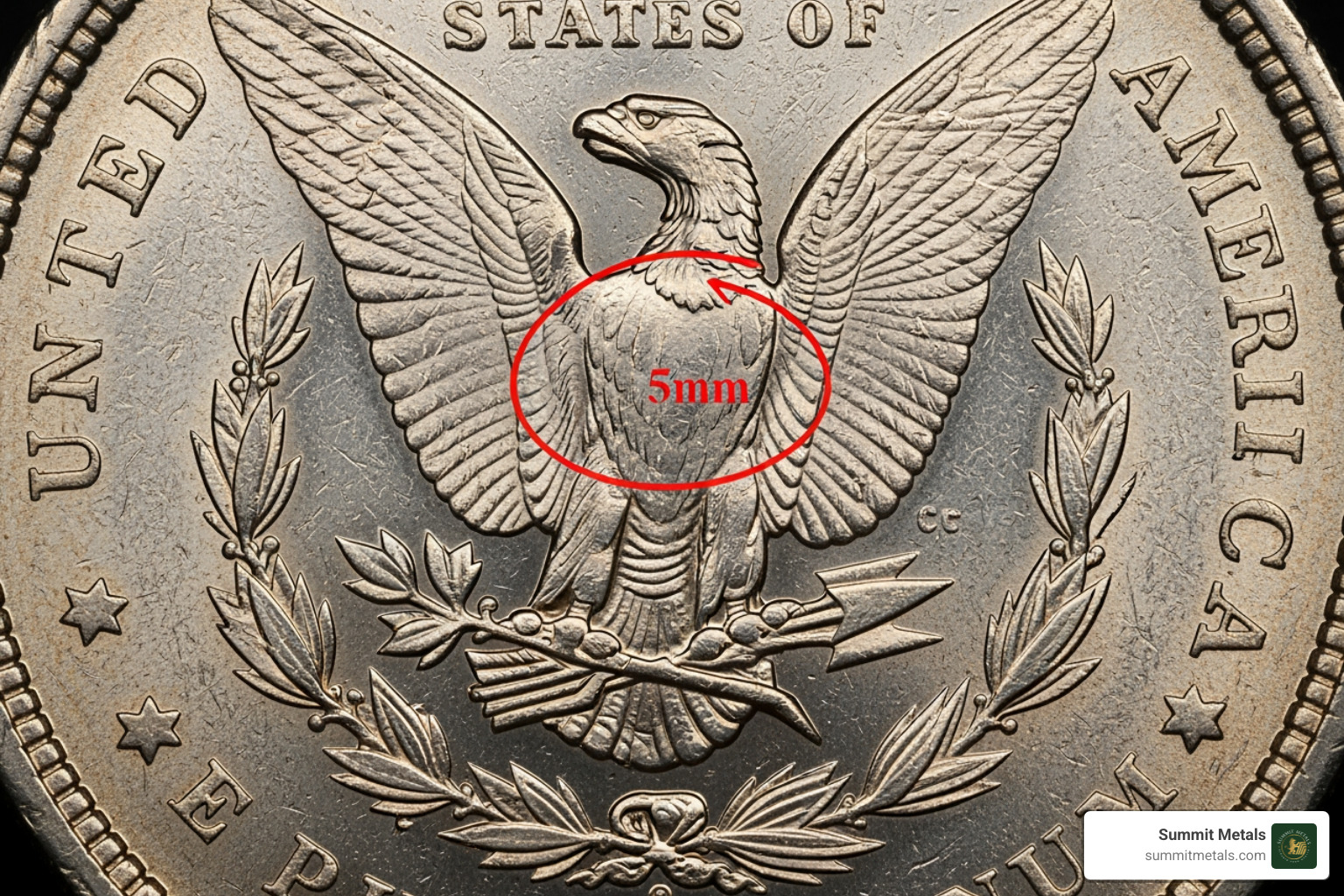
You can learn more about U.S. Mint locations and their markings from official sources like the U.S. Mint website. Knowing your coin's date and mint mark is the crucial first step in determining its potential value before you sell Morgan silver dollars.
Understanding Coin Condition and Grading
Once you've identified the date and mint mark, the next critical step is to assess your coin's condition, or "grade." A slight difference in wear can mean hundreds or even thousands of dollars. While professional grading uses a 70-point scale, you can get a good idea using these broader categories:
- Cull/Worn: Heavily damaged or so worn that details are gone. Value is typically just its silver melt value.
- Very Good (VG) to Fine (F): Significant wear is present, but major design elements are visible. Liberty's hair and the eagle's feathers are mostly flat.
- Extra Fine (XF): Light wear on the highest points of the design. Most details are clear.
- Almost Uncirculated (AU): Only a trace of wear is visible on the highest points, with much of the original mint luster present.
- Uncirculated (Mint State - MS): No signs of wear. May have small nicks ("bag marks") from storage. MS grades (MS-60 to MS-70) indicate a coin that never circulated, with higher numbers signifying better preservation.

For high-value Morgan dollars, professional grading by third-party services like PCGS (Professional Coin Grading Service) or NGC (Numismatic Guaranty Company) is highly recommended. They authenticate, grade, and encapsulate the coin, which provides confidence to buyers and maximizes its resale value. You can explore their extensive price guides, such as the PCGS Morgan Dollar Values, to see how condition dramatically impacts pricing.
From Common Coins to Rare Treasures: What's Your Morgan Worth?
Now that you know how to identify and assess the condition of your Morgan dollar, let's dive into the exciting part: understanding its potential rarity and value. Not all Morgan dollars are created equal, and recognizing the difference between a common coin and a true treasure is key to a successful sale.
Common Dates vs. Key Dates and Rarities
The Morgan dollar series spans from 1878 to 1904, with a final year in 1921. Many dates, especially the 1921 issues from Philadelphia, Denver, and San Francisco, were minted in massive quantities and are considered common. A worn 1921 Morgan might trade close to its melt value, but an uncirculated example still commands a premium.
Key Dates and Rarities are the coins collectors dream of finding. Their value is driven by low mintages or low survival rates in high grades ("condition rarities").
Here are some of the most sought-after Key Dates and Varieties to look for:
- 1895-P (Proof): The "King of Morgan Dollars," with only 880 proofs minted. The rarest and most valuable in the series.
- 1893-S: The rarest circulation strike, with only 100,000 made. Mint State examples are exceedingly rare and valuable. You can learn more about this specific rarity on the PCGS 1893-S Silver Dollar page.
- 1889-CC: The key date of the coveted Carson City series, with top-condition coins valued near $1 million.
- 1884-S: A "condition rarity." Common in worn grades but extremely rare and valuable in uncirculated condition.
- 1879-CC: A popular and scarce Carson City issue, prized by collectors.
- 1878 8-Tail Feathers: An early design error that was quickly corrected, making it a sought-after variety.
Another important piece of Morgan history is the GSA Hoard. In the 1960s, the U.S. Treasury finded millions of uncirculated silver dollars, many from the Carson City Mint. These were sold in special government holders and are highly desirable today.
The Carson City (CC) Premium and Other Valuable Mints
If your Morgan dollar has a "CC" mint mark, you're holding a piece of Wild West history. The Carson City Mint had a short operational life, and its coins are highly coveted due to lower production numbers. The rarest Carson City dates are 1885-CC, 1889-CC, and 1893-CC.
While Carson City holds a special place, other mints also produced valuable Morgan dollars:
- San Francisco (S) Mint: Produced some of the series' greatest rarities, including the 1893-S. Other dates like the 1894-S and 1896-S also command substantial premiums in high grades.
- New Orleans (O) Mint: While many "O" mints are common, dates like the 1893-O and 1895-O are scarce due to low mintages and are highly valued by collectors.
- Philadelphia (no mint mark): As the main mint, it produced the most coins. Most are common, but key dates like the 1893, 1894, and the proof-only 1895 are exceptionally rare.
- Denver (D) Mint: Only produced Morgan dollars in 1921. These are common, but uncirculated examples still fetch a premium.
Understanding these distinctions is crucial for valuing your coin. Always consult updated price guides from reputable sources like PCGS or NGC for the most accurate market values.
How to Sell Morgan Silver Dollars for the Best Price
You've identified your Morgan dollar, assessed its grade, and researched its potential value. Now comes the exciting part: turning that silver beauty into cash. Knowing where and how to sell Morgan silver dollars can make a significant difference in the price you receive.
Where to Sell Morgan Silver Dollars: Pros and Cons
Choosing the right venue to sell your Morgan dollars depends on the coin's value, how quickly you need cash, and your comfort level with different selling environments.
Here's a comparison of common selling options:
| Selling Option | Speed | Price Potential | Convenience | Pros | Cons |
|---|---|---|---|---|---|
| Local Coin Shops | Fast, often immediate cash | Fair, but typically below retail for dealer profit | High – walk-in, local (e.g., Summit Metals in Utah) | Immediate payment, expert appraisal, personal service, safe. | May not offer highest price for rare items, limited market reach. |
| Online Dealers | Moderate – mail-in, appraisal, payment | Good – competitive, wider market reach | Moderate – requires shipping, online communication | Access to national buyers, often offer competitive rates. | Shipping risks, potential for lower offers if uncertified. |
| Auction Houses | Slow – consignment, auction schedule, payment | Highest for rare/graded coins | Low – lengthy process, fees, specialized knowledge | Maximize value for rare coins, broad collector exposure. | High commissions, long wait times, no guarantee of sale price. |
| Online Marketplaces | Moderate – listing, shipping, payment | Varies widely – can be high for sought-after items | High – DIY listing, direct to collector | Direct access to collectors, potentially higher prices. | High fees, fraud risk, requires good photos/descriptions, shipping. |
| Pawn Shops | Very Fast, immediate cash | Lowest – focus on melt value, high-interest loans | High – quick process, no expertise needed | Quickest cash, no questions asked. | Rarely offer fair numismatic value, last resort for sellers. |
For those in Utah, Summit Metals offers a trusted local option. We pride ourselves on transparent pricing and a straightforward selling process for your precious metals, including Morgan silver dollars. You can learn more about how to sell to us.
For exceptionally rare and high-value coins that have been professionally graded, major auction houses can be a viable option. They provide access to a global market of serious collectors but involve high commissions and a lengthy process.
How to Choose a Reputable Buyer
Regardless of the selling venue you choose, selecting a reputable buyer is paramount to ensure you get a fair price and a secure transaction. Here’s what to look for:
- Transparent Pricing: A good buyer will be clear about how they determine their offer. At Summit Metals, we believe in transparent, real-time pricing.
- Positive Reviews and Reputation: Check online reviews and testimonials for a long-standing history in the business.
- Professional Affiliations: Membership in organizations like the American Numismatic Association (ANA) indicates adherence to ethical standards.
- Clear Selling Process: The buyer should clearly explain their appraisal, offer, and payment process with no hidden fees.
- Fair Appraisal: A good buyer will explain why they are offering a certain price based on your coin's full numismatic value.
- No Pressure Tactics: Avoid anyone who pressures you into an immediate sale or discourages you from getting multiple offers.
If you're in Salt Lake City or the surrounding Utah area, we invite you to bring your coins into Summit Metals. Our numismatic professionals are happy to examine your coins and provide a fair, no-pressure offer.
Common Mistakes to Avoid When You sell morgan silver dollars
When you decide to sell Morgan silver dollars, a few common pitfalls can significantly reduce your return. Avoid these mistakes to maximize your payout:
- Never Clean Your Coins: This is the golden rule. Cleaning or polishing a coin destroys its natural patina and numismatic value, reducing it to its silver melt value.
- Selling for Melt Value Without Research: A rare or high-grade coin is worth far more than its silver content. Always get a professional appraisal before accepting a melt-based offer.
- Not Getting Multiple Offers: Get appraisals from several reputable dealers to understand the market value and ensure you receive a competitive price.
- Selling Uncertified High-Value Coins: For potentially valuable coins, professional grading by PCGS or NGC can significantly increase the final selling price by providing trust and liquidity.
- Improper Shipping/Insurance: When selling online, always use secure, insured shipping to protect against loss or damage.
Beyond Selling: Investing in Silver Dollars
While this guide focuses on how to sell Morgan silver dollars for immediate cash, it's worth considering their role in a broader investment strategy. For many, Morgan dollars aren't just historical artifacts; they're tangible assets with enduring value.
Morgan Dollars vs. Other Silver Investments
When you invest in silver, you have various options. Collectible coins like Morgan and Peace Dollars offer a unique blend of silver value and numismatic potential. Modern bullion coins and bars are prized for their low premiums and direct exposure to the silver market.
Here is a comparison to help you decide:
| Feature | Collectible Coins (e.g., Morgan Dollars) | Silver Bars/Bullion Coins |
|---|---|---|
| Value Basis | Silver content + Numismatic (collector) value | Primarily silver content |
| Premium | Higher premium over spot price | Lower premium over spot price |
| Upside Potential | Rarity and condition can drive value up, independent of silver price | Value is tied directly to the silver market |
| Protection | Numismatic value and face value can offer a buffer against market dips | No protection beyond the metal's value |
- Peace Dollars: The successor to the Morgan, also containing .7734 oz of silver. They have their own key dates and collector base, though Morgans are generally more popular.
- American Silver Eagles: Modern bullion coins with one troy ounce of .999 fine silver. Their value is tied closely to the spot price, making them excellent for pure silver exposure.
- Silver Bars: The most cost-effective way to acquire physical silver by weight, with the lowest premiums over spot price.
For more comprehensive information on precious metals investing, including gold and silver, we encourage you to visit our blog post: More info about selling gold and silver.
Building a Silver Portfolio with Dollar-Cost Averaging
For those looking to build a long-term position in precious metals, dollar-cost averaging is a powerful and disciplined strategy. It involves investing a fixed amount of money at regular intervals, regardless of the asset's price.
This approach helps mitigate market volatility by averaging your purchase price over time. You buy more ounces when prices are low and fewer when they are high, removing the emotion and risk of trying to "time the market." It's a proven method for steadily accumulating wealth, much like contributing to a 401k.
At Summit Metals, we make this easy with our Autoinvest program. You can set up automatic, recurring monthly purchases of your chosen silver or gold products, allowing you to build your precious metals portfolio consistently and affordably. It’s a smart, “set it and forget it” way to invest in your future. Learn more about how our Autopay service can help you build your precious metals portfolio: Learn about our Autopay service.
Conclusion: Cashing In or Investing for the Future
Whether you're looking to sell Morgan silver dollars for immediate cash or considering them as a long-term investment, understanding their true value is your most powerful tool. We've walked through the essential steps: identifying your coin's date and mint mark, accurately assessing its condition, and recognizing the critical difference between common dates and rare treasures.
Morgan silver dollars are more than just old coins; they are tangible pieces of American history, each carrying stories from the nation's industrial boom and westward expansion. Their intrinsic silver content provides a solid foundation of value, while their numismatic appeal can open up significant premiums for collectors.
At Summit Metals, based in Utah, we are dedicated to being your trusted partner in precious metals. We offer transparent pricing, competitive rates, and expert guidance whether you're looking to sell your treasured Morgan dollars or build a diversified portfolio through our Autoinvest program. Our goal is to ensure you receive fair value and experience a seamless, secure transaction.
Ready to explore the value of your Morgan silver dollars or discuss your precious metals investment options? We're here to help. Sell Your Morgan Dollars to Us or visit our main site to learn more about how we can serve your needs: Summit Metals. We look forward to working with you.