What Coin Shops Actually Pay for Junk Silver (And How to Get More)
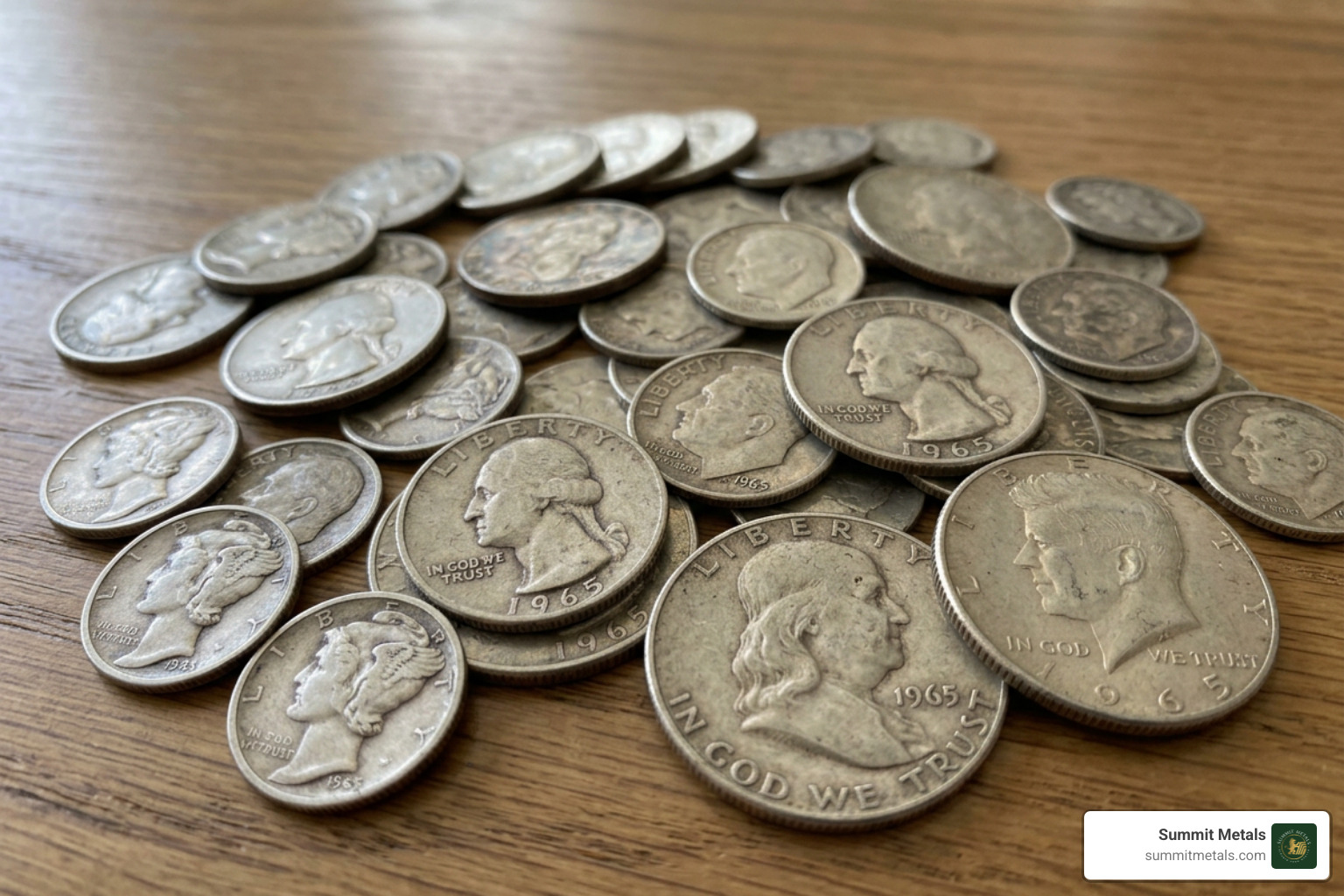
If you've ever wondered how much do coin shops pay for junk silver, here's the short answer:
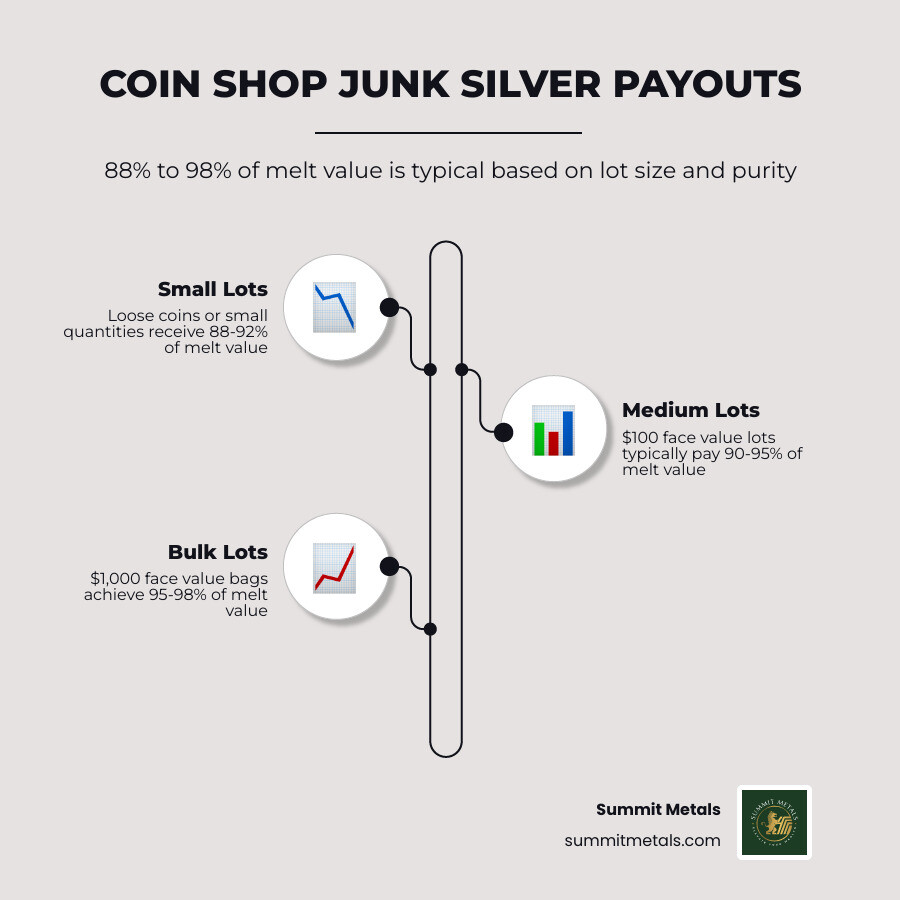
Most coin shops pay 88% to 98% of melt value for 90% junk silver, depending on quantity, condition, and current silver spot price. Here's a quick breakdown:
| Lot Size | Typical Payout (% of Melt Value) |
|---|---|
| $1,000 face value bag | 95% - 98% of melt |
| $100 face value lot | 90% - 95% of melt |
| Loose coins (small quantity) | 88% - 92% of melt |
| Mixed purity or foreign silver | 60% - 85% of melt |
Melt value = face value × 0.715 × current silver spot price
The term "junk silver" sounds like something you'd toss in a garage sale box. It isn't. These are pre-1965 U.S. dimes, quarters, half dollars, and silver dollars — each one containing real, government-certified 90% silver. A single bucket of them sitting in a closet can be worth tens of thousands of dollars at today's silver prices.
But here's the problem: most people have no idea what they're actually holding. And coin shops — some honest, some not — know this. There are real stories of sellers walking out with only face value for coins worth many times more. One forum user described a widow who received just face value from a local coin shop for an entire bucket of 90% silver. That's the kind of mistake this guide exists to prevent.
Whether you inherited a roll of old quarters, found a canvas bag in an estate sale, or have been stacking silver for years, understanding the pricing mechanics behind coin shop offers puts the power back in your hands.
I'm Eric Roach — an investment banker turned precious metals advisor, published in Business Insider and CNBC, and I've helped clients navigate exactly this kind of decision, including one retiree whose silver position generated over $266,000 in liquidity when he needed it most. My institutional background in risk management and asset valuation gives me a clear lens on how much do coin shops pay for junk silver — and more importantly, how to make sure you're not leaving money on the table. Let's break it all down.
Key terms for how much do coin shops pay for junk silver:
Understanding Junk Silver and the 90% Standard
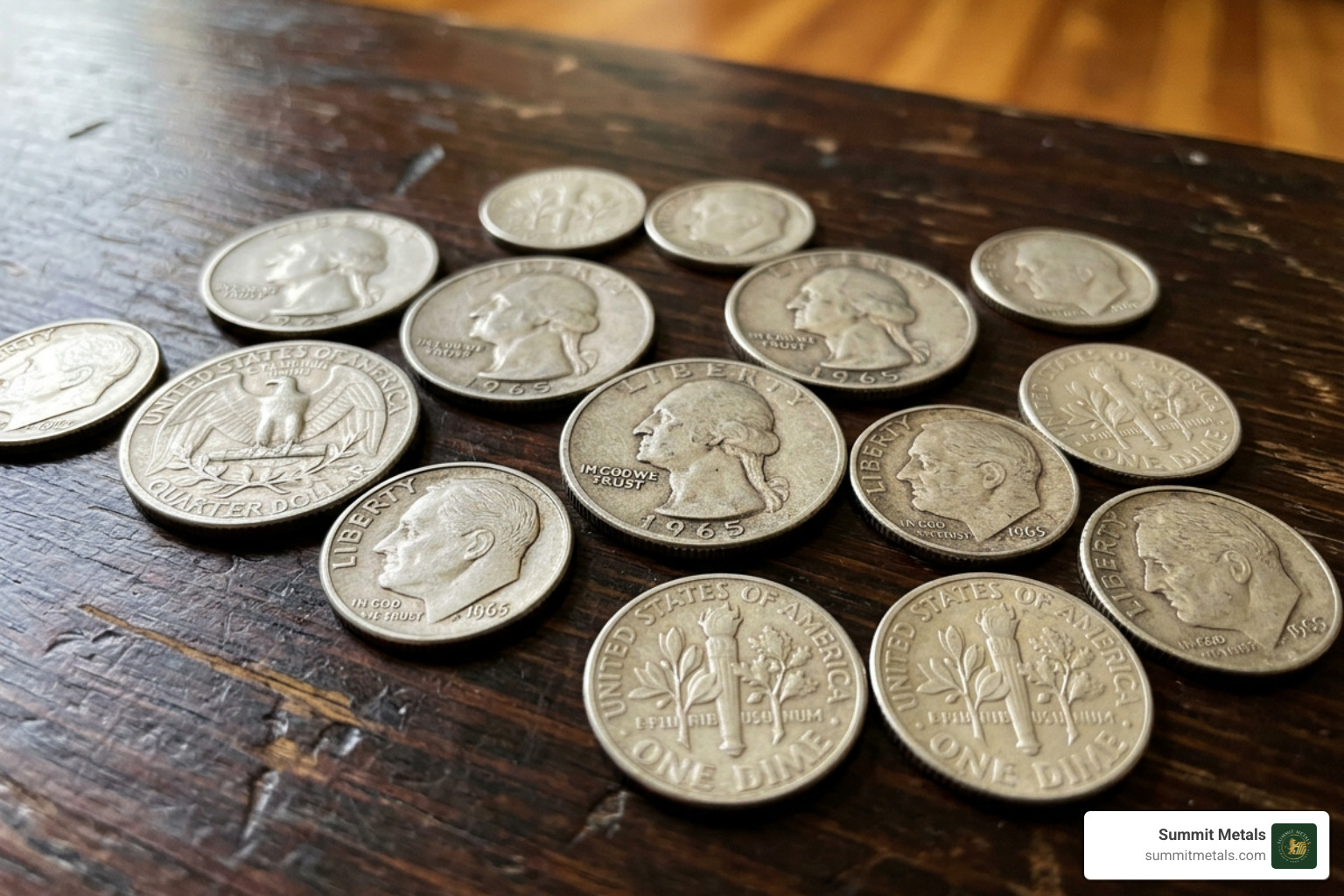
Before we can calculate what a local shop in Salt Lake City will pay you, we need to define exactly what you have. "Junk silver" is an endearing misnomer used in the precious metals industry. It doesn't mean the coins are worthless; it simply means they carry no significant collectible (numismatic) value. Instead, their worth is tied directly to their raw precious metal content.
Historically, the United States minted its circulating coinage with a high concentration of precious metals. Under the Junk Silver Guide, any U.S. dime, quarter, half dollar, or dollar coin minted in 1964 or earlier is composed of 90% pure silver and 10% copper.
When the Coinage Act of 1965 took effect, the U.S. Mint transitioned circulating dimes and quarters to a copper-nickel clad composition containing zero silver. Half dollars had their silver content reduced to 40% before eventually going entirely clad in 1971. This historical shift makes pre-1965 coinage highly sought after by modern investors looking for fractional, easily recognizable physical assets.
To determine if your loose change qualifies, look for these specific designs:
- Dimes: Roosevelt Dimes (1946–1964), Mercury Dimes (1916–1945), and Barber Dimes (1892–1916).
- Quarters: Washington Quarters (1932–1964), Standing Liberty Quarters (1916–1930), and Barber Quarters (1892–1916).
- Half Dollars: Kennedy Half Dollars (only the 1964 issue is 90%), Franklin Half Dollars (1948–1963), Walking Liberty Half Dollars (1916–1947), and Barber Half Dollars (1892–1915).
- Silver Dollars: Morgan Dollars (1878–1921) and Peace Dollars (1921–1935).
To learn more about the deep history and secondary market of these coins, read A Comprehensive Guide to Junk Silver Value.
How Much Do Coin Shops Pay for Junk Silver?
When you walk into a coin shop, the dealer is not looking at your coins as historical artifacts. They view them as a commodity. The price they offer is a reflection of the live spot price of silver, minus their operating margin (the dealer spread).
To help you decide between different silver formats, let’s compare junk silver coins against standard silver bullion rounds:
| Feature | 90% Junk Silver Coins | Private Mint Silver Rounds |
|---|---|---|
| Purity | 90% Silver, 10% Copper | 99.9% Pure Silver |
| Legal Tender Status | Yes (U.S. Government Face Value) | No (Private Medallic Issues) |
| Fraud Protection | Extremely High: counterfeiting legal-tender U.S. coins carries serious federal penalties, and the designs are familiar to dealers and investors | Moderate: private rounds can be reputable, but buyers must rely more heavily on mint reputation, testing, and authentication |
| Divisibility | High: dimes, quarters, and half dollars make it easy to sell or trade smaller amounts | Lower: most rounds are 1-ounce pieces, so you usually sell a full ounce at a time |
| Typical Dealer Payout | 88% to 98% of melt value, depending heavily on lot size and sorting | Spot price minus a small flat fee or dealer spread |
| Best For | Sellers who want recognizable, fractional silver with built-in trust and flexible resale options | Sellers or buyers focused mainly on pure-ounce stacking and simple spot-price math |
As the comparison chart shows, constitutional silver coins offer a practical advantage beyond melt value: they carry a government-backed face value and are instantly recognizable to U.S. coin dealers. That legal-tender status does not make them worth more than melt by itself, but it does support fraud protection, resale confidence, and easier verification compared with many private mint rounds.
Factors Determining How Much Do Coin Shops Pay for Junk Silver
To understand the exact offer a dealer makes, you have to understand the math of wear and tear.
When U.S. silver coins were originally minted, a dollar of face value (for example, ten dimes, four quarters, or two half dollars) contained exactly 0.7234 troy ounces of pure silver. However, because these coins circulated in commerce for decades, they rubbed against fingers, pockets, and cash registers. This physical wear scraped away small amounts of metal.
To account for this weight loss, the precious metals industry established a practical standard: 0.715 troy ounces of silver per dollar of face value.
Whether you are selling a bag of dimes or a bag of quarters, dealers will use the 0.715 multiplier to calculate the actual silver weight. This prevents them from having to weigh thousands of worn coins individually. You can read more about how this works in our guide on Calculating Silver in Junk Silver.
To calculate the baseline melt value of your coins before visiting a shop, you can use the Junk Silver Calculator: How to Value Coins, Dimes, and 800 Silver (2026) | CalculatorFlux to get an instant, objective math check.
Real-World Examples: How Much Do Coin Shops Pay for Junk Silver?
Let's look at how this math translates into real-world offers.
If you bring in a loose handful of heavily worn quarters, the dealer has to spend time sorting, verifying, and potentially shipping them to a refiner. Because of the labor involved and the slow turnover of small lots, they will likely offer you on the lower end of the spectrum — around 88% to 92% of the calculated melt value.
On the other hand, if you bring in a neatly sorted $1,000 face value canvas bag, the dealer's eyes will light up. Large, standardized bags are highly liquid. The dealer can resell them to another investor that very afternoon without extra processing. Because of this high turnover, they can operate on razor-thin margins, often paying you 95% to 98% of the melt value.
For a deeper look into how dealers view these transactions and how to avoid leaving money on the table, explore What's Your Junk Worth? The Real Value of Your Silver Coins. You can also read about peer experiences with dealer payouts on this Numista discussion thread.
7 Smart Strategies to Maximize Your Payout

Now that you know how dealers calculate their numbers, let's look at seven practical, battle-tested strategies to ensure you walk out of the shop with the absolute highest payout possible.
Strategy 1: Separate Your Coins by Purity and Denomination
Never hand a dealer a mixed bucket of coins. If you present a disorganized pile containing 90% silver dimes, 40% Kennedy halves, and 35% war nickels, some dealers may default to valuing the entire lot at the lowest purity level to save themselves the time of sorting.
Before you go:
- Group by Denomination: Put dimes in one container, quarters in another, and halves in a third.
- Separate by Purity: Keep 1964 and earlier 90% coins completely separate from 1965–1970 40% silver half dollars.
- Isolate War Nickels: Jefferson nickels minted between 1942 and 1945 contain 35% silver, but only if they have a large mintmark (P, D, or S) located directly above the dome of Monticello on the reverse. Keep these separate, as they are often bought by weight rather than face value.
By presenting a clean, organized collection, you signal to the dealer that you are an informed seller who knows exactly what they have. For tips on identifying different purities, see Don't Get Scrapped: Uncover the True Value of Your Silver Coins.
Strategy 2: Check for Key Dates and Numismatic Value
While most constitutional coins are worth only their melt value, a few rare dates and mintmarks carry massive collector premiums. If you sell a rare coin at junk melt prices, you are giving the coin shop a massive free bonus.
Keep an eye out for these premium coins:
- Mercury Dimes: Look closely at 1916 dimes. If there is a small "D" mintmark on the reverse near the bottom left, you have a highly valuable key date.
- Washington Quarters: The 1932-D and 1932-S quarters are incredibly scarce and worth far more than their weight in silver.
- Walking Liberty Halves: Early dates (1916–1921) and coins with mintmarks on the obverse (front) of the coin often command significant collector premiums.
For a comprehensive breakdown of key dates that you should pull out of your junk silver pile before selling, check out the resources provided by the Xenia Coin Shop guide.
Strategy 3: Know the Math Before You Walk In
Before you step foot inside any local business, do your homework. Check the live spot price of silver. Multiply your total face value by the 0.715 industry standard, then multiply that by the spot price to find your baseline melt value.
Dealers often quote their buy prices as a "multiplier of face value" (for example, "18 times face"). To see if this is a fair offer, divide their multiplier by the current spot price of silver to see what percentage of melt they are actually offering.
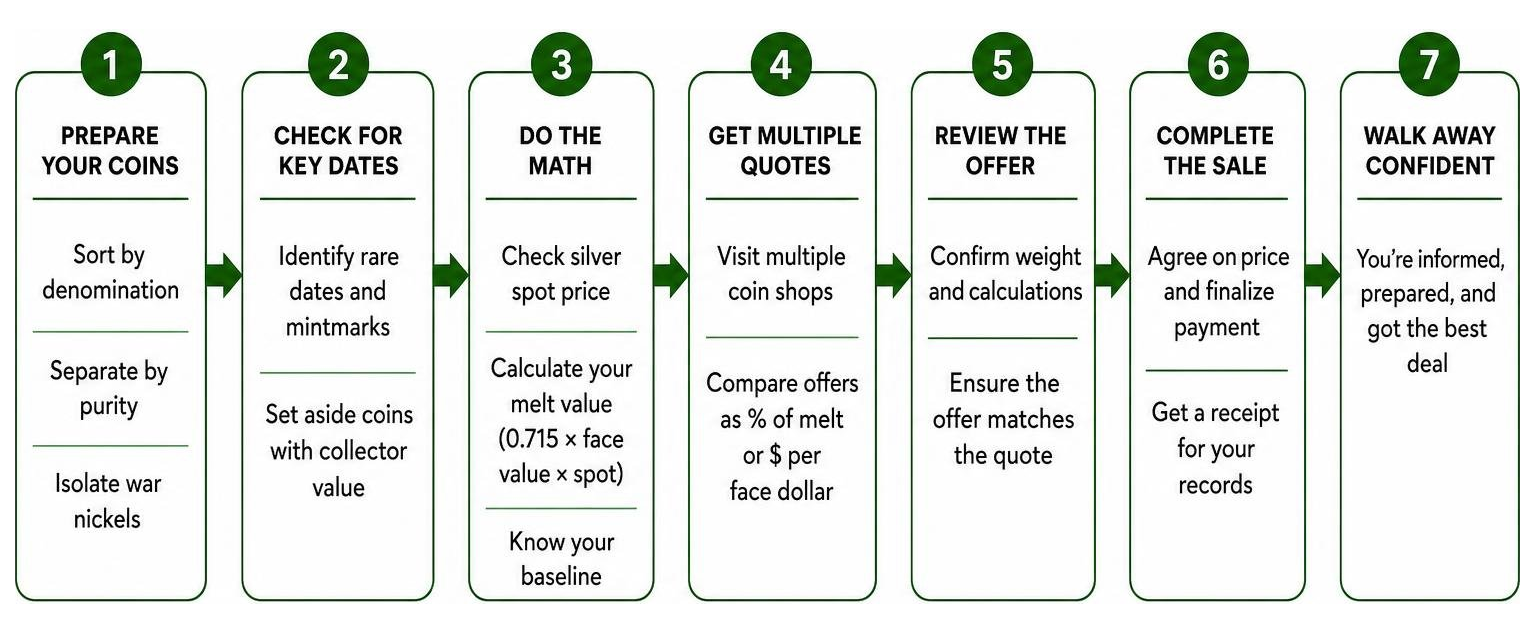
Using these calculations protects you from lowball offers. To master this mental math, read An Essential Guide to Valuing Constitutional Silver.
Strategy 4: Sell in Bulk to Tighten the Spread
If you have a large collection, try to sell it all at once rather than in small, piecemeal batches. As we noted earlier, dealers pay a significantly higher percentage of spot for bulk lots because they can turn them over instantly to wholesale buyers or other stackers.
A $1,000 face value bag contains roughly 715 ounces of pure silver. Selling a full bag or even a half-bag ($500 face value) will get you much closer to the spot price than selling a few loose rolls. Learn more about bulk transaction benefits in Sell Coins for Melt Value.
Strategy 5: Compare Local Coin Shops vs. Online Dealers
Don't settle for the first offer you receive. Call multiple coin shops in the Salt Lake City area and ask for their current buy rate on 90% silver.
Compare these local offers with online bullion dealers. While online dealers sometimes offer highly competitive buyback rates, remember to factor in the costs of secure, insured shipping and the transit time. Local coin shops offer the undeniable benefit of immediate, same-day cash or check payment. For a detailed comparison of these selling channels, read How to Sell Junk Silver Coins.
Strategy 6: Never Clean Your Coins
This is the golden rule of coin collecting: never, under any circumstances, clean your silver coins.
Even if your dimes and quarters are covered in dark, heavy tarnish, leave them alone. Cleaning a coin with chemicals, baking soda, or abrasive cloths leaves microscopic scratch marks that permanently ruin the coin's natural patina. If a coin in your pile happens to have numismatic value, cleaning it can instantly slash its collector value by 50% or more. Dealers prefer coins in their natural, circulated state.
Strategy 7: Establish an Exit Strategy with a Trusted Partner
The best way to sell silver is to plan your exit before you even buy. When you partner with us at Summit Metals, we don't just sell you physical metals; we help you build a secure, long-term plan.
By utilizing private vault storage, your assets remain highly liquid. When the time comes to sell, you don't have to worry about driving across town with heavy bags of coins or risking shipping transit. You can liquidate your holdings instantly through our secure platform. Ready to learn more about how we buy back metals? Visit our Sell to Us page.
Taxes and Reporting Requirements for Large Silver Sales
When selling physical precious metals in large quantities, you must be aware of the federal tax and reporting regulations.
The IRS classifies physical gold and silver as "collectibles." This means that any profits you make from selling your junk silver are subject to a maximum federal collectibles capital gains tax rate of 28%, rather than the standard long-term capital gains rates.
Furthermore, coin dealers are legally required to file an IRS Form 1099-B under specific conditions. For 90% silver coins, the current federal reporting threshold is a total face value of $1,000 or more in a single transaction. If you sell a full bag of junk silver, the dealer is required to record your personal identification and report the transaction to the IRS.
To make sure you stay fully compliant while maximizing your net returns, read Don't Get Shortchanged: Selling Your Silver Coins Wisely.
Frequently Asked Questions About Junk Silver
How much do coin shops pay for junk silver during market volatility?
During periods of extreme market volatility, the spread between the silver spot price and what a dealer offers will typically widen. If the price of silver is swinging wildly, dealers face higher risk when holding inventory. To protect themselves from sudden price drops before they can resell your coins, they may temporarily lower their payout percentages.
Can I get junk silver at a bank for face value?
While it is technically possible, it is extremely rare today. Most banks use automatic coin-sorting machines that filter out silver coins due to their weight differences compared to modern clad coins. However, some hobbyists still engage in "coin roll hunting" — buying boxes of dimes or half dollars from banks in hopes of finding a stray pre-1965 coin left in circulation.
Is 90% constitutional silver better than silver bars?
Both have their place in an investment portfolio. Silver bars typically carry lower premiums when buying, making them great for accumulating raw ounces. However, 90% constitutional silver offers unmatched divisibility and barter utility. Because they are legal tender, they are universally trusted and far more difficult to counterfeit than private mint bars.
Conclusion
Determining how much do coin shops pay for junk silver doesn't have to be a guessing game. By understanding the 0.715 wear standard, sorting your collection by purity, and knowing the current spot price, you can confidently walk into any local shop and secure a fair deal.
At Summit Metals, based in Salt Lake City, Utah, we believe in empowering investors with education and transparency. We sell fully authenticated gold and silver precious metals, backed by fast, secure FedEx Express shipping. To help you stay ahead of market trends, we also host an educational YouTube channel where we break down the complexities of the precious metals market.
If you are looking to build your silver position over time, we highly recommend our Autoinvest program. Just like a 401(k), Autoinvest allows you to dollar-cost average into physical gold and silver automatically every month, building a tangible shield against inflation.
Ready to explore our physical inventory or start your automated savings plan? Visit our Silver Collection and dive deeper into precious metals strategies on our Constitutional Silver Blog.