Is a 100 Pound Copper Bar Worth Your Attention?
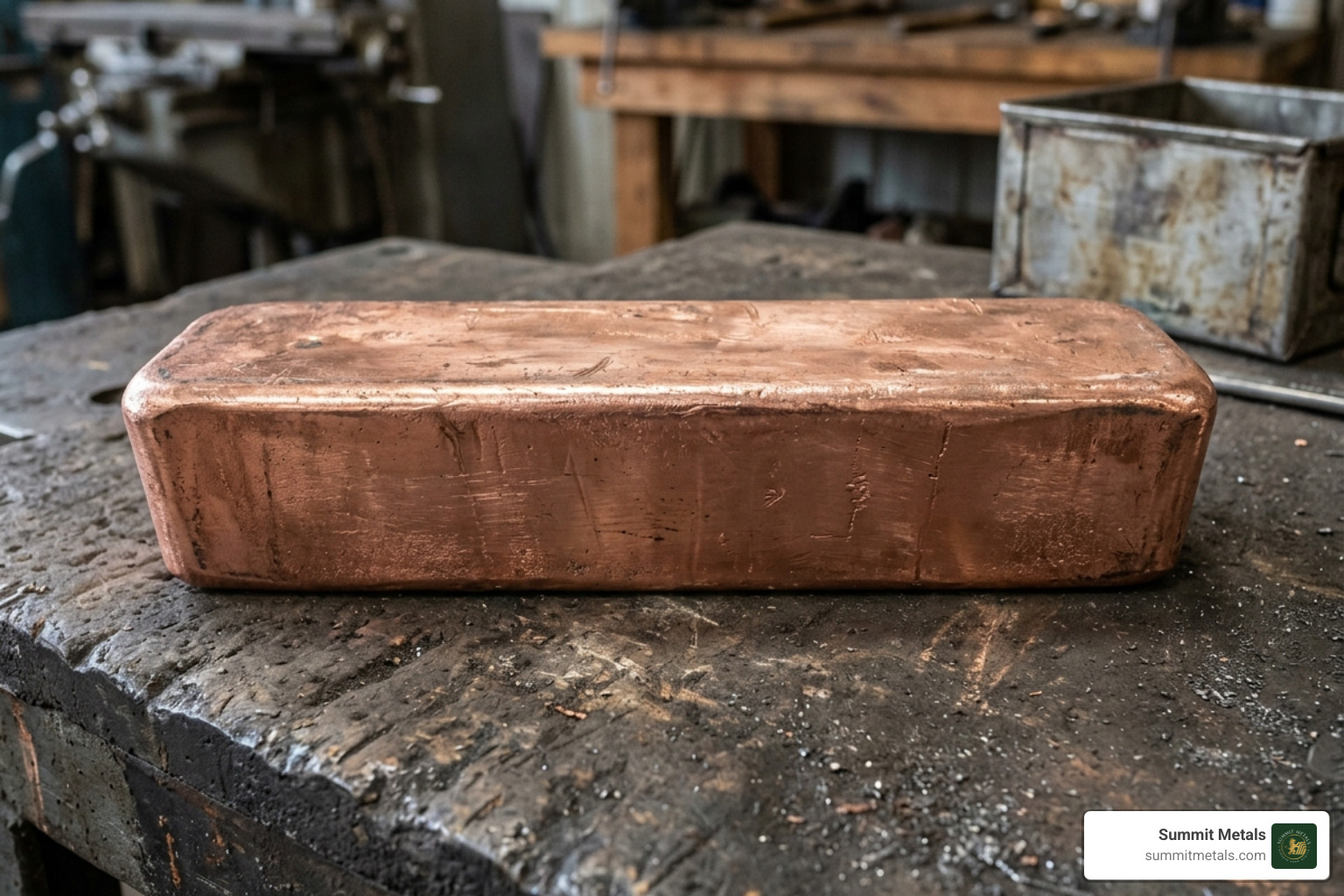
A 100 pound copper bar sits at a fascinating crossroads between industrial commodity and serious tangible asset — and if you're evaluating one as an investment, here's what you need to know upfront:
Quick Facts: 100 Pound Copper Bar at a Glance
| Feature | Details |
|---|---|
| Weight | 100 lbs (approx. 1,600 troy oz or 1,600 AVDP oz) |
| Typical purity | .999 or .9999 fine copper |
| Primary market | Industrial buyers; niche bullion collectors |
| Retail availability | Limited — most retail copper bars top out at 100 oz (~6.25 lbs) |
| Approximate value | Based on copper spot price + premium (copper spot ~$4–5/lb as of publication) |
| Best for | Bulk investors, industrial hedgers, serious metals stackers |
| Storage challenge | High — weight requires reinforced shelving or vault |
Bottom line: True 100 lb copper bars exist primarily in the industrial world. For retail investors, the closest widely available product is a 100 oz bar (~6.25 lbs). Understanding this distinction is the first step before you buy.
Copper has been a cornerstone of human civilization for over 10,000 years — from prehistoric tools to the electrical wiring powering today's electric vehicles and renewable energy grids. Yet most investors overlook it entirely, fixated on gold and silver while one of the most industrially critical metals on the planet quietly builds a compelling investment case.
The appeal of large-format copper bullion is real. Bigger bars typically carry lower premiums per pound, require fewer individual transactions to build a meaningful position, and signal serious commitment to a metal whose demand is projected to outpace supply for decades. But they also come with real challenges — weight, storage, liquidity, and verification — that smaller bars simply don't present.
This guide cuts through the noise so you can decide whether a large copper bar belongs in your portfolio.
I'm Eric Roach — a former Wall Street investment banker who spent over a decade advising Fortune 500 companies on multi-billion-dollar deals before turning that institutional knowledge toward helping everyday investors build resilient, physical-asset portfolios, including large-format copper positions like the 100 pound copper bar. That background in risk management and alternative assets is exactly what I bring to every piece of guidance you'll find here at Summit Metals.
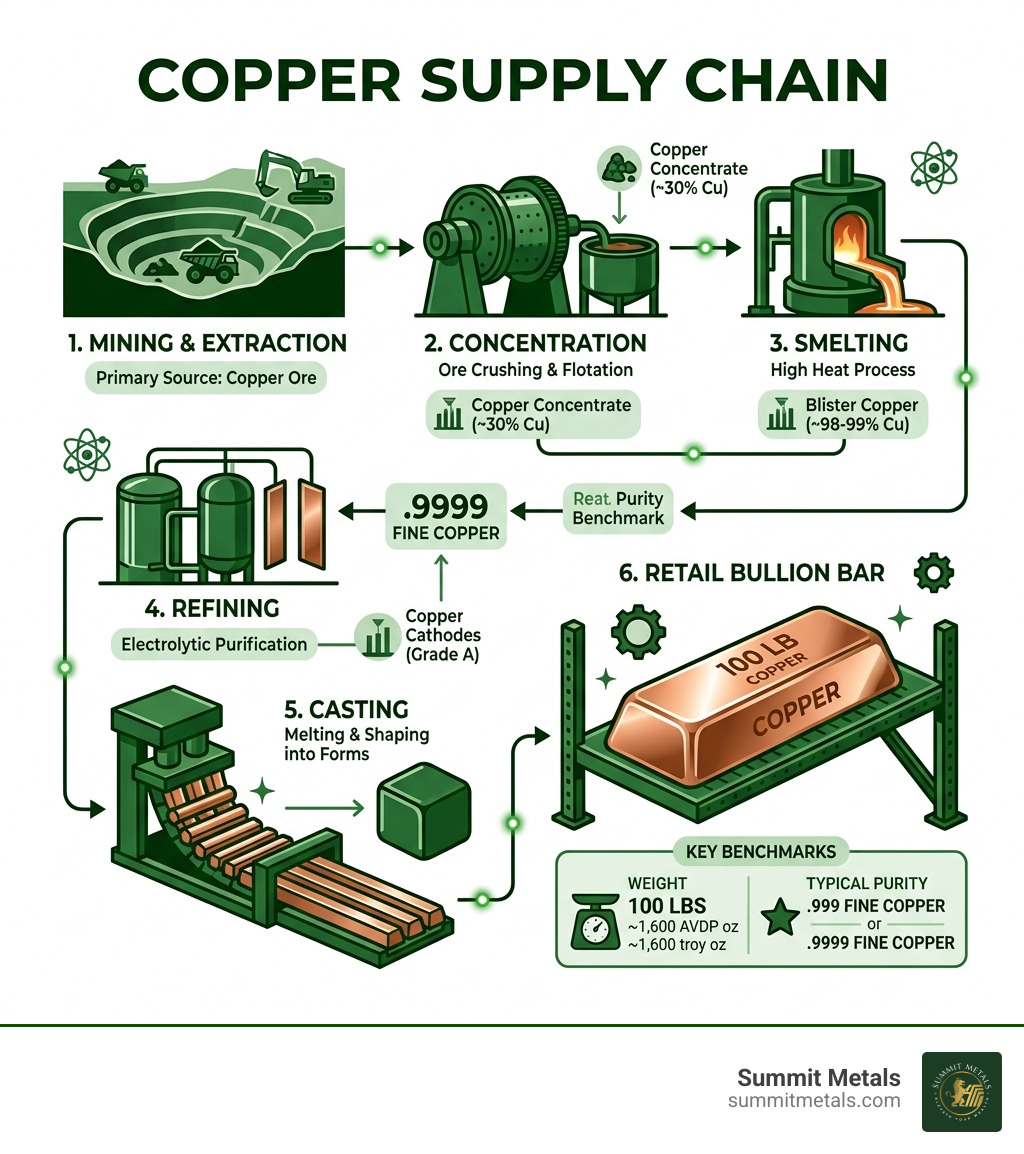
Glossary for 100 pound copper bar:
Understanding the 100 Pound Copper Bar: Retail vs. Industrial
When we talk about a 100 pound copper bar, we are moving into a weight class that separates the casual collector from the industrial-scale stacker. In precious metals, we often think in troy ounces. However, copper is unique because it is frequently measured in avoirdupois (AVDP) ounces—the standard "grocery store" ounce we use in the U.S.
One of the biggest points of confusion for new investors is the difference between a 100 oz bar and a 100 lb bar. A 100 oz bar weighs about 6.25 pounds. A true 100 pound copper bar, on the other hand, is sixteen times heavier. While 100 oz bars are common in retail catalogs, 100 lb bars are often categorized as industrial ingots. These are the "bricks" used by manufacturers to melt down for wiring, plumbing, and high-tech components.
Buying in this size often means you are looking for Bulk Copper Bars to maximize your metal-to-dollar ratio. For a deeper dive into the various shapes and sizes available, check out our guide on Copper Bar Types 101.
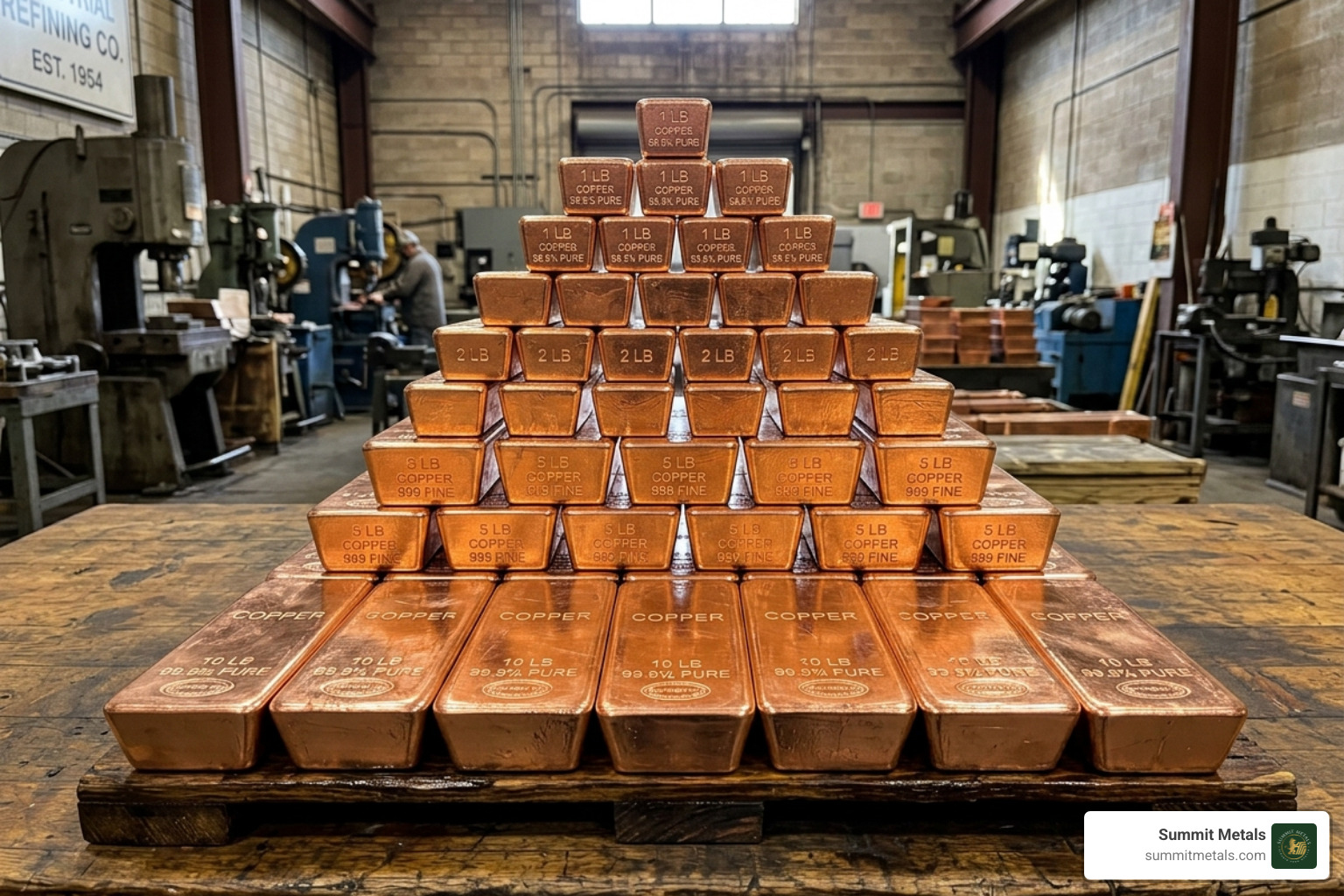
Specifications of a 100 Pound Copper Bar
If you manage to source a true 100 pound copper bar, you aren't just getting a heavy paperweight; you're getting a standardized unit of value. Most investment-grade bars will be 999 Fine Copper Bars, meaning they are 99.9% pure copper.
- Purity: .999 or .9999 fine.
- Weight Tolerance: Industrial bars may have a slight variance, but investment bars are typically struck or cast to a precise 100 lb specification.
- Dimensions: These vary by manufacturer, but expect a substantial "loaf" shape roughly 12 to 15 inches long.
Manufacturers and Availability in 2026
As of April 2026, finding a 100 lb bar for home delivery is a bit like finding a unicorn—it's possible, but you have to know where to look. Most retail investors stick to the highly reputable Copper Bars produced by mints like Geiger Edelmetalle. Geiger is famous for their .9999 fine "poured" bars that feature the Schloss Güldengossa castle design. While they commonly produce 100 oz and 5kg (~11 lb) bars, larger custom pours are occasionally available through specialized industrial distributors.
Investment Benefits of Large Format Copper Bullion
Why go big? The primary reason investors eye the 100 pound copper bar is efficiency. When you buy copper in small 1 oz rounds, you are paying for the art, the minting process, and the individual packaging. When you buy a 100 lb bar, you are buying the metal.
| Feature | 1 oz Copper Round | 10 lb Copper Bar | 100 lb Copper Bar (Industrial) |
|---|---|---|---|
| Premium Over Spot | High (often 100%+) | Moderate | Lowest |
| Collectibility | High (Artistic) | Moderate | Low (Utility focused) |
| Storage Density | Low | High | Very High |
| Liquidity | Easy (Sell to anyone) | Moderate | Industrial/Dealer only |
Why a 100 Pound Copper Bar Beats Smaller Denominations
The Price of Copper Ingots Per Pound drops significantly as the size of the bar increases. By purchasing in bulk, you bypass many of the "retail" markups. While the Cost of Copper Per Ounce might seem negligible, those pennies add up when you're talking about hundreds of pounds. Large bars offer the best "melt value" for your investment dollar.
Copper vs. Precious Metals: Gold and Silver Comparisons
We often get asked: "Why buy copper when I can buy silver?" It’s a fair question. Copper is an industrial workhorse. While gold is a store of value and silver is a hybrid, copper's value is tied directly to global infrastructure. If the world is building—EVs, 5G towers, or green energy grids—it needs copper. For a full breakdown of this relationship, read The Shiny Truth: Unpacking What Copper Bullion Really Is.
Logistics: Storage, Handling, and Authenticity
Owning a 100 pound copper bar is a physical workout. You can't just toss it in a shoe box under the bed. At 100 pounds, you have to consider floor load limits if you're stacking multiple bars, and you definitely need to worry about your lower back!
Verifying Your 100 Pound Copper Bar
Authenticity is key. Because copper has a lower value-to-weight ratio than gold, it is rarely "counterfeited" with other metals, but purity still matters. You should look for:
- Mint Hallmarks: Reputable stamps from the manufacturer.
- Ultrasonic Testing: Professional dealers use this to ensure there are no hollow spots or "slugs" inside the bar.
- Weight Verification: A 100 lb bar should weigh exactly 100 lbs on a calibrated industrial scale.
For more on pricing and purity, see our resource on 999 Copper Bar Price.
Legal and Regulatory Considerations
In the U.S., owning copper is perfectly legal and doesn't carry the same reporting "stigma" that large gold transactions sometimes do. However, if you are transporting 100 lb bars, ensure they are secured. In many jurisdictions, scrap metal laws are strict because of copper theft from construction sites. Always keep your Unearthing Value: A Seller's Handbook for Copper Ingots and your original purchase receipts to prove ownership.
Building Your Wealth with Summit Metals
At Summit Metals, we believe in the power of tangible assets. Based in Wyoming, we focus on providing authenticated metals with transparent, real-time pricing. Whether you're looking for a massive 100 pound copper bar or starting smaller, we use our bulk purchasing power to pass the savings on to you.
Understanding the Copper Bar Cost is the first step toward a diversified portfolio. We don't just sell you metal; we help you build a strategy.
Autoinvest: The 401k Strategy for Copper
One of our favorite tools for investors is Autoinvest. Just like you contribute to a 401k every month, you can set up recurring purchases of copper bullion. This uses "Dollar-Cost Averaging" (DCA) to smooth out the market's ups and downs. Instead of trying to "time" the perfect moment to buy a 100 lb bar, you can accumulate weight steadily over time.
Is this the right move for you? Check out our article: Is a 1kg Copper Bar Your Next Long-Term Investment to see how smaller, regular additions can lead to a massive stack.
Planning Your Exit Strategy and Liquidity
We don't just want to be the place you buy from; we want to be your long-term partner. That’s why we promote our "Sell to Us" program. When you're ready to liquidate your 100 pound copper bar, you need a buyer who understands the value of .999 fine bullion. We offer competitive buy-back rates and can even discuss storage in private vaults to keep your assets liquid and secure. Learn more at From Bar to Bank: Your Guide to Selling Copper Bullion.
Frequently Asked Questions about Large Copper Bars
Are 100 pound copper bars easy to resell?
While not as "liquid" as a 1 oz silver coin that you can sell at any local coin shop, 100 lb bars are highly desirable for industrial buyers and specialized bullion dealers. Because they are standardized .999 fine copper, their value is easily calculated based on the current spot price.
How do I prevent my copper bar from turning green?
Copper reacts with oxygen and moisture (oxidation). To keep your bar looking like a shiny new penny, store it in a cool, dry place. Many stackers use airtight containers with silica gel packets to absorb moisture. Some industrial bars come with a thin protective coating, but for investment bars, keeping them sealed is the best practice.
Is copper a better investment than silver in 2026?
"Better" is subjective, but copper currently has a much higher industrial utilization rate. While silver is often hoarded, copper is consumed. As we move further into the green energy transition in 2026, the demand for high-purity copper is expected to stay very strong.
Conclusion
A 100 pound copper bar is more than just a heavy piece of metal—it's a massive, tangible stake in the future of global infrastructure. Whether you are looking to hedge against inflation or simply want the lowest possible premium on your physical metal, going big with copper is a bold and strategic move.
Ready to start your journey? Whether you want to buy your first bar today or set up a recurring "Autoinvest" plan to build your wealth brick by brick, we're here to help.