Why $100 Face Value Junk Silver Is a Smart Addition to Your Portfolio
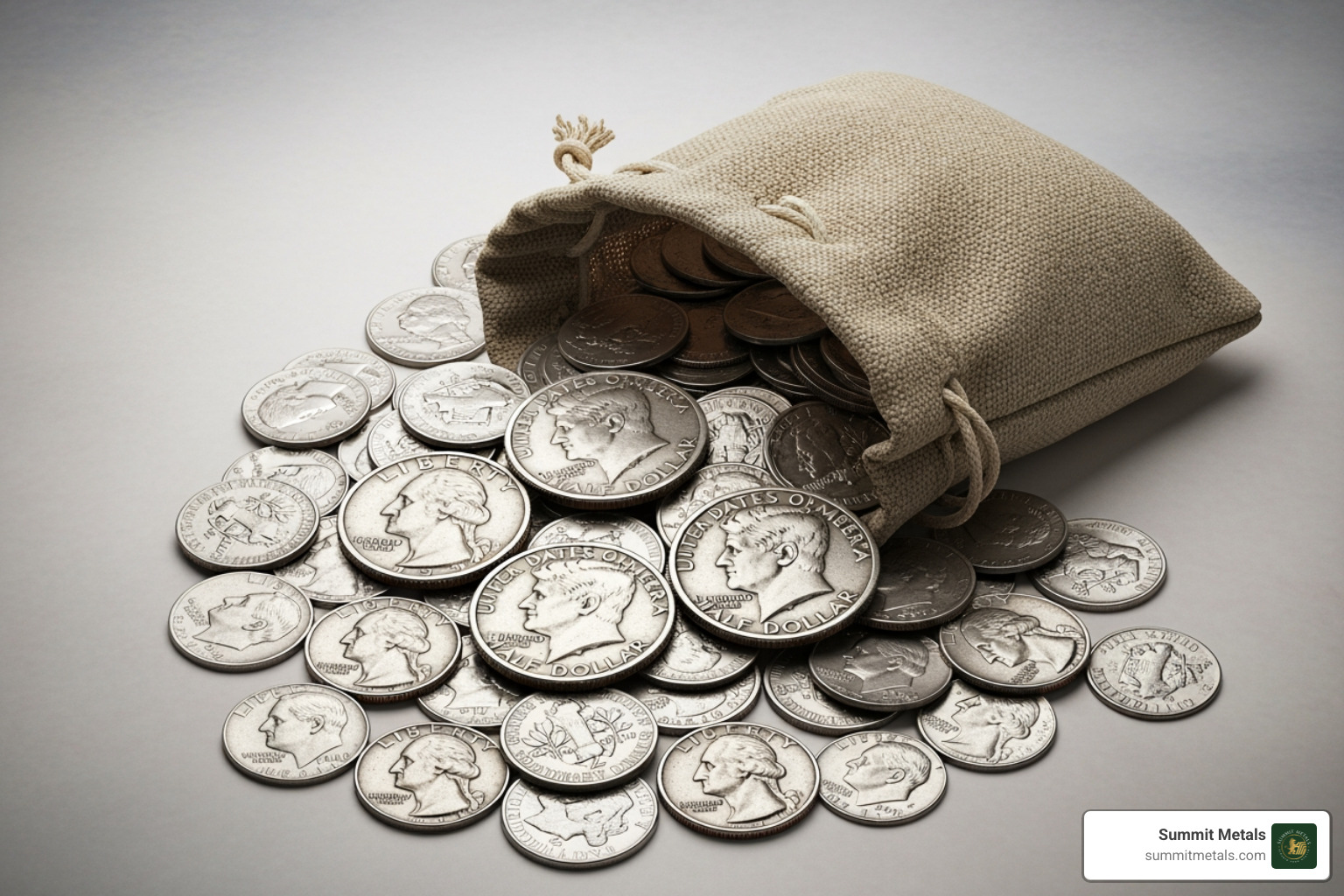
100 face value junk silver refers to a bag of pre-1965 U.S. dimes, quarters, or half dollars minted with 90% silver. These coins are no longer in circulation but are highly sought after by investors for their intrinsic precious metal value.
Quick Facts About $100 Face Value Junk Silver:
- Silver Content: Contains approximately 71.5 troy ounces of pure silver
- Composition: 90% silver, 10% copper
- Common Coins: Roosevelt dimes, Washington quarters, Franklin half dollars, Mercury dimes, Walking Liberty half dollars
- Value: Based on the current silver spot price plus a small dealer premium
- Why "Junk": The term refers to a lack of numismatic (collector) value, not poor condition
- Investment Appeal: Low premiums over spot, divisible, and widely recognized
These aren't worthless coins; they're tangible assets containing real silver that has historically held value during economic uncertainty. When silver was priced at $20 per ounce, a single pre-1965 quarter contained about $3.62 worth of silver—nearly 15 times its 25-cent face value.
Between 1795 and 1965, the U.S. Mint produced dimes, quarters, and half dollars with 90% silver. After the Coinage Act of 1965, rising silver prices made these coins worth more for their metal than their face value. The government switched to copper-nickel "clad" coins, and the older silver pieces quickly disappeared—a perfect example of Gresham's Law, where "good money" (silver) is hoarded while "bad money" (clad) circulates.
Today, these coins offer investors physical silver at low premiums in divisible, recognizable pieces. Unlike silver bars that can be harder to verify or trade in small amounts, a $100 face value junk silver bag offers flexibility and authenticity guaranteed by the U.S. Mint's original production.
I'm Eric Roach. During my decade as an investment banking advisor, I guided clients through complex hedging strategies. This same defensive thinking makes 100 face value junk silver an excellent portfolio diversifier. Now, I help individuals apply those institutional tactics to protect their savings with physical precious metals.
One practical way our clients build positions in junk silver is through Summit Metals' Autoinvest program—setting a fixed dollar amount to buy every month, much like contributing regularly to a 401k. This dollar-cost-averaging approach helps smooth out silver's price swings over time.
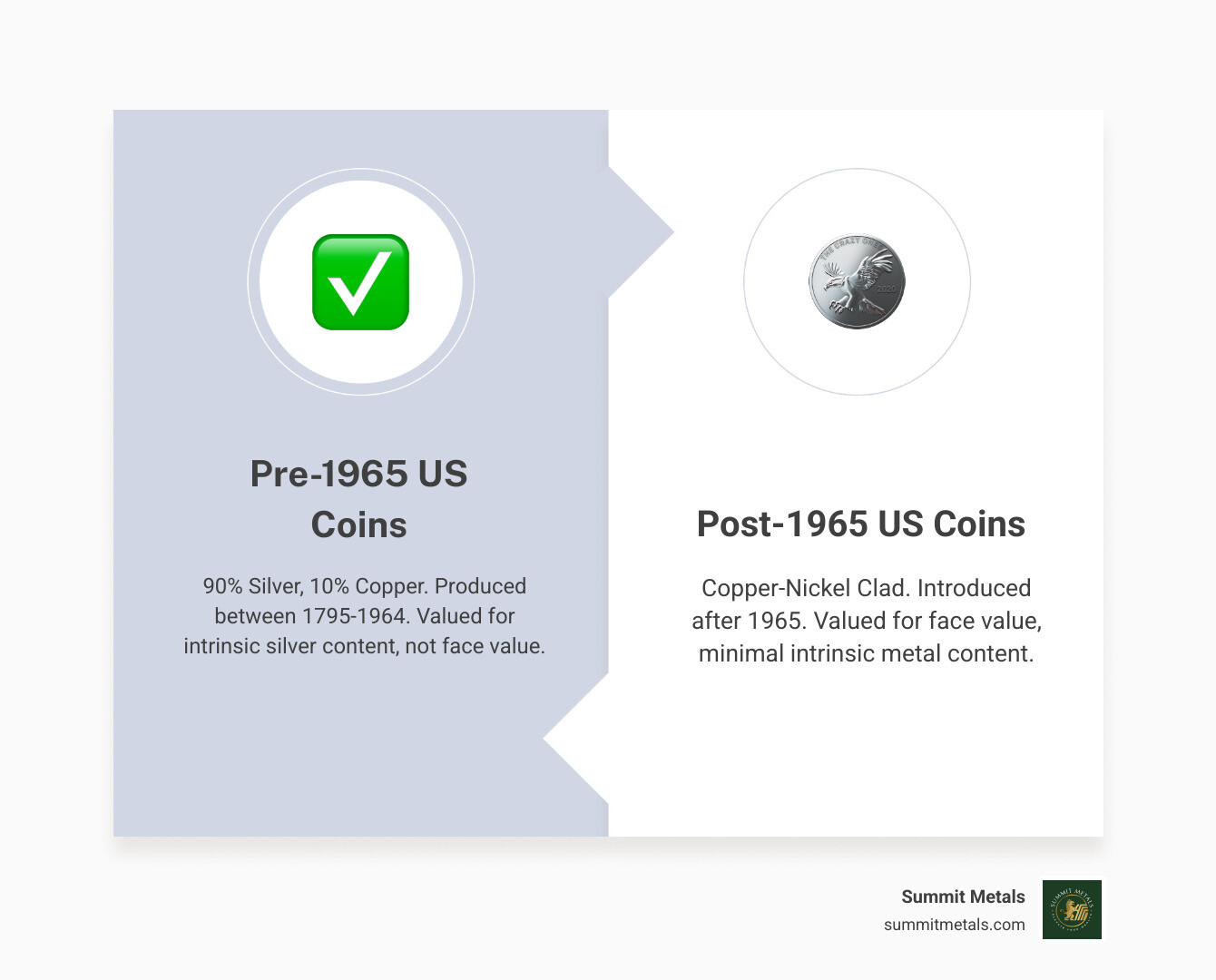
100 face value junk silver terms made easy:
Decoding "Junk Silver": More Treasure Than Trash
The term "junk silver" is misleading. It doesn't refer to worthless scrap but is a term from the 1970s for U.S. coins valued for their silver content, not their collectible status. While a coin might be worn from circulation, its intrinsic value as silver remains intact.
This distinction between numismatic value (collector value) and bullion value (metal value) is crucial. Most 100 face value junk silver coins are too common or worn to command high prices from collectors. Their true worth lies in the approximately 71.5 troy ounces of pure silver they contain per $100 face value, making them a cost-effective way to acquire physical silver.
For nearly 175 years (1795-1964), U.S. dimes, quarters, and half dollars were 90% silver. The Coinage Act of 1965 changed this. As silver prices rose, the coins' melt value exceeded their face value, leading people to hoard them. This is a classic example of Gresham's Law: "bad money drives out good." The new copper-nickel clad coins circulated while the valuable silver coins vanished into private hoards.
To dig deeper, we recommend our Comprehensive Guide to Junk Silver Value.
The Shift in US Coinage Composition
Before 1965, U.S. dimes, quarters, and half dollars were composed of 90% silver and 10% copper. This alloy provided durability while ensuring significant precious metal content. However, the mid-1960s brought a pivotal change. Rising industrial demand and a higher spot price for silver made it economically unfeasible to continue minting coins with such high silver content.
President Lyndon B. Johnson announced the decision to remove silver from most U.S. coinage, stating that "silver has become too scarce to be used in coins." As a result, from 1965, dimes and quarters were switched to a copper-nickel clad composition. Half dollars had their silver content reduced to 40% for a few years (1965-1970) before also becoming fully clad. This marked the end of an era, turning these once-common silver coins into sought-after bullion.
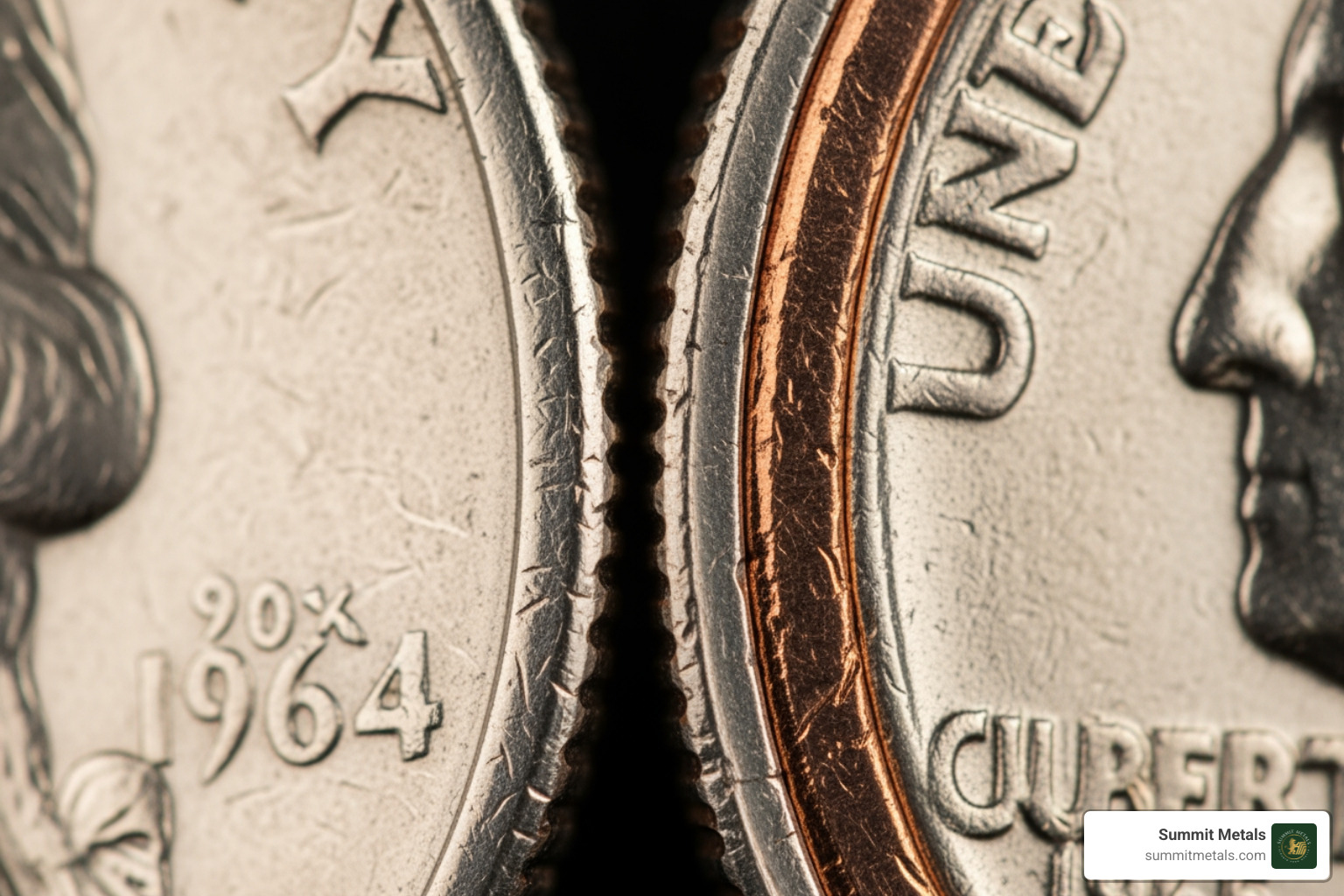
To see this historical shift, look at the edges of quarters from before and after 1965. A pre-1965 silver quarter has a solid silver edge, while a post-1965 clad quarter reveals a distinct copper stripe. It's a simple indicator of a coin's precious metal content.
The Anatomy of a $100 Face Value Junk Silver Bag
When you acquire a 100 face value junk silver bag, you are investing in a specific, measurable quantity of silver. Each bag is standardized to contain approximately 71.5 troy ounces of pure silver, known as the Actual Silver Weight (ASW). This consistent silver content makes these bags a reliable and liquid form of bullion.
These bags are typically supplied in heavy-duty canvas, sometimes sealed by the dealer. While the total silver content is fixed, the specific combination of coins is usually "dealer's choice." This means you might receive a bag of all dimes, all quarters, or a mix. Half dollars are less common in these standard bags but can be found in specialized offerings.
For a deeper dive into making smart purchases, our guide Junk Silver Coins: Your Go-To Guide for Smart Purchases offers valuable insights.
What's Inside? Common Coins in a $100 Bag
The beauty of a 100 face value junk silver bag lies in the history it holds. While the exact mix depends on the dealer, you'll typically find a selection of pre-1965 U.S. coins, all 90% silver.
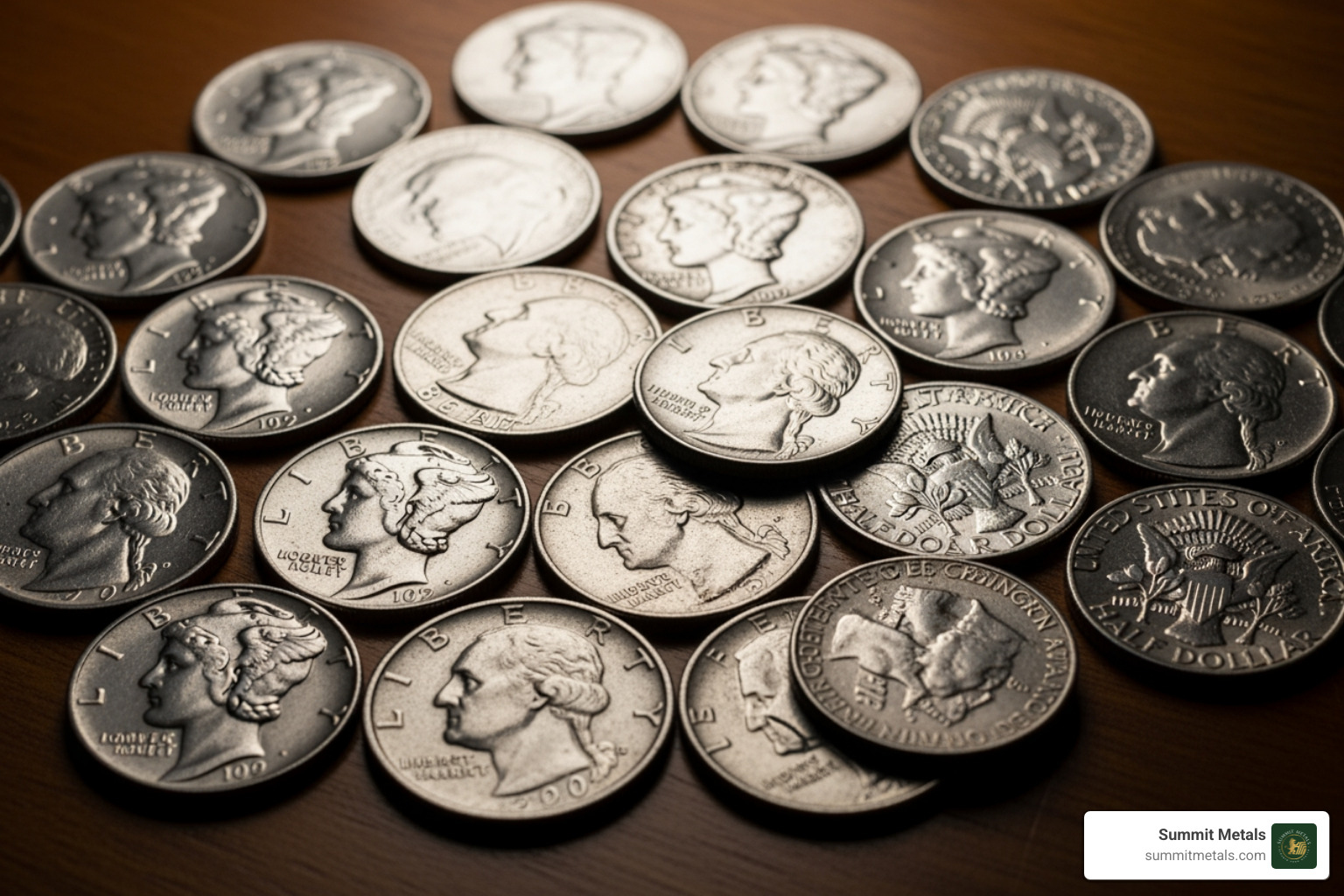
Here's a breakdown of common coins you might find:
- Roosevelt Dimes (1946-1964): The most common dimes, each contains about 0.0723 troy ounces of silver.
- Mercury Dimes (1916-1945): A collector favorite for its design, also containing 0.0723 troy ounces of silver.
- Washington Quarters (1932-1964): The most prevalent quarters, each with approximately 0.1808 troy ounces of silver.
- Standing Liberty Quarters (1916-1930): A less common but iconic quarter, also containing 0.1808 troy ounces of silver.
- Franklin Half Dollars (1948-1963): These half dollars each contain about 0.3617 troy ounces of silver.
- Walking Liberty Half Dollars (1916-1947): Prized for their beautiful design, these also contain 0.3617 troy ounces of silver.
The collective silver content is the primary driver of value, but the historical appeal of finding older designs adds to the enjoyment of owning 100 face value junk silver.
Calculating the Value of a 100 Face Value Junk Silver Bag
The value of a 100 face value junk silver bag is determined by the current silver spot price and the dealer's premium. Unlike collectible coins, junk silver's worth is tied to the fluctuating market price of silver.
Here's how its value is calculated:
- Actual Silver Weight (ASW): A $100 face value bag contains approximately 71.5 troy ounces of pure silver.
- Silver Spot Price: This is the real-time market price for one troy ounce of silver.
- Melt Value Calculation: Multiply the ASW by the current silver spot price. For example, if the spot price is $25 per ounce, the melt value is 71.5 oz * $25/oz = $1,787.50.
- Dealer Premiums: Dealers like Summit Metals charge a small premium over the melt value to cover operational costs. This premium can vary based on market demand and inventory.
Historically, a $100 face value bag of junk silver is worth significantly more than its face value. If silver is at $20 per ounce, the bag would be worth approximately $1,430 – over 14 times its face value. This illustrates the power of intrinsic metal value over nominal currency value.
At Summit Metals, we are committed to transparent, real-time pricing. To understand the intricacies of current values, consult our guide, Junk Silver: A Deep Dive into Current Values and Melt Prices.
Investing in Junk Silver: A Smart Strategy for Your Portfolio
Investing in 100 face value junk silver is a strategic move to diversify your portfolio with a tangible asset that offers key advantages in today's economy.
First, junk silver serves as an excellent hedge against inflation. When the purchasing power of fiat currency erodes, precious metals like silver tend to retain or increase their value.
Second, it's a proven asset during economic uncertainty. Historically, investors flock to safe-haven assets like silver during market downturns. Owning physical silver in a recognizable form like U.S. coinage provides a dependable store of wealth.
Another unique advantage is its divisibility for barter. In a severe economic disruption, these small, fractional units of silver could be used for transactions. A handful of silver dimes is far more practical than a large silver bar.
Finally, the recognizability of these U.S. Mint coins adds a layer of trust. Unlike generic silver rounds, pre-1965 coinage is widely known for its silver content, making it easier to trade or sell.
To gain a broader perspective, check out Charting Your Course: Understanding Junk Silver's Value Over Time.
A disciplined way to add this protection to your portfolio is through Summit Metals' Autoinvest program. By scheduling recurring monthly purchases of junk silver—similar to making regular 401k contributions—you naturally dollar-cost average, buying more ounces when prices dip and fewer when they rise, without trying to time the market.
Junk Silver vs. Other Bullion: What's the Best Choice?
When considering silver investments, you have several options beyond 100 face value junk silver bags. Here’s a comparison to help you make an informed decision:
| Feature | 90% Junk Silver Coins | Silver Bars | Silver Rounds |
|---|---|---|---|
| Divisibility | Excellent (small denominations for barter) | Poor (large, indivisible units) | Good (typically 1 oz units) |
| Premium over Spot | Generally low | Often lowest for large bars | Low to moderate (can vary with design) |
| Recognizability/Trust | Very High (U.S. Mint, widely known) | High (from reputable refiners) | Moderate to High (private mints, less standardized) |
| Fraud Protection (Legal Tender) | Yes (original face value protected by law) | No (pure bullion, no legal tender status) | No (pure bullion, no legal tender status) |
| Storage Efficiency | Moderate (bulky due to coin shape and copper content) | High (compact, stackable for weight) | High (compact, stackable for weight) |
For investors, 100 face value junk silver offers a unique blend of historical appeal, practical divisibility, and the trust of U.S. government-issued coinage. While large silver bars might offer slightly lower premiums, junk silver's versatility and recognizability make it a preferred choice for preparing for various economic scenarios.
To put this comparison in a broader context, many investors also weigh similar trade-offs when choosing between gold coins and gold bars. The table below illustrates typical differences:
| Feature | Gold Coins (e.g., 1 oz Eagles) | Gold Bars (1 oz and larger) |
|---|---|---|
| Divisibility | Good (1 oz, 1/2 oz, 1/4 oz, etc.) | Varies (often 1 oz, 10 oz, kilo; less flexible) |
| Premium over Spot | Moderate (higher due to minting and demand) | Generally lower per ounce for larger bars |
| Recognizability/Trust | Very High (government-minted, widely recognized) | High (well-known refiners; may require more verification) |
| Fraud Protection (Legal Tender) | Yes (has a face value backed by issuing government) | No (pure bullion, not legal tender) |
| Resale Flexibility | Excellent (very liquid, strong global demand) | Good, but large bars may be harder to sell in small amounts |
The same principle that makes gold coins attractive—legal-tender status and strong recognition—also supports the case for 90% junk silver coins over anonymous bullion in certain scenarios, especially where trust and smaller transaction sizes matter.
Pros and Cons of Buying 100 Face Value Junk Silver
Purchasing 100 face value junk silver bags comes with its own set of advantages and considerations.
Pros:
- Cost-Effective Bulk Purchase: Buying a $100 face value bag is an economical way to acquire physical silver, as dealers offer better per-ounce pricing on bulk quantities.
- Lower Premiums: Junk silver generally has lower premiums over spot price compared to newly minted bullion coins, making your dollar go further.
- Divisibility: The small denominations offer unparalleled divisibility, a significant advantage for potential barter or smaller transactions.
- Recognizable and Trustworthy: As genuine U.S. Mint coins, they are instantly recognizable, reducing concerns about authenticity.
- Historical Appeal: Owning these coins connects you to a tangible piece of U.S. history.
- Easy to Accumulate with Autoinvest: Summit Metals' Autoinvest allows you to build your junk silver position gradually, with automatic monthly purchases that mirror the discipline of a 401k contribution.
Cons:
- Variable Condition: Since these coins circulated, they will show wear. This doesn't affect their melt value, but they are not pristine.
- Storage Space: A bag of 100 face value junk silver takes up more space than an equivalent weight in pure silver bars due to its 10% copper content and coin shape.
- Potential for Non-Silver Coins: While highly unlikely from reputable dealers like Summit Metals, there's a tiny chance of a non-silver coin slipping into a bag if not properly vetted. Buying from trusted sources is paramount.
For further insights, our article Bagging a Bargain: Navigating Bulk Junk Silver Purchases provides valuable advice.
Build Your Stack with Autoinvest
At Summit Metals, we understand that building a precious metals portfolio is a long-term strategy. That's why we champion dollar-cost averaging through our Autoinvest options. Just like contributing to a 401k, you can consistently invest in physical silver, including 100 face value junk silver, without trying to time the market.
Our Autoinvest program lets you set up recurring purchases—monthly or on a schedule that fits your budget—smoothing out your average cost over time. This disciplined, "set-it-and-forget-it" strategy reduces the impact of short-term price volatility and helps you build wealth consistently.
We make precious metals investing easy and accessible for our clients in Wyoming and Salt Lake City, Utah. Explore how you can grow your stack effortlessly with our flexible options: Learn about our Autoinvest subscription options.
How to Buy Junk Silver Bags with Confidence
When investing in 100 face value junk silver, confidence is paramount. You're securing your wealth with a tangible asset, so understanding the product and your dealer is key to a smooth transaction.
Choosing reputable dealers is the most critical step. A trustworthy dealer offers transparent pricing, clearly outlining premiums over the spot price. They also provide secure, insured shipping for your investment. At Summit Metals, we pride ourselves on these principles, ensuring our clients in Wyoming and Salt Lake City, Utah, receive the best service.
To ensure you're getting the most out of your investment, it's wise to educate yourself. Our guide, Don't Get Scrapped: Uncover the True Value of Your Silver Coins, is an excellent resource.
What to Look For: Authenticity, Condition, and Dealer Reputation
When purchasing 100 face value junk silver, here's what we advise our clients to prioritize:
- Authenticity Guarantee: Always ensure your dealer guarantees their products are genuine. At Summit Metals, we carefully inspect all our precious metals, providing you with the assurance that your investment is authentic 90% U.S. silver coinage.
- Circulated Condition: "Junk silver" coins are expected to be in circulated condition, showing wear from public use. This does not detract from their silver melt value, as they are sold for their intrinsic silver content, not numismatic grade.
- Dealer Reputation: A strong reputation is built on trust. We, at Summit Metals, are a Wyoming-based dealer dedicated to transparent, real-time pricing and competitive rates. We believe in fostering long-term relationships, whether you're buying or looking to Sell your precious metals to us.
Uncovering Hidden Gems: The Hunt for Numismatic Value
While purchased for bullion, a 100 face value junk silver bag offers the thrilling possibility of finding a "hidden gem" with numismatic value, blurring the line between stacker and collector.
Numismatic value comes from factors like key dates, mint marks, and rare varieties that are worth more than their silver melt value. While dealers typically sort out obvious rarities, a circulated bag can still hold surprises.
Examples of coins that could carry a premium include:
- Barber Dimes, Quarters, and Half Dollars (1892-1916)
- 1932-D and 1932-S Washington Quarters
- 1916-D Mercury Dime
- Key Date Walking Liberty Half Dollars (e.g., 1916-S, 1921)
While we sell our 100 face value junk silver bags based on their guaranteed silver content, we know many clients enjoy the "treasure hunt." Familiarizing yourself with key dates can turn a bullion purchase into an exciting find. To help, we recommend our guide, An Essential Guide to Valuing Constitutional Silver.
Frequently Asked Questions about 100 Face Value Junk Silver
We often hear similar questions from our clients in Wyoming and Salt Lake City, Utah, about 100 face value junk silver. Here are some of the most common inquiries, answered directly:
How many coins are in a $100 face value bag?
The number of coins depends on the denominations included:
- Dimes: 1,000 coins
- Quarters: 400 coins
- Half Dollars: 200 coins
Most bags are sold as "dealer's choice" and will contain either all dimes or all quarters. Regardless of the mix, the total silver content will be approximately 71.5 troy ounces.
Is junk silver a good investment?
Yes, junk silver is considered an excellent investment for acquiring physical silver. Its key benefits include:
- Intrinsic Value: Its value is tied to the silver spot price, offering a tangible store of wealth.
- Low Premiums: It is often a more cost-effective way to accumulate silver ounces compared to newly minted products.
- Divisibility: Its fractional nature is practical for potential barter or small transactions.
- Hedge Against Inflation: Like all precious metals, silver helps preserve purchasing power.
- Recognizability: As U.S. coinage, its authenticity is widely recognized, simplifying future transactions.
For these reasons, many investors consider 100 face value junk silver a cornerstone of their precious metals portfolio.
Can I find rare coins in a junk silver bag?
It is possible, but not guaranteed. These bags are sold for their bullion value, and dealers typically remove obvious rarities.
However, some less-obvious key dates or varieties can slip through, offering a potential numismatic bonus. Many of our clients enjoy this "treasure hunt" aspect, but it shouldn't be the primary reason for investment. The main goal is to acquire 71.5 troy ounces of silver in a divisible and trusted form.
Conclusion
100 face value junk silver is more than old coins; it's a strategic, tangible asset blending history, intrinsic value, and utility. The term "junk" is misleading, as each bag's true worth is rooted in its approximately 71.5 troy ounces of 90% silver.
This form of silver provides an excellent hedge against inflation, offering unparalleled divisibility and the trust of U.S. Mint coinage. Compared to other bullion, junk silver stands out for its low premiums and recognizability, making it a smart choice for diversifying your portfolio. With our Autoinvest options, building your silver stack has never been more consistent.
At Summit Metals, serving our clients in Wyoming and Salt Lake City, Utah, we are committed to providing authenticated gold and silver with transparent, real-time pricing. We understand the importance of trust and value. A 100 face value junk silver bag is an investment in a piece of history and a safeguard for your future.
We invite you to explore our full range of Constitutional and Junk Silver products and find how we can help you secure your financial future with confidence.