Why Safe Silver Storage Demands a Different Approach Than Gold
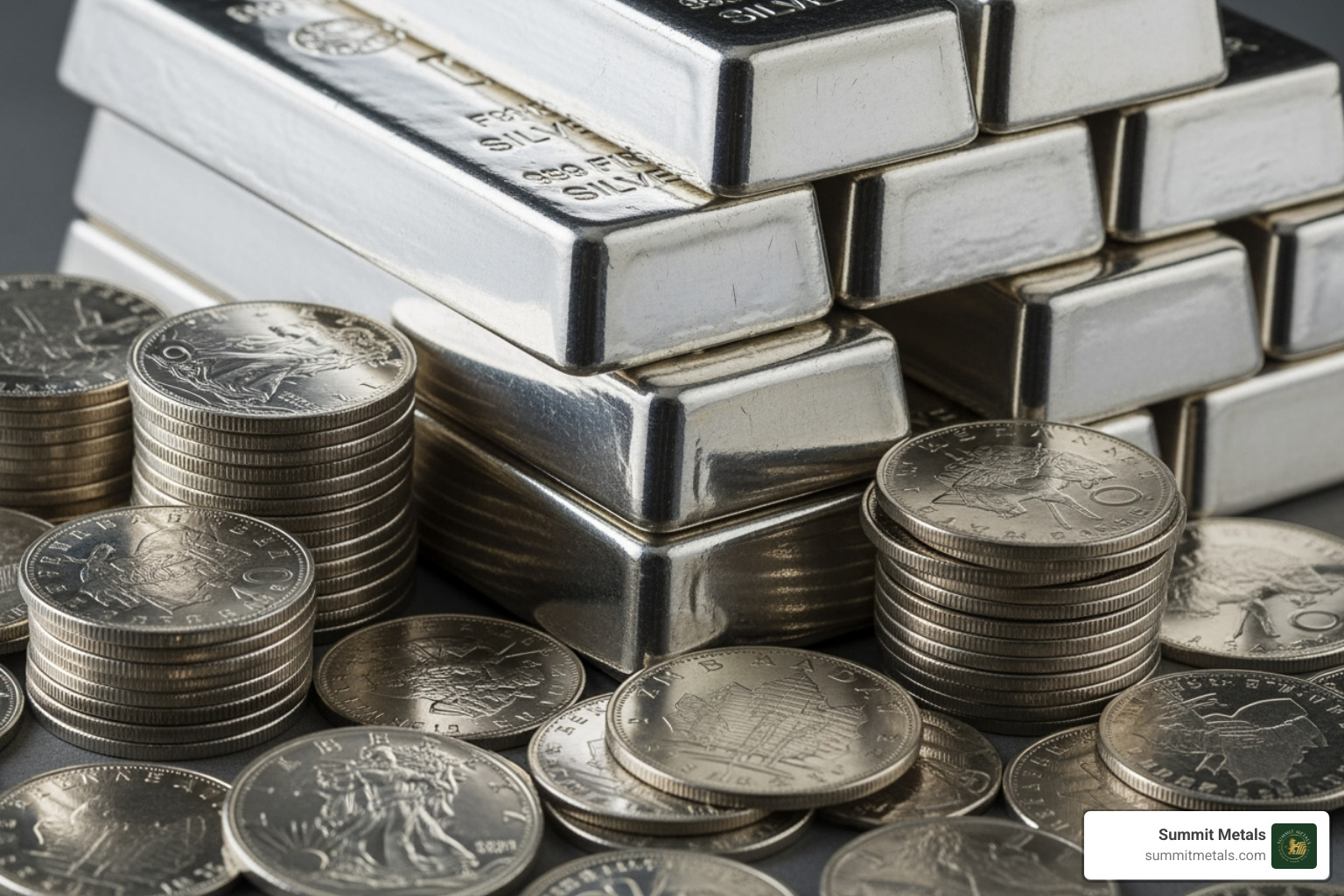
Safe silver storage is a critical concern for every precious metals investor, yet it's often underestimated. The challenge isn't just about security—it's about managing volume. Dollar for dollar, you'll acquire roughly 70 times more ounces of silver than gold, and that silver takes up as much as 128 times more space for the same dollar value. Suddenly, the drawer that held your gold coins won't accommodate your silver stack.
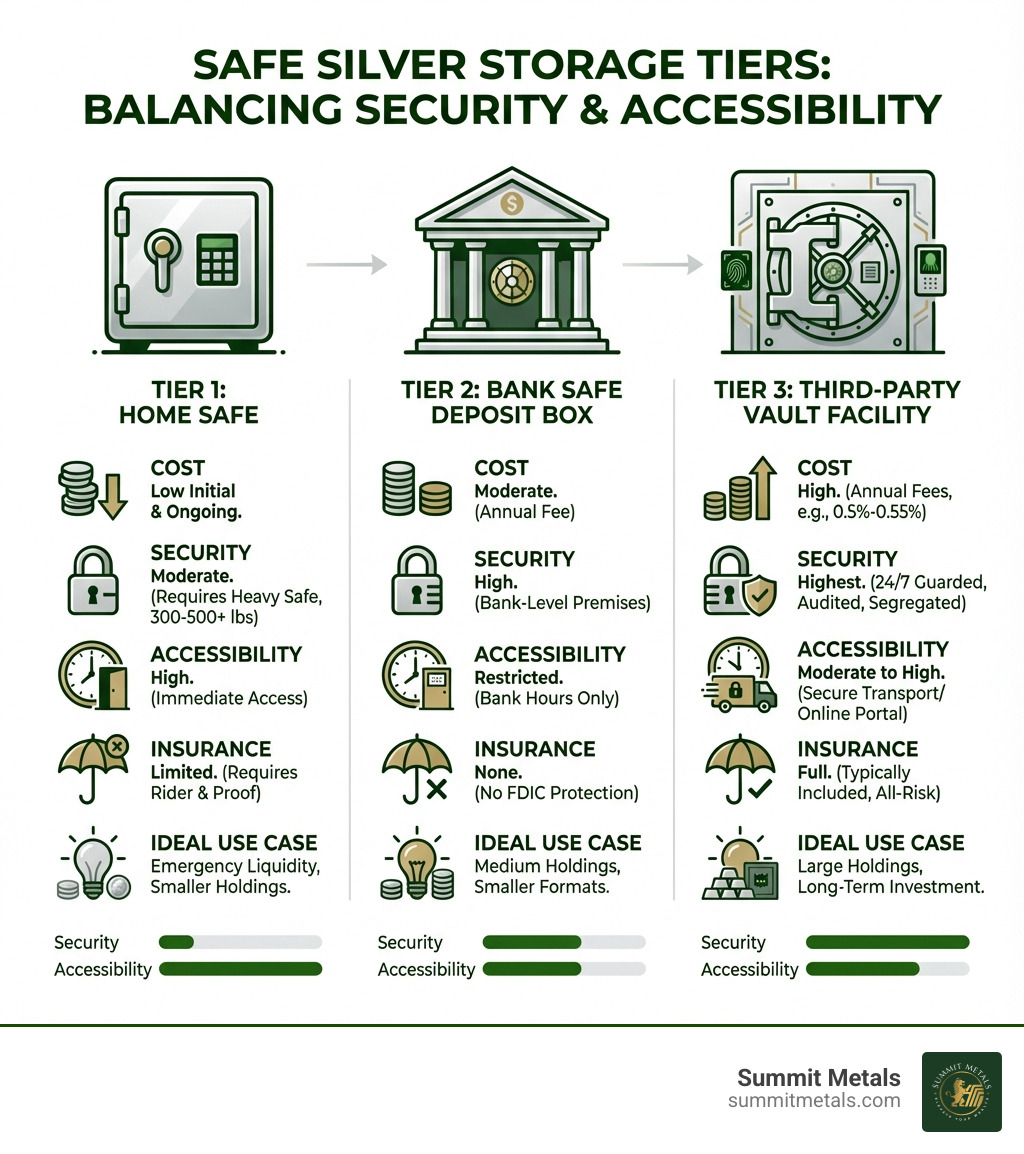
Quick Answer: Your Three Main Safe Silver Storage Options
- Home Storage – Requires a heavy safe (300-500+ lbs), climate control, and discretion. Best for emergency liquidity and smaller holdings.
- Bank Safe Deposit Box – Offers bank-level security but has restricted access, no insurance, and limited space for bulkier items like monster boxes.
- Third-Party Vault – Provides segregated, insured storage with 24/7 security and professional audits. Fees typically range from 0.5% to 0.55% annually, comparable to some ETF management fees.
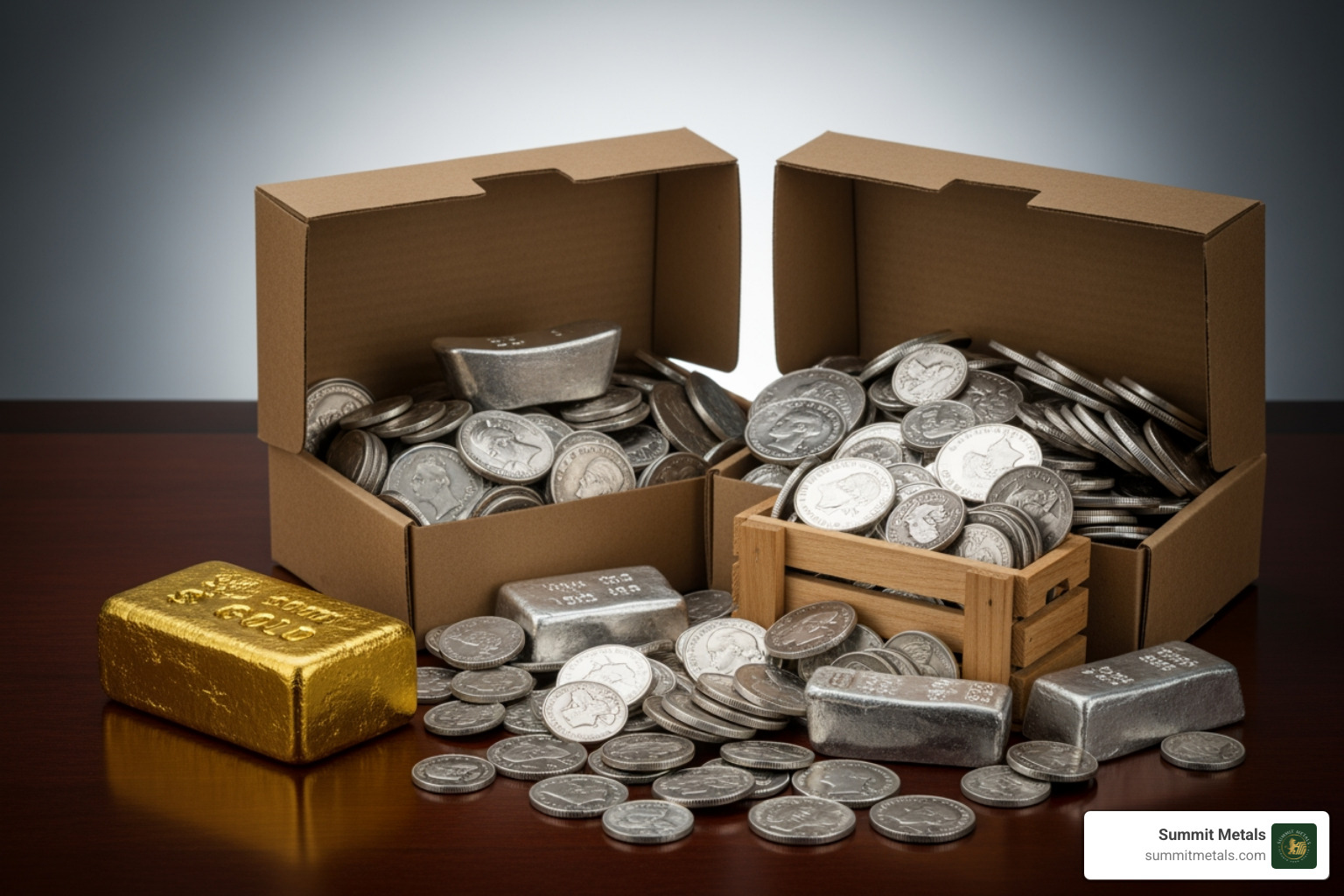
Silver's physical properties create unique storage challenges. A $50,000 gold position weighs about 2.6 pounds and fits in your hand. That same value in silver weighs approximately 189 pounds and fills ten large shoeboxes. This bulk means you must think strategically about where and how you store your stack—balancing accessibility, security, and cost.
Improper storage exposes your silver to theft, environmental damage (tarnish, corrosion), and loss. A 100-pound safe can be carried out by two determined burglars, while a safe deposit box offers no federal insurance protection if the bank loses your metals.
Physical assets demand disciplined risk management. Whether you're stacking American Eagles through Summit Metals' Autoinvest program or safeguarding inherited bars, the right storage strategy preserves both your wealth and your peace of mind.
Safe silver storage terms simplified:
- physical silver investment
- investing in bullion
- counterfeit silver bullion
Why Silver Storage is Different: The Gold vs. Silver Dilemma
When we talk about precious metals, it's easy to assume that storing silver is a similar affair to storing gold. But as experienced investors at Summit Metals, we know that silver presents unique challenges, primarily due to its physical properties. The sheer volume and weight of silver, compared dollar-for-dollar with gold, fundamentally changes the approach to safe silver storage.
Let's put it in perspective: pure silver is 84% larger in volume than pure gold. For the same dollar value, silver takes up as much as 128 times more space than gold. This isn't just a fun fact; it's a critical consideration for your storage strategy.
Consider these eye-opening statistics:
- A monster box of 500, 1-ounce American Silver Eagle coins measures approximately 15” x 8.5” x 4.5”.
- A single 100-ounce silver bar is roughly the size of a few large chocolate bars stacked together.
A $50,000 investment in gold weighs about 2.6 pounds and fits in one hand. The same value in silver weighs a staggering 189 pounds and requires about ten large shoeboxes. This colossal difference means that storage strategies designed for gold simply won't work for silver.
Understanding the nuances of silver's physical footprint is the first step in formulating a robust safe silver storage plan. It influences the type of safe you need, the viability of a bank safe deposit box, and the cost-effectiveness of third-party vaulting. For more insights into gold storage, check out our guide: Golden Rules: The Ultimate Guide to Storing Your Precious Gold.
Mastering At-Home Storage: Your First Line of Defense
Storing a portion of your silver at home offers unparalleled accessibility for emergency liquidity. However, this convenience comes with inherent risks that must be carefully addressed. The primary risks of storing silver at home include:
- Theft: An improperly secured stash is an open invitation for burglars. A small safe weighing only 100 pounds can be carried away.
- Fire: Extreme heat can damage storage containers and make your silver difficult to retrieve or identify.
- Flood/Water Damage: Water can cause significant tarnishing and corrosion, especially if metals are not properly sealed.
- Environmental Damage: Air, humidity, and chemicals can lead to tarnishing, diminishing the aesthetic appeal and potential resale value.
- Discretion: The more people who know about your silver, the higher the risk. We advise extreme discretion.
To mitigate these risks, home storage requires a multi-layered approach. We believe everyone should keep some silver and gold readily accessible, but the amount stored at home should align with your personal risk tolerance and security measures. For more tips, explore our Top Tips for Precious Metals Storage: Secure Your Investments.
Protecting Your Shine: Handling and Environmental Control
Unlike gold, silver reacts with sulfur compounds in the air, leading to tarnish. This can impact the long-term condition and perceived value of your investment.
Here's how to protect your silver's shine:
- Tarnishing Prevention: Minimize air exposure to prevent the chemical reaction that causes tarnish.
- Humidity Control: Aim for a humidity level below 50%. Use dehumidifiers or place silica gel packets in your storage containers to absorb moisture. You can learn more about how humidity affects silver at Research on humidity and tarnish.
- Temperature Control: Optimal temperatures are between 60°F and 70°F (15°C to 21°C). Avoid extreme temperature fluctuations that can cause condensation.
- Proper Handling: Always handle silver with clean, lint-free cotton gloves. The oils from skin can accelerate tarnishing. If you must touch coins, do so by their edges.
- PVC-Free Containers: Avoid polyvinyl chloride (PVC) containers, which cause irreversible damage. Opt for quality, inert containers designed for precious metals, such as sealed capsules or anti-tarnish bags. For more on choosing the right containers, see Beyond the Box: Choosing the Right Metal Storage Container.
- No Newspaper or Rubber Bands: Newspaper ink can discolor silver, and rubber bands degrade and leave corrosive residues.
By controlling these factors, you can significantly extend the pristine condition of your silver.
Choosing a Home Safe for Safe Silver Storage
A home safe is the cornerstone of an in-home safe silver storage strategy, but not all safes are created equal.
Key factors to consider when choosing a home safe:
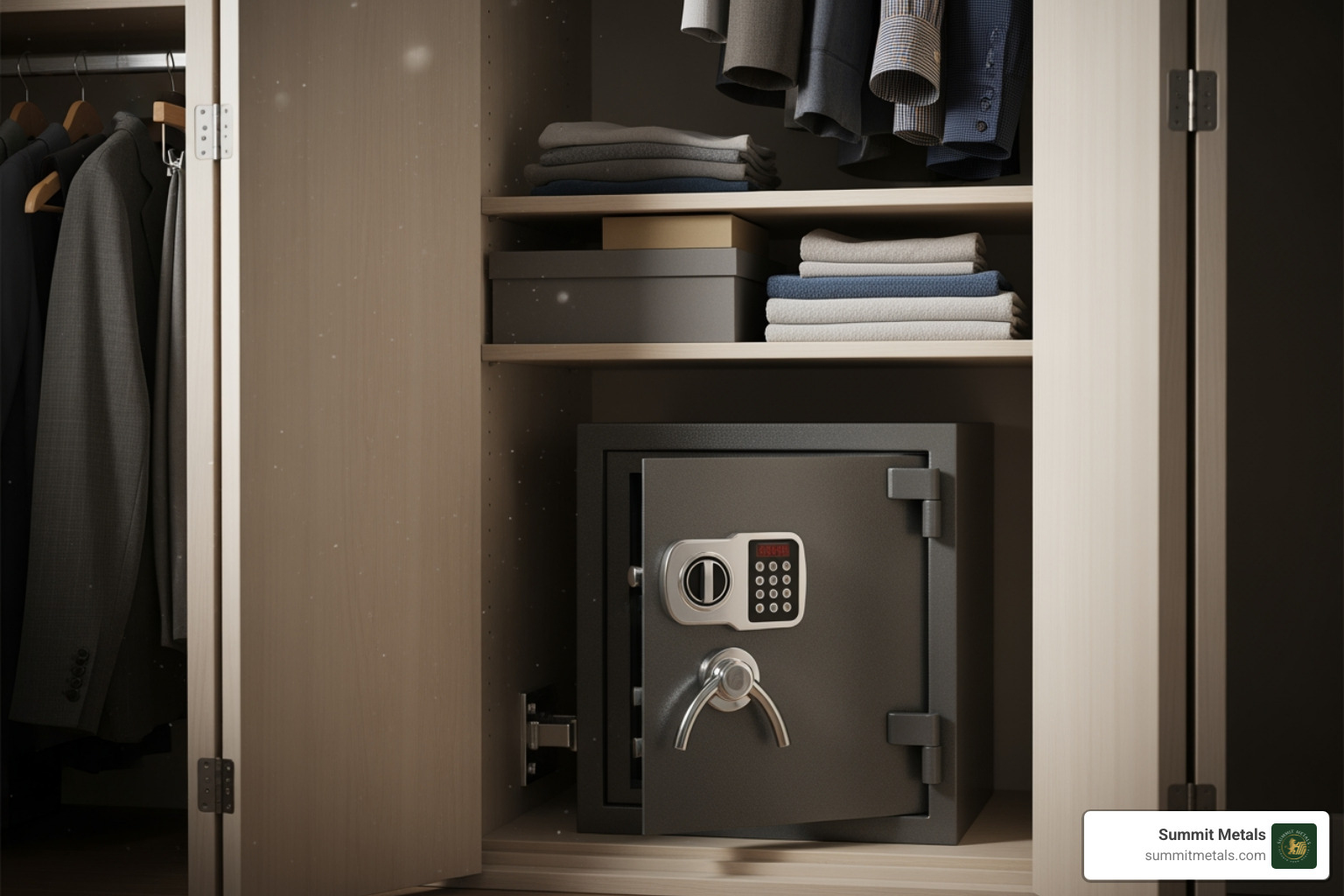
- Weight: A lightweight safe is an easy target. We recommend a safe weighing at least 300-500 pounds to deter theft, as anything lighter can be carried away.
- Fire Rating: Look for a safe with a good fire rating to protect its contents from extreme heat.
- Bolting Down: This is non-negotiable. Always bolt your safe to the floor or a wall to prevent it from being removed.
- Lock Type: Choose between reliable combination locks, convenient biometric locks, or quick-access electronic keypads. Each has its pros and cons regarding reliability and security.
- Water Resistance: Some safes offer water resistance, which is invaluable in case of a flood or burst pipe.
- Size and Capacity: Silver is bulky. Ensure the safe can accommodate your current holdings and allow for future growth.
- Discreet Placement: A safe is only effective if it's not easily found. Place it in an unobvious location like a closet or hidden compartment.
- Decoy Safes: A small, less secure "decoy safe" in an obvious location might satisfy a burglar's initial search, diverting them from your main stash.
Choosing the right home safe is a significant investment in your peace of mind. You can explore various types of home safes from specialty retailers.
Off-Site Solutions: Bank Boxes vs. Professional Vaults
While home storage offers immediate access, it's often not the sole solution for safe silver storage. As your stack grows, off-site options become more attractive. The two main choices are bank safe deposit boxes and third-party professional vaults.
| Feature | Home Safe | Bank Safe Deposit Box | Third-Party Vault |
|---|---|---|---|
| Security | Moderate (depends on safe/location) | Moderate (bank security, but accessible) | High (dedicated, multi-layered security) |
| Accessibility | High (24/7, immediate) | Low (bank hours, holidays, appointments) | Moderate (delivery on demand, typically 15 days notice) |
| Cost | Initial purchase (safe, accessories) | Annual rental fee | Annual fee (basis points, e.g., 0.55%) |
| Insurance | Requires separate rider on homeowner's policy | None from bank (requires separate policy) | Included (full replacement value) |
| Space | Limited by safe size | Very limited (small box sizes) | Scalable (can accommodate large volumes) |
| Privacy | High (if discreetly placed) | Moderate (bank knows you have one) | High (often anonymous, segregated storage) |
| Control | Full physical control | Limited physical control | No physical control (you own, they store) |
Bank Safe Deposit Boxes: Pros and Cons
Bank safe deposit boxes are a traditional option, but for safe silver storage, they have significant drawbacks:
- Limited Access: Boxes are only accessible during banking hours, restricting access on weekends, holidays, or during a crisis.
- No Federal Insurance: A common misconception is that box contents are insured. They are not. The FDIC does not cover them, and banks are not required to compensate you for loss or damage. You must purchase a separate, private insurance policy.
- Potential for Loss: Banks can go out of business or lose track of boxes, complicating access to your assets. During a severe economic downturn, access could be frozen.
- Size Limitations: Silver's bulk is a major issue. Bank boxes are often too small for monster boxes or multiple 100-ounce bars.
- Lack of Privacy: The bank knows you have a box, and in certain legal situations, contents can be seized.
Given these limitations, we generally advise against using bank safe deposit boxes for substantial silver holdings. For a deeper dive into storage options, read The Ins and Outs of Precious Metals Storage Options.
Third-Party Vaults: The Professional Standard
For investors seeking the highest level of security, third-party professional vaulting services are the silver standard. These specialized depositories are designed exclusively for precious metals.
Here’s why we often recommend third-party vaults for significant safe silver storage:
- Unparalleled Security: These facilities feature multi-layered security, including armed guards, 24/7 surveillance, biometric scanners, and restricted access in discreet, fortified locations.
- Full Insurance: Reputable vaults fully insure your metals against theft, damage, or loss for their full replacement value. This eliminates the need for a separate, costly insurance policy.
- Allocated vs. Unallocated Storage: We always advocate for allocated storage, where specific bars or coins are assigned to you. Segregated storage goes further, keeping your metals physically separate from all others. This guarantees you get back the exact items you deposited. Unallocated storage carries counterparty risk, as you only own a general quantity of metal.
- Independent Audits: Leading depositories undergo periodic independent audits to verify the existence and integrity of client holdings.
- Professional Handling and Environment: These facilities maintain optimal temperature and humidity to prevent tarnishing and preserve your silver's condition.
- Cost-Effectiveness: Annual fees are competitive, especially considering the included insurance. Fees can be as low as 5 basis points (0.05%) annually, though 55 basis points (0.55%) is also common.
- Delivery on Demand: Most services offer delivery on demand, allowing you to take physical possession of your metals when needed.
Third-party vaults provide a secure, transparent, and professionally managed solution. For more information, check out our Depository Deep Dive and Guide to IRS Approved Precious Metals Depositories.
Advanced Strategies for Safe Silver Storage
A robust safe silver storage strategy is about diversification. Just as we diversify investments to mitigate financial risk, we diversify storage methods to mitigate physical risk. This means not putting all your silver in one basket.
We encourage a tiered approach:
- A small, accessible portion at home for immediate liquidity.
- A larger portion in a secure third-party vault for maximum security and insurance.
This balanced approach ensures you have access when needed, while the bulk of your wealth is protected by institutional-grade security.
Building Your Stack Over Time with Autoinvest
Many of our clients at Summit Metals use our Autoinvest program to dollar-cost average their silver purchases. This strategy involves buying a fixed amount of silver regularly, much like contributing to a 401k. This consistent accumulation means your holdings grow steadily, making a scalable storage strategy even more critical. With Autoinvest, you're building a secure future, one ounce at a time.
Bars vs. Coins: Special Storage Considerations
When investing in physical silver, the choice between bars and coins affects storage.
Here’s a comparison:
| Feature | Silver Bars | Silver Coins (e.g., American Eagles) |
|---|---|---|
| Form Factor | Rectangular, often cast or minted | Circular, typically with intricate designs |
| Stackability | Highly stackable, efficient for bulk | Stackable, but often require capsules or tubes to protect design |
| Premiums | Generally lower premiums per ounce | Higher premiums per ounce (due to minting, collector value) |
| Divisibility | Larger denominations (10 oz, 100 oz, 1 kg) less divisible | Smaller denominations (1 oz) offer greater divisibility for transactions |
| Fraud Protection | Relies on assay marks and trusted dealers | Face value (even if nominal) offers sovereign backing and anti-counterfeit measures |
| Damage Risk | Less prone to handling damage (less intricate) | More prone to aesthetic damage (scratches, dings) if not protected |
| Storage Needs | Requires robust containers; weight is a factor | Often stored in capsules, tubes, or monster boxes; volume is a factor |
| IRA Eligibility | Specific 100 oz or 1 kg bars (must be 99.9% pure) | Many government-minted coins (e.g., American Silver Eagles) are IRA-eligible |
- Silver Bars: Bars are highly stackable and space-efficient, making them ideal for bulk storage. They typically have lower premiums than coins but require robust containers and lack the anti-counterfeit features of sovereign-minted coins.
- Silver Coins: Coins like the American Silver Eagle are popular for their divisibility and recognition. Their intricate designs are more susceptible to damage, so we recommend storing them in capsules or tubes. Monster boxes are common for bulk accumulation. A key advantage is their sovereign backing, which provides an additional layer of fraud protection. For a comprehensive look at storing different types of silver, read From Eagles to Ingots, Your Guide to Storing All Types of Silver.
Your choice between bars and coins will influence your safe silver storage solutions.
The Role of Insurance in Safe Silver Storage
Insurance provides true peace of mind for your silver investments. Understanding your coverage is paramount, regardless of your storage method.
Here’s what to consider:
- Homeowner's Policy Riders: Standard policies offer minimal coverage for precious metals. You'll need a specific rider to insure your home-stored silver adequately, which often requires an appraisal and detailed inventory, impacting privacy and cost.
- Separate Policies: For significant home-stored collections, a dedicated precious metals insurance policy from a specialized provider might be more comprehensive.
- Depository Insurance: This is where third-party vaults shine. Reputable depositories include full replacement value insurance as part of their service, covering your metals against theft, damage, or loss.
- Documenting Your Collection: Meticulous documentation is essential for any insurance claim. Maintain detailed inventory logs with purchase dates, costs, photos, and serial numbers (for bars).
Securing appropriate insurance is a non-negotiable step in building a truly safe silver storage strategy.
Frequently Asked Questions about Silver Storage
We often receive questions from our clients about the practicalities of safe silver storage. Here are some of the most common ones:
How can I stop my silver from tarnishing in storage?
To prevent tarnish, store silver in a cool, dry place (below 50% humidity) using sealed, PVC-free containers with silica gel packets. Minimize handling, and when you must, use cotton gloves. This controlled environment minimizes the chemical reaction with sulfur in the air that causes tarnish.
How much silver is "too much" to store at home?
This depends on your personal risk tolerance and home security. A good rule is to keep only enough at home for immediate emergency needs. Due to silver's bulk and the risks of theft or damage, storing the majority of a large collection in a secure, insured third-party vault is a safer, more diversified strategy.
Are my precious metals insured in a bank's safe deposit box?
No. This is a dangerous misconception. The contents of a bank safe deposit box are not insured by the FDIC or the bank itself. If your metals are stolen, damaged, or lost, the bank is generally not liable. You must purchase a separate, private insurance policy to cover your holdings.
Conclusion: Building Your Secure Silver Strategy
Protecting your silver investment is crucial. As we've explored, silver's unique bulk and weight demand a different storage strategy than gold.
We've detailed the nuances of:
- Mastering At-Home Storage: Focusing on discretion, environmental control, and choosing a heavy, bolted-down safe.
- Evaluating Off-Site Solutions: Weighing the drawbacks of bank safe deposit boxes against the superior security and insurance of third-party vaults.
- Advanced Strategies: Including diversifying storage locations, understanding the needs for bars versus coins, and the critical role of insurance.
At Summit Metals, we understand that building your silver stack is an investment in your future. Whether you're making consistent purchases through our Autoinvest program or expanding your holdings, we're here to help you develop a personalized safe silver storage plan. Our transparent, real-time pricing and competitive rates ensure you get the best value, and our expertise helps you protect that value for the long term.
A thoughtful storage strategy preserves both your wealth and your peace of mind. Build your stack with confidence, knowing it's protected by a plan as robust as the metals themselves. For more insights, Discover the best silver to buy and why liquidity matters.