What Is the Rate of Gold and Silver Today?
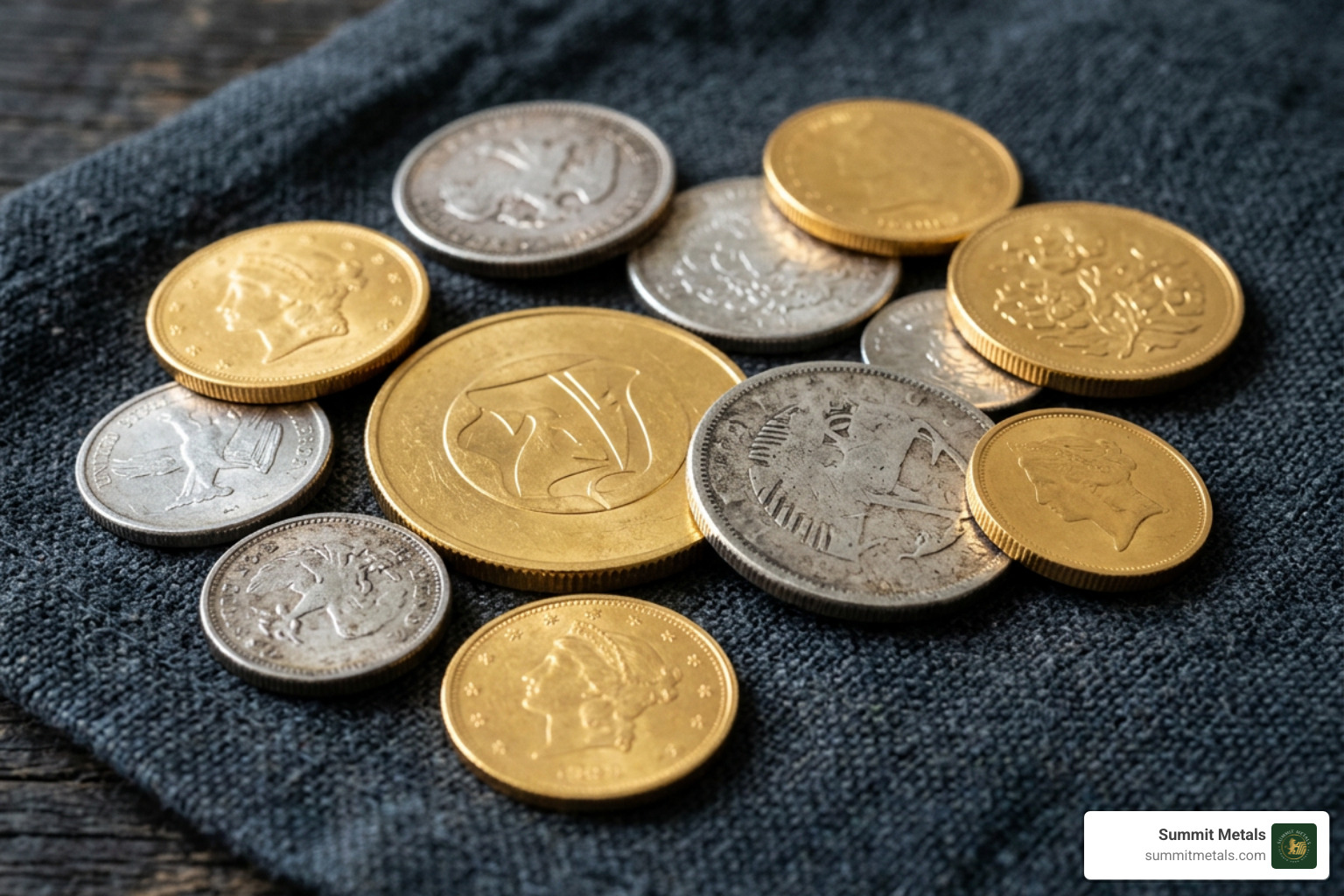
The rate of gold and silver today is moving fast — here's a quick snapshot of where prices stand right now:
| Metal | Spot Price (USD/oz) | Change |
|---|---|---|
| Gold | $4,182.70 | +$60.80 (+1.48%) |
| Silver | $62.55 | +$1.71 (+2.82%) |
| Platinum | $1,662.00 | +$46.00 (+2.85%) |
| Palladium | $1,268.00 | +$22.00 (+1.77%) |
Prices reflect latest available spot data as of July 2026. Retail prices will be higher due to premiums.
Precious metals are having a strong moment. Gold has climbed toward multi-month highs, silver is outpacing it on a percentage basis, and the gold/silver ratio has compressed to around 66.5 — a signal that silver may be catching up fast.
What's driving it? A weaker-than-expected US jobs report pushed back Federal Reserve rate hike expectations, sending investors back into gold and silver as safe-haven assets. Central banks are piling in too — the World Gold Council reports a net 41 metric tons of gold added to global reserves in May alone.
Whether you're tracking prices to time a purchase, monitor an existing position, or simply protect your wealth from inflation and currency risk, understanding what moves these markets is essential. This guide walks you through everything — from how spot prices are set, to city-by-city rates in India, to smart strategies like dollar-cost averaging through Summit Metals' Autoinvest program.
I'm Eric Roach — a former investment banker who has guided Fortune 500 clients through multi-billion-dollar transactions and now helps everyday investors use physical gold and silver as a resilient hedge against economic uncertainty. Tracking the rate of gold and silver today is the foundation of every strategy I recommend, and this guide reflects the same disciplined, data-driven approach I've used with clients for over a decade.
Simple guide to rate of gold and silver today terms:
Understanding the Rate of Gold and Silver Today
To navigate the precious metals market successfully, we must first understand what the "spot price" actually represents. When you look up the rate of gold and silver today, the numbers you see on financial dashboards are spot prices.
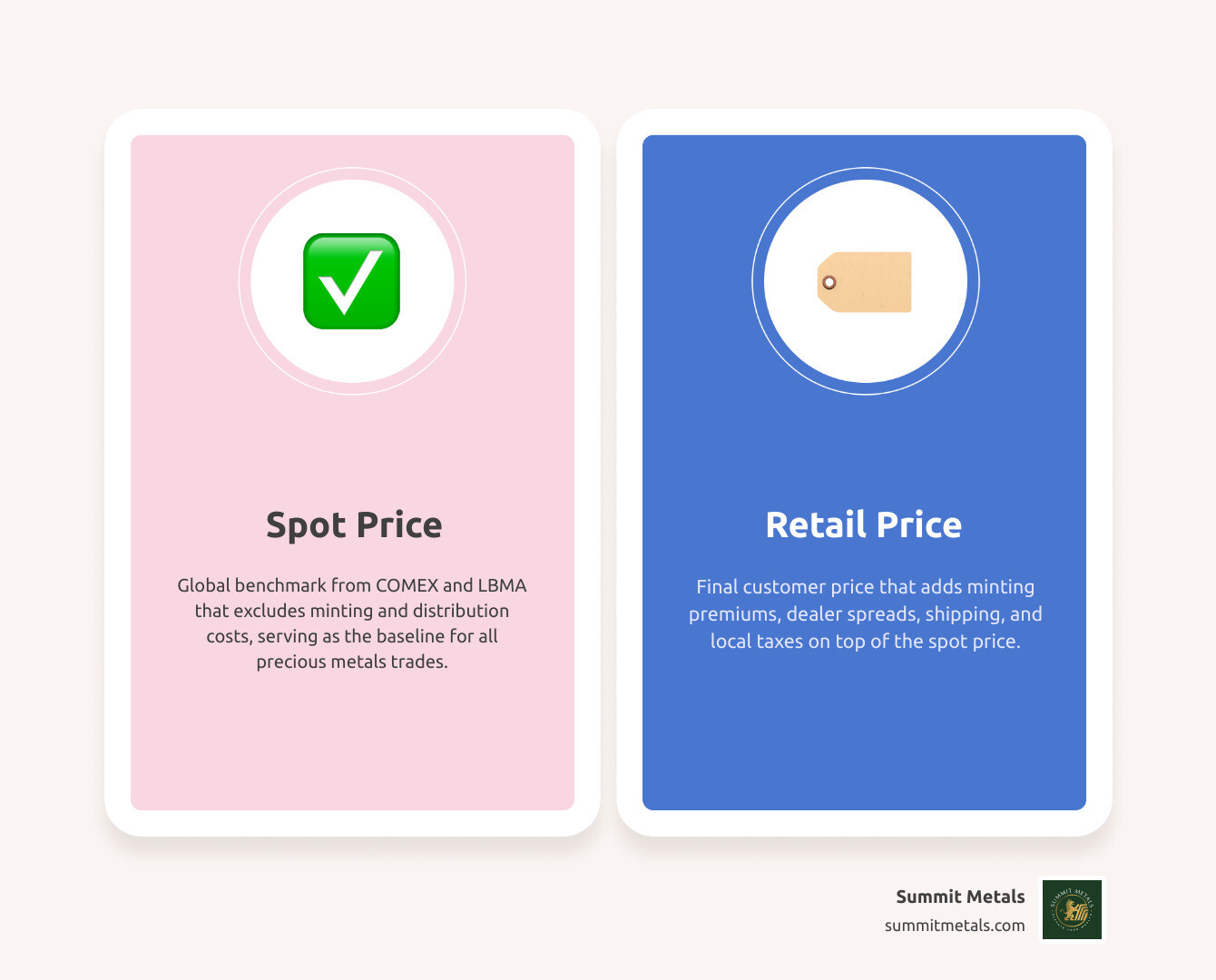
The spot price is the benchmark price at which a raw troy ounce of a precious metal can be bought or sold for immediate delivery. This price is constantly changing as major global commodity exchanges—such as the Commodity Exchange (COMEX) in New York and the London Bullion Market Association (LBMA)—process buy and sell orders from institutional traders, mining companies, and central banks.
For a deeper dive into how these valuations function in real-time, you can explore our resources on Unlocking Today's Value: What Is the Current Price of Gold and Silver and track Real-Time Precious Metals Prices directly through our platform.
How is the Rate of Gold and Silver Today Determined?
The live spot price is determined by the continuous interplay of supply and demand. In practical terms, this breaks down into three key elements:
- The Bid Price: The highest price a buyer in the wholesale market is currently willing to pay for the metal.
- The Ask Price: The lowest price a seller is willing to accept for the same metal.
- The Spread: The difference between the bid and ask prices, which serves as a primary measure of market liquidity.
When trading volumes are high and the market is highly liquid, the spread narrows. Conversely, during periods of extreme volatility or thin holiday trading, the spread can widen. You can monitor these movements using our Live Spot Gold Price tool, or view interactive historical developments on Gold Price Today - Live Gold Spot Price Charts.
Spot Prices vs. Retail Prices
A common point of confusion for new investors is why they cannot purchase a physical gold coin or silver bar at the exact spot price.
The spot price represents raw, unprocessed metal. To turn that raw metal into a beautifully minted coin or a highly secure bar, physical mints must refine, design, strike, package, and distribute the product. These steps incur operational costs, which are passed down as a "premium" over the spot price.
Retail prices also account for dealer operations, shipping, insurance, and local inventory costs. If you want to understand the base valuation before these premiums are applied, you can review the Spot Price Gold Oz to establish your baseline.
Key Drivers Behind Today's Precious Metals Market
Precious metals do not trade in a vacuum. They react dynamically to macroeconomic shifts, monetary policy, and geopolitical events.

What Factors Influence the Rate of Gold and Silver Today?
The primary force driving the rate of gold and silver today is the outlook for US interest rates. Because physical gold and silver do not pay dividends or interest, they face stiff competition from yield-bearing assets like US Treasury bonds when interest rates are high.
However, when economic indicators suggest the Federal Reserve might lower interest rates, the opportunity cost of holding precious metals drops, making them highly attractive. Key indicators that the market watches closely include:
- US Jobs Data (Non-Farm Payrolls): A weak jobs report suggests economic cooling, which reduces the likelihood of Fed rate hikes. For example, when US jobs data showed a lower-than-expected increase in employment, rate hike expectations fell, triggering a rally in gold and silver.
- The CME FedWatch Tool: This tool tracks market expectations for upcoming Fed interest rate decisions. A drop in rate hike probabilities is historically highly supportive of metal prices.
- US Dollar Strength: Since precious metals are priced globally in US dollars, a weaker dollar makes gold and silver cheaper for international buyers, boosting global demand.
- Crude Oil Prices: Falling energy costs can ease broader inflation fears, occasionally leading to short-term profit-taking in commodities, as highlighted in reports like Gold prices fall after 4-day rally - The Economic Times.
To keep a close eye on these macroeconomic correlations, check out Gold Prices Today: Live Gold Price Chart, Historical Data.
Central Bank Buying Trends
Retail investors are not the only ones looking for a safe haven. Central banks around the world have been accumulating gold at historic rates to diversify their reserves away from fiat currencies.
According to data compiled by the World Gold Council, central banks added a net 41 metric tons of gold to global reserves in May alone. This institutional demand creates a robust price floor for the metals market, reflecting a long-term commitment to physical assets. To learn more about how this institutional backing shapes retail valuations, read The Midas Touch: What Are Gold and Silver Prices Per Ounce Today.
Regional Variations: 22K vs 24K Gold Across Major Cities
When shopping for gold, you will frequently encounter different purity levels, most notably 22-carat (22K) and 24-carat (24K) gold.

- 24-Carat Gold: This is 99.9% pure gold. It has a distinct bright yellow color but is relatively soft and malleable, making it ideal for investment-grade bullion bars and coins but less suitable for intricate, everyday jewelry.
- 22-Carat Gold: This consists of 91.6% pure gold alloyed with other metals like copper, silver, or zinc. The added metals make the alloy significantly harder and more durable, which is why it is the global standard for fine jewelry.
Because of these purity differences, 22K gold always trades at a lower price per gram than 24K gold. You can track these differences in detail by checking the Gold Price Today in USA Per Gram.
Domestic vs. International Rates
Even within the same country, retail precious metals prices can vary from city to city. While the underlying spot price remains global, domestic retail rates are influenced by local factors:
- State and Local Taxes: Different jurisdictions impose varying sales taxes or municipal levies on precious metals.
- Shipping and Logistics: Moving physical bullion securely from major hubs to local vaults incurs transportation and insurance costs.
- Local Demand: Regional cultural events, holidays, and local buying trends can temporarily drive up premiums in specific metropolitan areas.
While international benchmarks like COMEX futures dictate the wholesale direction, local retail rates adapt to regional realities. For instance, global tracking services like Gold Rate Today, July 6, 2026 - LatestLY and Gold, silver prices today (July 6) - BusinessToday show how international shifts ripple across domestic consumer markets.
Smart Investment Strategies: Coins, Bars, and Autoinvest
When building a precious metals portfolio, choosing the right product format and investment strategy is just as important as watching the live spot price.
Gold Coins vs. Gold Bars
One of the first decisions you will face is whether to buy coins or bars. Both offer unique advantages depending on your investment goals:
| Feature | Gold Coins | Gold Bars |
|---|---|---|
| Purity | High (often 22K to 24K) | Very High (typically 24K / .9999) |
| Premiums | Moderate to High | Low to Moderate |
| Legal Tender Status | Yes (issued by sovereign mints) | No |
| Fraud Protection | High (backed by government; face value protection) | Moderate (relies on assay cards) |
| Liquidity | Extremely High | High |
We highly recommend considering gold coins, especially for newer investors. Because sovereign coins carry a legal tender face value, they are heavily protected under federal counterfeiting laws, offering an extra layer of security against fraud. If you are looking to start small, exploring our Fractional Gold Collection is an excellent way to acquire highly liquid coins without committing to a full ounce.
The Power of Autoinvest and Dollar-Cost Averaging
Trying to perfectly time the market to buy at the absolute lowest rate of gold and silver today is incredibly difficult—even for professional Wall Street traders. Instead of stressing over daily price swings, smart investors use dollar-cost averaging (DCA).
With our Autoinvest program, you can set up automated, recurring monthly purchases of gold and silver, just like you would contribute to a 401(k) or IRA. When prices are low, your monthly budget automatically buys more metal; when prices are high, it buys less. Over time, this disciplined approach smooths out market volatility, ensuring you pay a fair average price.
To see how this strategy fits into a balanced portfolio, check out our Silver Collection and read more about the Current Price of Gold, Silver, and Platinum.
Furthermore, a great investment strategy always includes a clear exit plan. Through our Sell to Us program, we make it simple to liquidate your holdings when the time comes. To maximize security and liquidity, many of our clients choose to store their physical metals in a private vault, keeping their assets fully secure yet highly liquid and ready for immediate sale whenever market conditions are optimal.
Frequently Asked Questions about Precious Metals
Why do gold and silver prices change throughout the day?
Precious metals are traded globally across multiple time zones, creating a nearly 24-hour market. As markets open and close in London, New York, Tokyo, and Sydney, prices fluctuate in real-time based on incoming economic reports, currency shifts, and geopolitical news. You can track these intraday movements using our Gold Price Charts Live tool.
What is the gold/silver ratio and why does it matter?
The gold/silver ratio measures how many ounces of silver it takes to purchase one single ounce of gold. Investors use this ratio to determine which metal is historically under- or overvalued. When the ratio compresses (as we are seeing around the 66.5 mark), it indicates that silver is outperforming gold on a relative basis.
How can I safely store my physical gold and silver?
You have three primary options for storing physical bullion:
- Home Safes: Convenient and private, but requires high-quality, fireproof safes and may impact your home insurance policies.
- Bank Safety Deposit Boxes: Secure, but lacks insurance coverage from the bank and limits your access to standard banking hours.
- Private Vault Storage: Highly secure, fully insured, third-party facilities that offer professional security and immediate liquidity when you are ready to sell.
Conclusion
Navigating the precious metals market does not have to be overwhelming. By understanding how spot prices are set, choosing the right product format, and utilizing disciplined strategies like Autoinvest, you can confidently build a portfolio designed to stand the test of time.
At Summit Metals, based in Salt Lake City, Utah, we are dedicated to helping you secure your financial future. We offer fully authenticated gold and silver precious metals at highly competitive rates, thanks to our bulk purchasing power. To ensure your investments arrive safely, we provide fast, secure FedEx Express shipping once your payment is processed and verified.
Want to learn more? Check out our educational YouTube channel to build your market knowledge, or use our Gold Price Calculator to estimate the value of your next investment today.