Why Understanding 999 Copper Bar Price Matters More Than the Spot Price
The 999 copper bar price is more complex than many realize. While copper's spot price is around $5.95 per pound (or roughly $0.37 per troy ounce), the retail price for a .999 fine copper bar can range from $1.79 for a 1 oz bar to over $67.99 for specialty designs.
To understand how live market prices move, you can track copper prices on major commodity exchanges like COMEX and the London Metal Exchange, which provide real-time data on industrial metal pricing.
Here's what drives the final price you pay:
- Spot Price: The raw commodity value (~$0.37/oz).
- Minting Premium: Costs for manufacturing, fabrication, and design.
- Dealer Markup: Retailer overhead and profit.
- Shipping & Insurance: Typically a flat rate or free on orders over $199.
- Design & Mint: Premium brands like Geiger or collectible designs command higher prices.
Quick Price Reference by Weight:
| Weight | Typical Price Range | Price Per Ounce |
|---|---|---|
| 1 oz | $1.79 - $32.68 | $1.79 - $32.68 |
| 5 oz | $8.99 - $33.20 | $1.80 - $6.64 |
| 10 oz | $11.99 - $29.89 | $1.20 - $2.99 |
| 1 lb (16 oz) | $25.99 - $67.69 | $1.62 - $4.23 |
| 1 Kilo (35.3 oz) | $69.99 - $125.38 | $1.98 - $3.55 |
| 5 lb (80 oz) | $67.99 - $165.82 | $0.85 - $2.07 |
Prices shown are at the time of this publication.
Copper is primarily an industrial metal, vital for wiring, construction, and electric vehicles. However, .999 fine copper bars have become popular among collectors and investors seeking a tangible asset without the high cost of precious metals. The ".999" means the bar is 99.9% pure copper, giving it a distinctive shine and collectible value.
The catch is that premiums often eclipse the metal's intrinsic value. A 1 oz copper bar with $0.37 of raw copper might sell for $18 or more. Understanding this gap is key. I'm Eric Roach, and my experience on Wall Street taught me that understanding an asset's full cost structure is the first step to smart investing. Below, we'll break down what you're paying for and whether copper bars fit in your portfolio.
One way Summit Metals clients smooth out these costs is by using our Autoinvest feature to dollar-cost average into metals. By buying a fixed dollar amount of gold, silver, or even copper every month—much like contributing to a 401k—you average out premiums and price swings over time.
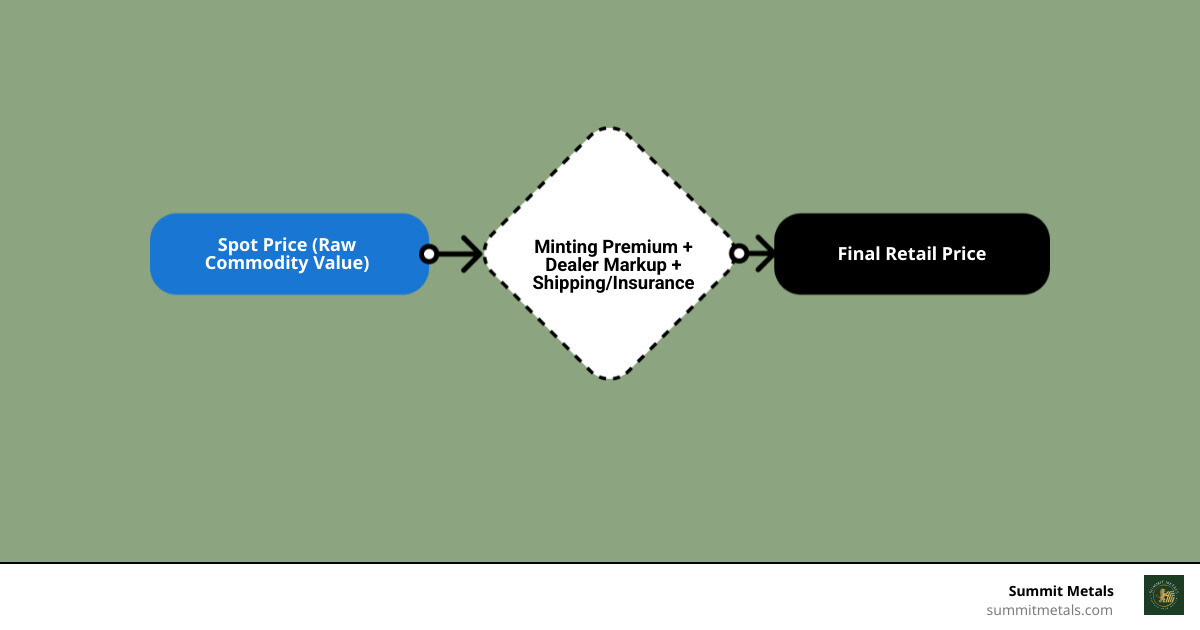
The infographic above illustrates the full cost breakdown: Spot Price (base commodity value) + Minting Premium (fabrication, design, quality control) + Dealer Markup (retailer overhead, profit margin) + Shipping & Insurance (delivery, tracking, protection) = Final Retail Price. Additional factors like collectible designs, premium mints (Geiger, Germania), and bulk discounts further influence the price you pay per ounce.
Must-know 999 copper bar price terms:
What Determines the Current 999 Copper Bar Price?
Understanding the 999 copper bar price begins with distinguishing between the raw commodity value and the retail price. It's like buying a custom-made cake versus buying flour—both involve ingredients, but one has significant labor and artistry added.
Spot Price vs. Retail Price
The spot price of copper is the current market price for the raw commodity, quoted on exchanges like the London Metal Exchange (LME) or COMEX. These major commodity exchanges provide real-time pricing data that reflects global supply and demand dynamics.
As of this publication, the live copper price is around $5.95 per pound. You can monitor copper prices through various financial data providers and commodity exchanges to see the baseline value of the metal itself.
The retail price of a 999 copper bar is what you pay from a dealer like us at Summit Metals. This price includes the spot price plus a "premium" that covers refining to .999 purity, manufacturing, design, marketing, and dealer overhead. Because copper's spot price is low, this premium represents a much larger percentage of the final price compared to gold or silver.
Using a dollar-cost averaging approach through Summit Metals' Autoinvest program can help you manage this spread. By scheduling automatic monthly purchases—just like regular 401k contributions—you smooth out short-term price moves and avoid trying to time the copper market.
Price Fluctuation Factors
Copper's price is volatile, earning it the nickname "Dr. Copper" as an indicator of global economic health. Key factors include:
- Industrial Demand: Copper is essential for the construction sector, electronics, and green technologies like the EV market. High industrial activity often raises copper prices.
- Global Supply Chains: Mining disruptions or transportation issues can restrict supply and push prices up.
- Geopolitical Events: Trade tensions and political instability in major producing or consuming nations can cause price swings.
- Economic Outlook: A strong global economy generally means higher copper prices, while downturns can lead to decreases.
Historical Price Trends
Long-term charts show copper's price mirroring global economic cycles. Its industrial utility ties its value closely to real-world economic activity, making it different from monetary metals like gold. For broader economic context, you can review copper's role and price history on reference sites like Wikipedia's copper page, which also outlines its industrial uses.
For a deeper dive into what copper bullion really entails, including its purity and value proposition, we encourage you to read our guide: More info about what copper bullion is.
Navigating the Market: Sizes, Forms, and Retailers
When you're looking to acquire 999 copper bars, you'll find a wide variety of options. These choices—from weight and form to where you purchase them—all play a role in the final 999 copper bar price you'll encounter.
Common Weights
Copper bars come in sizes for every budget and collection goal:
- 1 oz: The most affordable entry point, but with a high premium per ounce.
- 10 oz: A popular mid-range option balancing affordability and substance—the 10 oz Frontier Mint copper bar is a good example of this size.
- 1 Kilo (approximately 35.3 oz): A significant piece for those seeking a larger tangible asset.
- 1 lb (approximately 16 oz): A common weight, often in novelty designs.
- 5 lb and 10 lb: Larger bars with a lower premium per ounce, ideal for accumulating more copper for less.
The price per ounce effect is crucial: generally, the larger the bar, the lower the premium per ounce. A 10 oz bar won't cost ten times a 1 oz bar; it might be significantly cheaper per ounce because fixed manufacturing costs are spread over more metal.
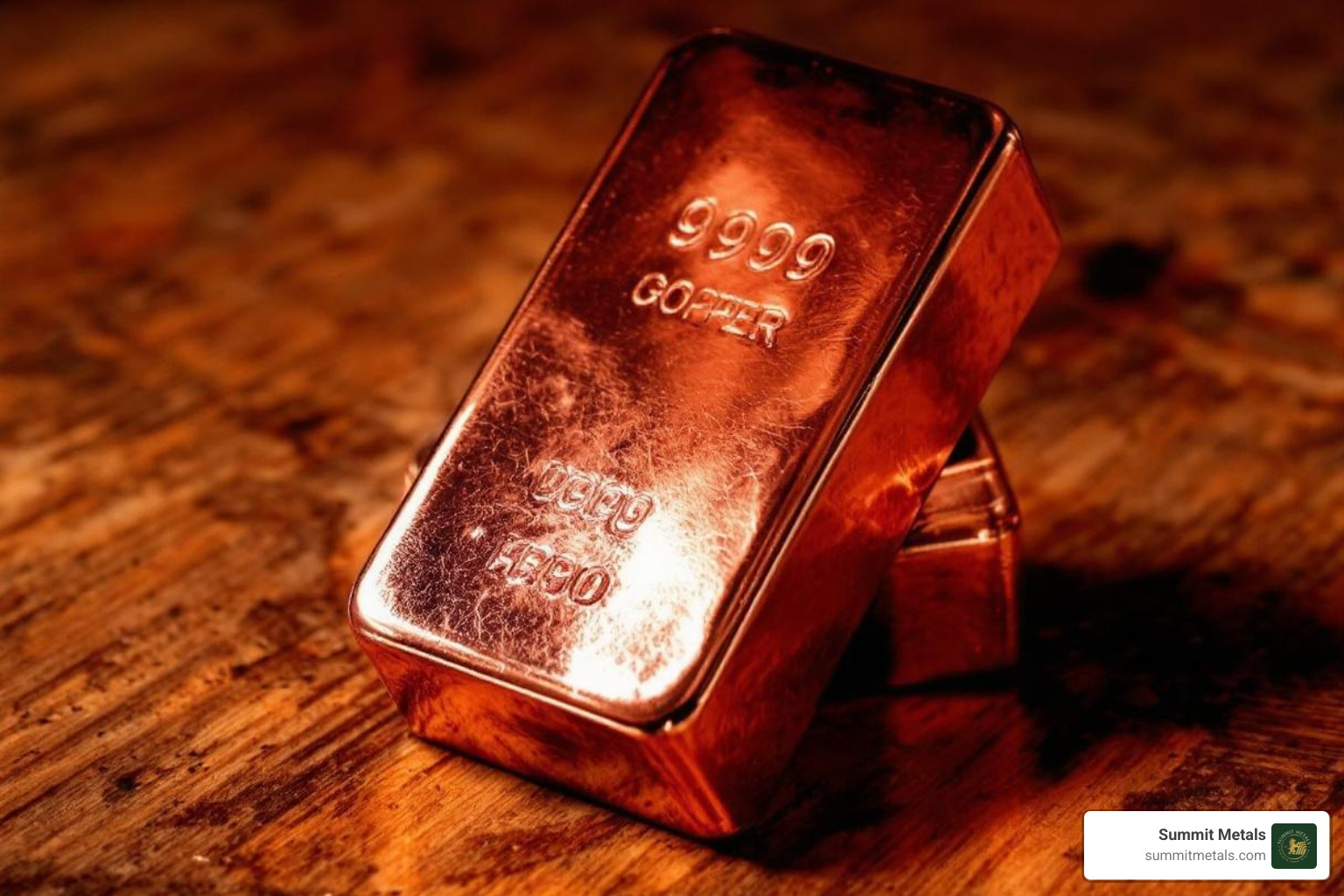
A visual representation of the common sizes of copper bars, from a small 1 oz bar to a hefty 1 Kilo bar, illustrating the tangible difference in scale.
Bars vs. Rounds
Beyond just weight, copper bullion also comes in different forms: bars and rounds.
- Shape Difference: Bars are rectangular, while rounds are circular, often resembling coins.
- Design Variety: Both forms offer vast design variety. Rounds often feature coin-like art (e.g., Morgan, Walking Liberty), while bars may have elemental or banknote motifs.
- Collectibility: Intricately designed rounds can have higher numismatic appeal, but unique poured bars are also sought by collectors.
- Price Comparison: The intrinsic value is the same, but rounds with complex designs may have slightly higher premiums.
Here's a simple comparison to help you weigh your options:
| Feature | 1 oz Copper Bar | 1 oz Copper Round |
|---|---|---|
| Typical Premium | Moderate to High | Moderate to High (can be higher for intricate designs) |
| Design Variety | Industrial, elemental, banknote, simple logos | Coin-like, historical figures, intricate art, commemorative |
| Stackability | Excellent for uniform bars | Good, especially with protective capsules |
If you plan to add copper consistently through Summit Metals' Autoinvest program, bars are often easier to stack and store in bulk, while rounds may appeal more if you enjoy rotating designs month after month.
Where to Buy
Finding a reliable source for your 999 copper bars is paramount.
- Online Bullion Dealers: This is often the most convenient way to purchase. Reputable dealers offer a wide selection, competitive pricing, and secure, insured shipping.
- Summit Metals: As your trusted partner in the Intermountain West, we offer a curated selection of metals, including our copper bars and rounds. We focus on authentic products with transparent, real-time pricing, ensuring you get the best value due to our bulk purchasing power. With Autoinvest, you can set a monthly budget and automatically accumulate bars or rounds over time, just like setting up recurring investments in a retirement account.
- Local Coin Shops: Shops in Salt Lake City, Utah, or other communities can be good for small purchases, but inventory may be limited and prices higher than online retailers.
No matter where you choose to buy, always verify the dealer's reputation, check their policies, and ensure the purity of the copper (.999 fine) is clearly stated.
Uncovering the Full Cost: Premiums, Mints, and Additional Fees
When you see a 999 copper bar price, it's rarely just the melt value of the copper. A significant portion of that price is made up of premiums and additional costs. Understanding these components is key to making an informed purchase.
Understanding Premiums
The "premium" is the amount you pay above the current spot price of copper. It covers several essential costs:
- Minting Costs/Fabrication: Turning raw copper into a polished bar requires machinery, labor, and energy. Intricate designs or smaller bars have higher per-ounce fabrication costs.
- Dealer Markup: This covers a dealer's operating expenses and profit. At Summit Metals, we strive to keep our markups competitive, ensuring value for our clients.
- Design Intricacy: A plain bar will generally have a lower premium than one featuring a detailed design like a Walking Liberty, which requires more complex manufacturing steps.
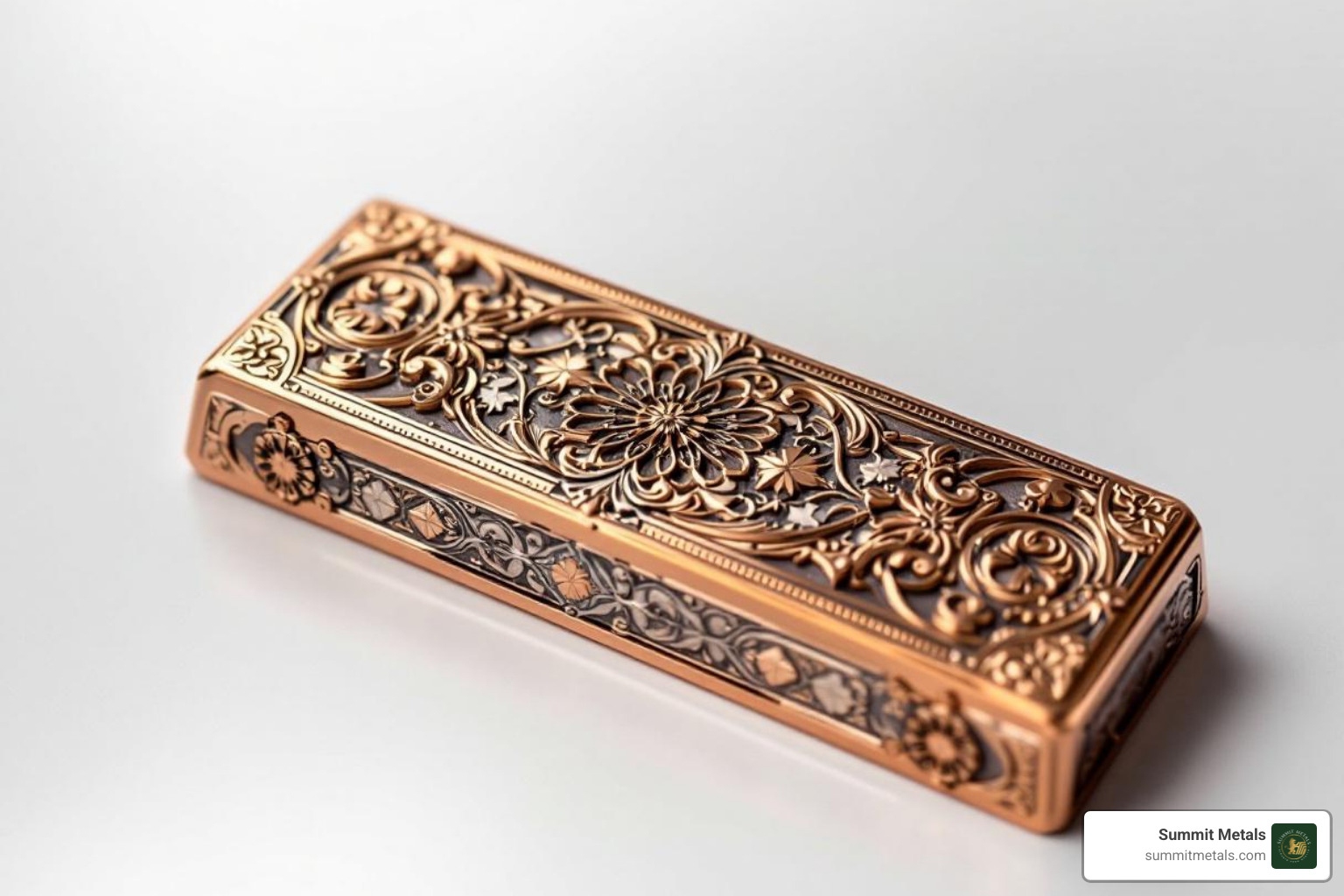
This image showcases a highly detailed, collectible copper bar, emphasizing the intricate designs that can contribute to a higher premium over the spot price. Such pieces are often sought after for their aesthetic appeal and craftsmanship, beyond just their metal content.
How Mints and Designs Affect the 999 copper bar price
The origin and aesthetic of your copper bar can significantly influence its price.
Premium Mints
Certain mints like Geiger Edelmetalle or Germania Mint command higher premiums for their recognized quality, craftsmanship, and unique designs.
- Summit Metals exclusive designs: We sometimes offer unique designs that celebrate American heritage, adding a special touch for our collectors.
- Poured vs. Stamped bars: Poured bars have a rustic, artisan feel, while stamped bars allow for more intricate, consistent designs. Both can carry premiums for their distinct aesthetics.
Collectible Designs
Many copper bars are minted with designs that echo popular coin motifs, enhancing their collectible appeal. These include:
- Walking Liberty: A classic American design.
- Buffalo Nickel: Another iconic and nostalgic design.
- Banknote series: Designs inspired by historical U.S. banknotes.
These designs contribute to the 999 copper bar price by adding to the manufacturing complexity and perceived value. For a deeper look into the types of copper bars available, check out our guide: Copper Bar Types 101.
Factoring in Extra Costs Beyond the 999 copper bar price
Beyond the bar itself, there are other costs to consider.
Shipping & Insurance
- Free shipping thresholds: Summit Metals and other dealers often offer free shipping on orders over $199. Otherwise, a flat rate (e.g., $9.95) typically applies.
- Signature requirements: For security, orders over a certain value (often $1000) usually require a signature. All our shipments are fully insured.
Using Autoinvest can help you plan around these thresholds. By scheduling recurring monthly orders, you can target sizes and mixes of bars that efficiently reach free-shipping levels while sticking to your budget.
Sales Tax
Sales tax laws vary by state. For our clients:
- Utah: Precious metal bullion, including copper, is generally exempt from sales tax.
- Wyoming: Precious metal bullion is also generally exempt.
Always consult a tax advisor for specific guidance, as laws can change.
Copper as an Investment: Benefits, Risks, and Comparisons
So, you're considering a 999 copper bar for your portfolio. Is it a good idea? The answer is "it depends." Copper offers a unique set of benefits and risks, especially when compared to its shinier precious metal cousins.
Copper vs. Precious Metals
Let's put copper in perspective by comparing it to gold, silver, and platinum.
- Gold: The ultimate safe-haven and monetary metal with high value density and excellent liquidity.
- Silver: Has both monetary and industrial demand, making it more volatile than gold.
- Platinum: Primarily an industrial metal whose price is heavily influenced by the auto industry.
You can track how these metals move relative to one another by monitoring major commodity exchanges and financial data providers that offer comprehensive precious metals pricing.
Price Per Ounce Comparison (Approximate, as of this publication):
- Gold: ~$2,300 per troy ounce
- Silver: ~$30 per troy ounce
- Platinum: ~$1,000 per troy ounce
- Copper: ~$0.37 per troy ounce (spot price)
As you can see, the value density is drastically different. You'd need a very large amount of copper to equal the value of a small gold coin.
This image visually compares a copper bar, a silver bar, and a small gold coin, highlighting the stark difference in their physical size relative to their monetary value, illustrating value density.
Comparison Chart: Gold Coin vs. Gold Bar vs. Copper Bar
When building your tangible asset portfolio, understand the nuances of different forms of metal. Here's a comparison to help clarify where copper bars fit in.
| Feature | Gold Coin (e.g., American Eagle) | Gold Bar (e.g., 1 oz PAMP Suisse) | Copper Bar (e.g., 1 oz .999 Fine) |
|---|---|---|---|
| Face Value | Yes (e.g., $50 for 1 oz American Eagle) | No | No |
| Premiums | Moderate to High | Moderate | High (due to low spot price) |
| Liquidity | Excellent | Excellent | Low |
| Storage | Compact, high value density | Compact, high value density | Bulky, low value density |
| Fraud Protection | High (government-backed, legal tender) | Moderate (assay cards, serialized) | Low (private-issue bullion) |
| Investment Appeal | Store of wealth, crisis hedge | Store of wealth, crisis hedge | Budget entry, industrial hedge, collectible |
| Legal Tender | Yes | No | No |
Benefit of Gold Coins: A key advantage of owning a government-issued gold coin is its face value. While the intrinsic metal value far exceeds this, its status as legal tender provides an additional layer of authenticity, trust, and fraud protection, enhancing its global liquidity and making it a secure asset.
If you plan to accumulate metals regularly using Summit Metals' Autoinvest, many investors prioritize gold coins and bars for their compact storage and liquidity, while allocating a smaller monthly amount to copper as a speculative or collectible component.
Investment Benefits
- Low Entry Point: Copper bullion is affordable, making it an accessible way to start a physical asset collection.
- Portfolio Diversification: It can add a small element of industrial commodity diversification.
- Industrial Demand Hedge: An investment in copper is a bet on the continued growth of manufacturing, renewable energy, and EVs.
A disciplined dollar-cost averaging plan—such as setting up recurring monthly purchases via Autoinvest—can help you integrate copper alongside gold and silver without overexposing your portfolio to a single metal.
Investment Risks
- High Premiums Over Spot: The premium is often many times the melt value, making it hard to profit from spot price increases alone.
- Lower Liquidity: The market for selling copper bars is smaller and less efficient than for gold or silver.
- Storage Space: Accumulating significant value requires a lot of physical space.
- Not a Monetary Metal: Its value is tied to industrial use, not historical wealth preservation.
For those considering a larger copper investment, such as a 1kg bar, we have a detailed analysis: Is a 1kg Copper Bar Your Next Long-Term Investment.
Frequently Asked Questions about Copper Bar Pricing
We often hear similar questions from our clients in Utah and Wyoming regarding the 999 copper bar price and its investment potential. Let's address some of the most common ones.
Is buying .999 copper bars a good investment?
This depends heavily on your expectations and goals.
Pros:
- Low Cost: It's an incredibly affordable way to enter the tangible asset market.
- Diversification: It can offer exposure to industrial commodity trends.
- Tangible Asset: Owning something physical, something you can hold, appeals to many.
Cons:
- High Premium-to-Value Ratio: The premium makes up a large fraction of your purchase price, making it difficult to realize gains unless copper's spot price skyrockets.
- Lower Liquidity: It's not as easy to sell copper bars quickly or for a high return compared to gold or silver.
- Storage Bulk: Accumulating a significant amount of copper takes up considerable space.
In summary, for pure investment, copper bars are generally not a primary vehicle. They shine more as a collectible, a gift, or a very low-cost entry into physical metals.
How much is a 1 lb .999 copper bar worth?
A 1 lb (avoirdupois) 999 copper bar contains 16 ounces of pure copper. Its intrinsic metal value is the current spot price of copper. If the spot price is $5.95 per pound, the metal value of a 1 lb bar would be approximately $5.95.
However, the retail price is significantly higher due to premiums. Retail prices for a 1 lb .999 copper bar typically range from $25.99 to $67.69 or more. This wide range is due to the retailer, design, and mint. A plain bar from a generic mint will be on the lower end, while a beautifully designed bar from a premium mint will be on the higher end.
What's the difference between .999 and .9999 fine copper?
The difference lies in their purity level:
- .999 fine copper: This means the copper is 99.9% pure. This is the common standard for most copper bullion.
- .9999 fine copper: This indicates a higher purity of 99.99%, which requires additional refining steps.
While this difference might seem minuscule, .9999 fine bars, often from renowned mints like Geiger Edelmetalle, may carry a slightly higher premium. For most collectors and budget investors, .999 fine copper is perfectly adequate and more widely available.
Building Your Metal Portfolio Strategically
We've covered a lot of ground regarding the 999 copper bar price, its components, and its place in the broader metals market. Let's bring it all together and consider how you can strategically approach building your tangible asset portfolio.
Recap
The true cost of a 999 copper bar goes far beyond its spot price. It encompasses minting premiums, dealer markups, and the allure of specific designs. While copper offers a low entry point into physical metals, its high premium-to-spot ratio and lower liquidity mean it's typically better suited as a collectible or a niche investment rather than a primary store of wealth like gold or silver.
Strategic Investing
Consistency and a long-term view are often the keys to success. We advocate for a strategy known as dollar-cost averaging. This involves investing a fixed amount of money at regular intervals, regardless of the market price, which averages out your purchase price over time.
At Summit Metals, our Autoinvest feature makes this easy. You can set up recurring purchases of gold, silver, or even copper and have them processed automatically every month—similar to making regular contributions to a 401k. Over time, this approach helps smooth out volatility, reduces the temptation to time the market, and steadily builds your stack of tangible assets.
A simple way to structure your plan is to prioritize high-liquidity, high-value-density assets (like gold coins and bars) with the bulk of your monthly Autoinvest budget, while allocating a smaller portion to copper bars or rounds if you enjoy their industrial story or collectible designs.
Summit Metals
At Summit Metals, we are dedicated to providing our clients in Utah and Wyoming with authenticated gold and silver precious metals for investment. Our transparent, real-time pricing and competitive rates, achieved through strategic bulk purchasing, ensure trust and value for every investor.
Whether you're looking to sell your existing bullion or expand your portfolio, we offer clear guidance and support. You can explore From Bar to Bank: Your Guide to Selling Copper Bullion to understand the process.
We believe that education is the first step toward smart investing. We invite you to learn how to build your metal portfolio with our expert guides and see how features like Autoinvest can help you accumulate metals month after month, just like you would with a long-term retirement plan.
Copper Pricing Quick Answers (Updated September 2026)
Why do two .999 copper bars cost different amounts per ounce? Fabrication, not metal. A 1 oz round and a kilo ingot hold the same purity, but the minting cost is spread across 35× more metal in the kilo — so price-per-ounce falls as pieces get bigger.
How is copper bullion priced? Not by spot. At copper's low melt value, the minting work is most of what you pay; think of the sticker as metal + craftsmanship, with craftsmanship in the lead.
What's the cheapest way to buy .999 copper? Big and plain: cast kilo bars and bulk boxes carry the lowest premium per ounce; small art rounds carry the highest.
Does copper bullion track the futures price? Loosely at best. Retail premiums are so large relative to melt that day-to-day spot moves barely register in finished-piece prices.
Is copper bullion a good investment? Treat it as collecting-plus-stacking — the lowest entry price in metals, paid for with proportionally high premiums. Enjoyment is the yield.
Is copper IRA eligible? No — IRAs accept only qualifying gold, silver, platinum, and palladium. See IRA-eligible gold and silver.
Copper vs silver on price mechanics: silver = live spot market, tight spreads, IRA-eligible; copper = fabrication-driven pricing and the lowest cost per piece. Stack copper for fun, silver for mechanics.
Shop .999 copper at Summit Metals
Compare the kilo raw bar, kilo cast bar, 1 oz Buffalo round, and 500 oz monster box in the copper collection.
Guide updated September 2026 by the Summit Metals team.