Understanding the True American Platinum Eagle Value
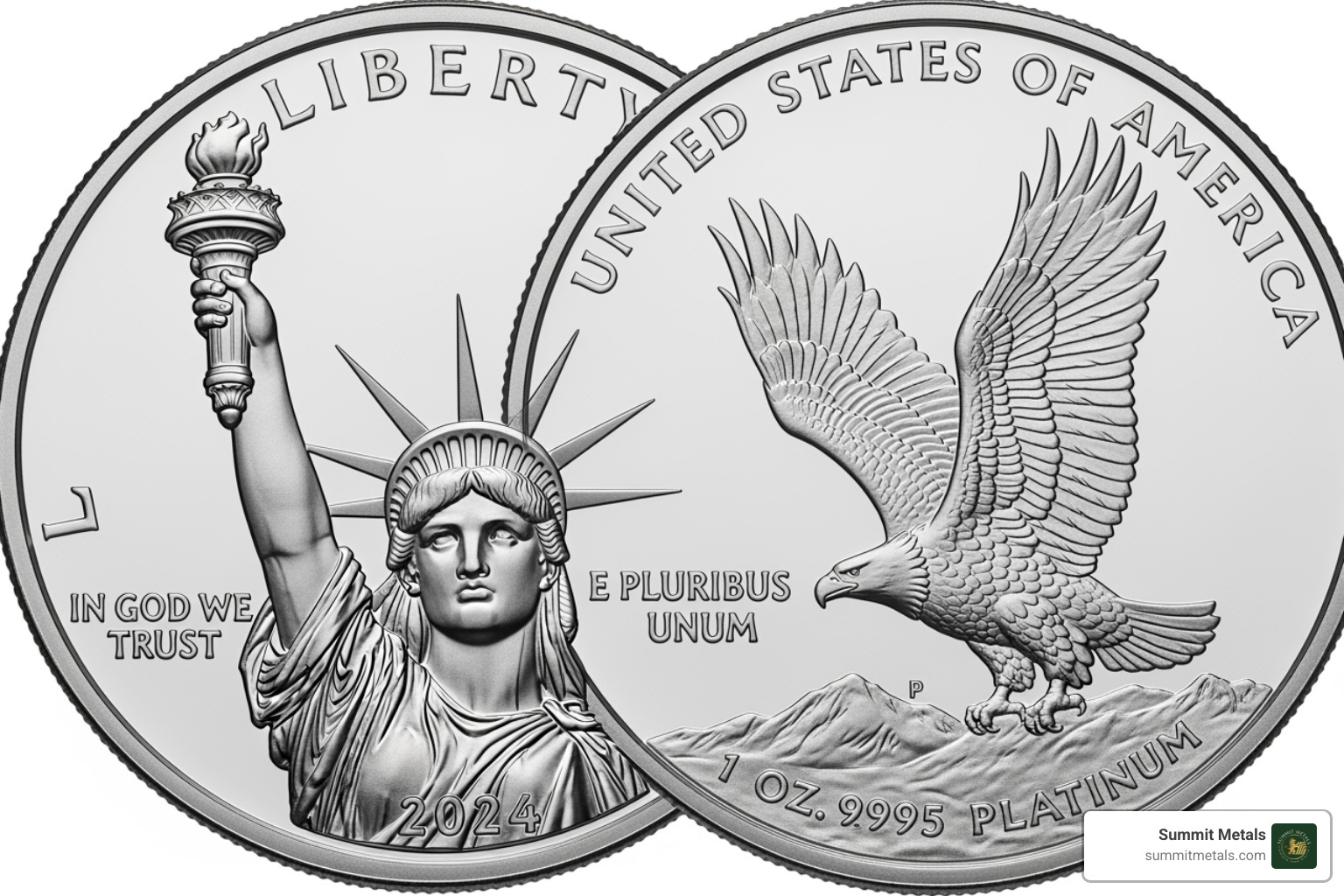
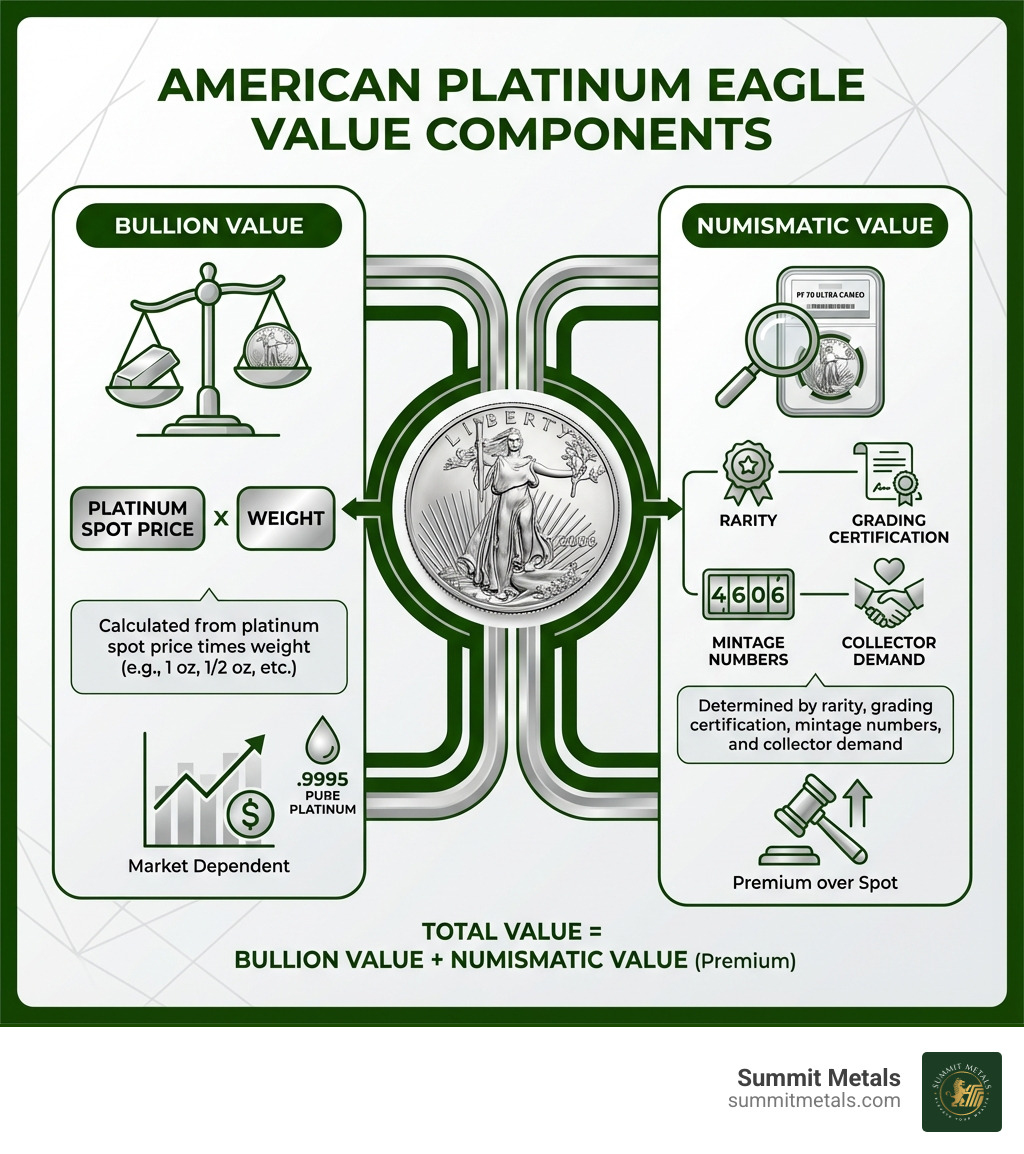
American Platinum Eagle value depends on two key components: the current platinum spot price (approximately $998 per troy ounce as of this publication) and any numismatic premium based on the coin's rarity, condition, and collector demand.
Quick Value Overview:
- 1 oz Bullion Coin (Random Year, BU): Starting at $1,318 (spot + premium)
- Graded Proof 70 Coins: $3,018 to $13,392+ depending on year
- Rare High-Grade Mint State: $1,700 (1997 $10 MS70) to $36,500 (1997 $100 MS70)
- Key Value Drivers: Grade (MS/PF 60-70), mintage numbers, finish type (Bullion vs. Proof), and year
The American Platinum Eagle is the only official platinum bullion coin produced by the U.S. Mint. Since its introduction in 1997, this .9995 pure platinum coin has served both as a precious metal investment and a highly collectible numismatic piece. Unlike its gold and silver counterparts, the Platinum Eagle features unique annual reverse designs on Proof versions, making certain years significantly more valuable than others.
Understanding your coin's true worth requires looking beyond just the metal content. A standard bullion coin trades close to the platinum spot price plus a modest premium, while rare Proof 70 examples can command premiums of 300% or more. For instance, the 2008 Platinum American Eagle Proof 70 Set has gained 71% since 2018, now valued at $13,392. Meanwhile, the scarce 2014 Proof (mintage of just 4,606) carries substantial collector premiums due to its rarity.
The difference between a $1,318 bullion coin and a $36,500 graded specimen lies in understanding grade, mintage, finish, and market demand—factors we'll break down in this comprehensive guide.
I'm Eric Roach, and during my decade advising Fortune 500 clients through complex hedging programs on Wall Street, I learned how institutions use alternative assets to manage risk—strategies I now apply to help everyday investors diversify with physical precious metals like platinum. Throughout this guide, I'll show you exactly how to determine American Platinum Eagle value and make informed decisions about buying, selling, or holding these remarkable coins.
Key Specifications of the American Platinum Eagle
The American Platinum Eagle coins are a testament to the United States Mint's commitment to producing high-quality precious metal products. These stunning coins are produced at the West Point Mint and proudly bear the 'W' mint mark, signifying their origin.
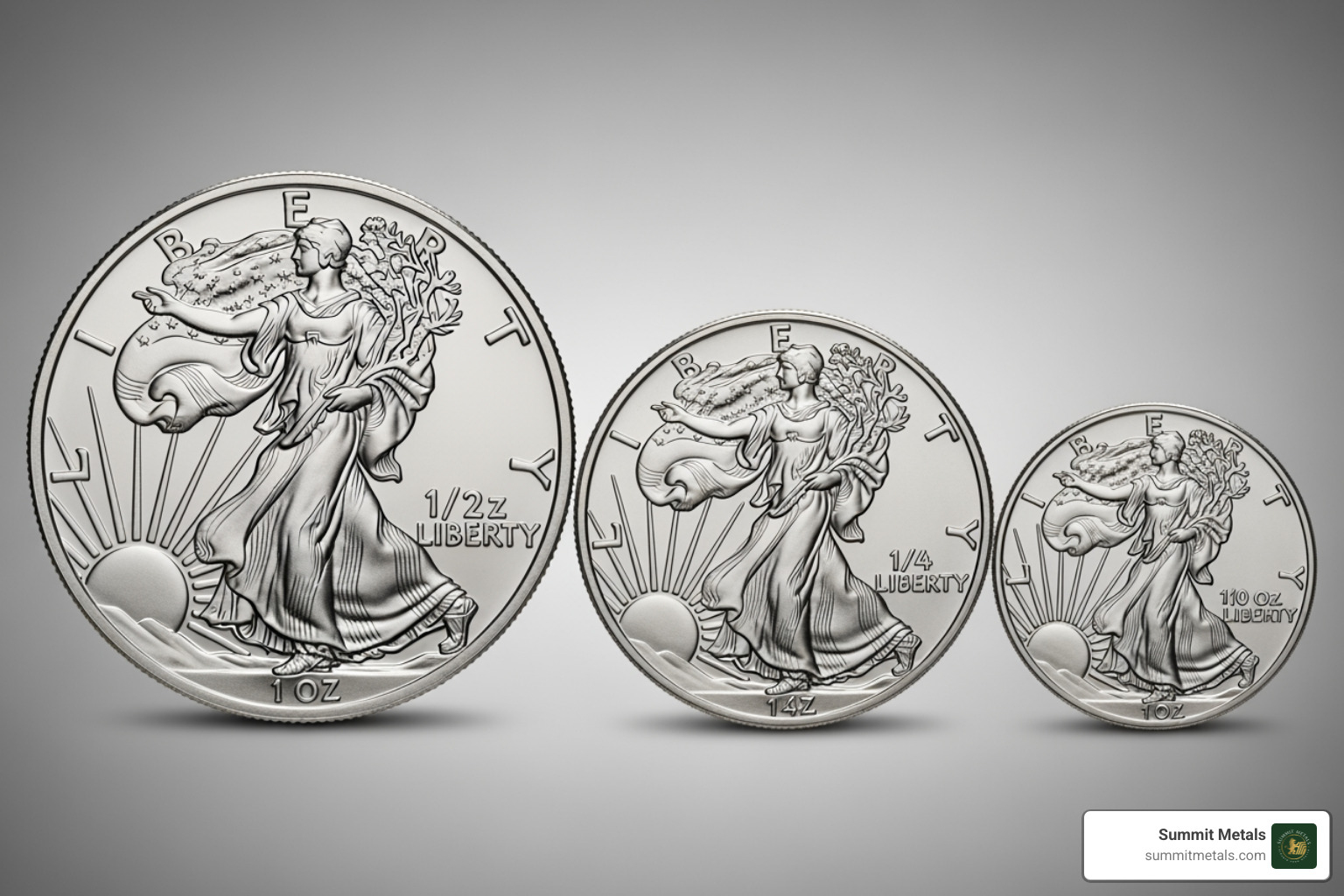
First introduced in 1997, the Platinum Eagle program initially offered a range of denominations and sizes to cater to different investors and collectors:
- 1 oz (one troy ounce): With a face value of $100, this is the flagship coin and has the highest face value of any U.S. coin.
- 1/2 oz (half troy ounce): Carries a face value of $50.
- 1/4 oz (quarter troy ounce): Denominated at $25.
- 1/10 oz (one-tenth troy ounce): The smallest denomination, with a face value of $10.
These fractional sizes (1/2 oz, 1/4 oz, and 1/10 oz) were produced from 1997 to 2008. After 2008, the U.S. Mint primarily focused on minting only the 1 oz platinum coin, specifically in proof versions, which we'll discuss shortly.
Each American Platinum Eagle coin contains an impressive 99.95% pure platinum, a level of purity guaranteed by the U.S. Treasury Department. This makes them a trusted choice for those looking to invest in physical platinum.
The design elements of the American Platinum Eagle coins are both iconic and deeply symbolic. The obverse (front) of the coin features a majestic portrayal of Lady Liberty, a design masterfully created by John Mercanti, who is also renowned for his work on the American Silver Eagle reverse. Lady Liberty gazes confidently forward, embodying the spirit of freedom and enlightenment.
The reverse (back) of the bullion version of the coin depicts a powerful soaring eagle, a design by Thomas D. Rogers. This image evokes strength, independence, and the vastness of the American landscape. It's a classic and enduring symbol that beautifully complements the obverse.
Bullion vs. Proof Finishes
When exploring American Platinum Eagle value, it's crucial to understand the distinction between "Bullion" (also known as Mint State or BU for Brilliant Uncirculated) and "Proof" finishes. This difference significantly impacts a coin's collectibility and premium.
Mint State (BU) Coins: These coins are designed primarily for investment in precious metals. They are produced for mass circulation (though rarely actually circulated) and are valued mainly for their platinum content. While they still possess the beautiful Lady Liberty and soaring eagle designs, their finish is typically a standard, uniform shine. They are struck once, or a few times, to produce a consistent coin. For example, the 1 oz American Platinum Eagle coin (Random Year, BU) is available for purchase starting at $1,318.06 (at the time of this publication). These coins offer an excellent way to own physical platinum with a lower premium over the spot price.
Proof Coins: Proof Platinum Eagles are a different breed altogether. These coins are specially struck for collectors and are characterized by their exquisite, mirror-like fields and frosted, detailed devices (the raised elements of the design). This stunning contrast is achieved by striking the coin multiple times with specially prepared dies on polished planchets.
What truly sets the Proof Platinum Eagles apart from other U.S. precious metals coins is their unique annual reverse designs. While the bullion version maintains the same soaring eagle design, the Proof versions, starting in 1998 (with the exception of the 1997 Proof which shared the bullion design), feature a new, thematic reverse design each year. This annual design change is a major driver of collector interest and numismatic value, turning each year's Proof coin into a distinct work of art and a potential rarity.
Since 2009, the U.S. Mint has exclusively produced the 1 oz Platinum Eagle in its proof version, discontinuing the Mint State editions and all fractional sizes. This shift further solidifies the Proof Platinum Eagle's position as a collector's item with significant numismatic appeal.
Factors Influencing the American Platinum Eagle Value
The American Platinum Eagle value isn't simply determined by the weight of its metal. Several factors intertwine to create its market price, making it a fascinating asset for both investors and collectors.
At its core, the value starts with the platinum spot price. This is the real-time market price of one troy ounce of pure platinum, and it serves as the baseline for any platinum product. As a government-issued bullion coin, the Platinum Eagle's intrinsic value is directly tied to this fluctuating commodity price. Understanding the dynamics of this base value is fundamental to appreciating the coin's overall worth. For a deeper dive into how this works, we encourage you to read our guide on Platinum Bullion and Spot Price: What You Need to Know.
Beyond the spot price, a coin's value includes a premium. This premium covers manufacturing costs, distribution, dealer markups, and, crucially, any numismatic desirability. These premiums can vary significantly based on supply, demand, and the specific characteristics of the coin.
The condition of the coin is another paramount factor. Coins are graded on the Sheldon scale from 1 to 70, with 70 representing a perfect, flawless coin. For Mint State coins, this is referred to as MS-70, and for Proof coins, it's PF-70 (or PR-70). A higher grade almost invariably means a higher value, as perfect coins are much scarcer and highly sought after by collectors.
The Significance of 'Proof 70' Certification
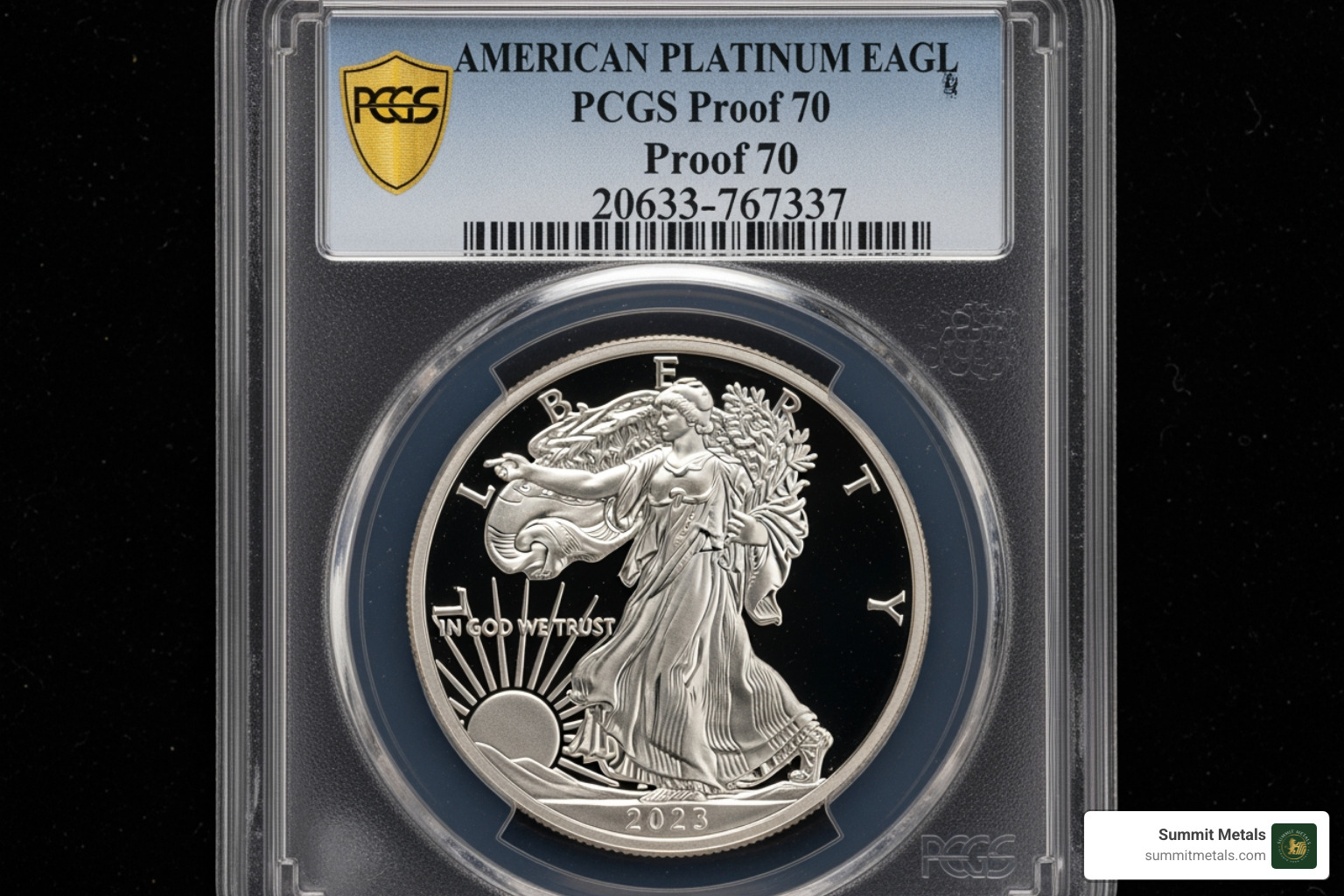
The concept of a 'Proof 70' certification is a game-changer for the American Platinum Eagle value. When a coin receives this coveted grade from a reputable third-party grading service like PCGS or NGC, it signifies perfection. A Proof 70 coin is flawless, even under 5x magnification, exhibiting no post-production imperfections. It's truly "museum-quality."
This certification does more than just confirm perfection; it guarantees authenticity and encapsulates the coin in an inert, tamper-evident slab, protecting its condition indefinitely. For collectors and investors, a Proof 70 grade translates directly into significantly higher market demand and, consequently, substantial price premiums over lower-graded coins or raw bullion.
Consider these statistics:
- The 1997 Platinum American Eagle Proof 70 Set, which started at $6,650.00 (in 2018), is now valued at $10,979.00 (at the time of this publication), representing a 65% gain.
- The 2013 Platinum American Eagle Proof 70 Coin has seen an impressive 86% gain, increasing its value by $2,950.00 (at the time of this publication).
- The 2008 Platinum American Eagle Proof 70 Set has a current price of $13,392.00 (at the time of this publication), having seen a 71% gain.
These figures illustrate that a perfect grade can dramatically boost a coin's value far beyond its intrinsic metal content, making Proof 70 Platinum Eagles a distinct investment class. They are valued not just for their platinum, but for their rarity and pristine condition.
How Mintage and Rarity Affect American Platinum Eagle Value
In numismatics, scarcity often equates to desirability, and the American Platinum Eagle is no exception. Mintage numbers—the total quantity of coins produced for a specific year and type—play a pivotal role in determining a coin's rarity and, by extension, its American Platinum Eagle value.
Lower mintages mean fewer coins are available on the market, which can drive up demand and prices, especially for high-grade examples. Some years of Proof Platinum Eagles have notably low mintages, making them particularly sought after. For instance:
- The 2014 Platinum American Eagle Proof coin had a mintage of just 4,606 pieces.
- The 2015 Platinum American Eagle Proof coin had an even lower mintage of 3,886 pieces.
These low production figures contribute significantly to their higher premiums compared to years with larger mintages.
Beyond the standard Proof issues, special burnished issues from the West Point Mint, produced in 2006, 2007, and 2008, are also considered scarce. Each of these burnished coins had mintages of fewer than 4,000 pieces, making them highly collectible and often worth more than their basic spot value.
Furthermore, the discontinuation of the fractional Platinum Eagle sizes (1/2 oz, 1/4 oz, and 1/10 oz) after 2008 also contributes to the rarity of these earlier issues. Finding complete sets of these earlier fractional coins, especially in high grades, can be challenging and commands higher prices.
For those keen on tracking the specifics of mintage figures and their corresponding values, reputable price guides are invaluable. You can View the PCGS Price Guide for Platinum Eagles to see detailed pricing data based on grade and year. This resource, along with others like APMEX and Greysheet, offers a comprehensive look at how mintage directly influences the market value of these beautiful coins.
Collectibility: Special Issues and Thematic Series
What truly sets the American Platinum Eagle apart in the pantheon of U.S. bullion coins is its unique approach to design. While the American Gold and Silver Eagles maintain their iconic reverse designs year after year for their bullion versions, the Proof American Platinum Eagles are distinct for their annual reverse design changes. This makes each year's Proof coin a unique artistic expression and a highly collectible item.
This commitment to fresh, thematic designs began in 1998 and has continued ever since, changing the Platinum Eagle program into a dynamic series for numismatists. It's like collecting miniature platinum art pieces, each with its own story and significance.
Understanding the Numismatic American Platinum Eagle Value
The continuous evolution of the Proof Platinum Eagle's reverse designs has led to several captivating thematic series, each adding layers to the coin's numismatic American Platinum Eagle value. These series explore different facets of American ideals and history, making them particularly appealing to collectors who appreciate both the precious metal and the artistry.
Some notable thematic series include:
- "Vistas of Liberty" Series (1998-2002): This was the first multi-year series for the Platinum Eagle, showcasing various majestic American landscapes and wildlife.
- "Foundations of Democracy" Series (2006-2008): These designs honored the fundamental principles upon which the United States was built.
- "Preamble to the Constitution" Series (2009-2014): This highly regarded series explored the core tenets expressed in the Preamble to the U.S. Constitution. A fun fact from this series: the 2012 coin deliberately used the archaic spelling "defence" (instead of "defense"), a nod to the original text of the Preamble, adding a quirky historical detail for collectors!
- "Torches of Liberty" Series (2015-2016): This series focused on the concept of liberty and its symbols.
- "Preamble to the Declaration of Independence" Series (2018-2020): Honoring the foundational document of American independence.
- "First Amendment to the United States Constitution" Series (2021-Present): The current ongoing series, each year highlighting one of the five freedoms guaranteed by the First Amendment.
Beyond these thematic series, some Platinum Eagles gain additional numismatic appeal through special collaborations. The Ed Moy Signature Series is a prime example. We've partnered with former U.S. Mint Director Ed Moy to offer special editions of Proof Platinum Eagles with his hand-signed certification labels. These exclusive coins are highly sought after, with their limited population and association with a prominent figure in U.S. coinage adding significant value and collectibility. They represent a unique blend of historical significance and expert authentication, making them prized possessions for serious collectors.
Investment Potential and Long-Term Performance
Investing in American Platinum Eagle coins offers a unique blend of precious metal security and numismatic upside, creating a compelling case for their inclusion in a diversified portfolio. While the spot price of platinum provides a strong foundation for their value, the numismatic characteristics of these coins, particularly the Proof 70 graded examples, demonstrate significant investment potential and long-term performance.
History shows that well-chosen Platinum Eagles can provide impressive returns. Consider these statistics on Proof 70 coins (at the time of this publication):
- The 2008 Platinum American Eagle Proof 70 Set has seen a remarkable 71% gain, now valued at $13,392.00.
- The 2013 Platinum American Eagle Proof 70 Coin has increased in value by $2,950.00, an 86% gain.
- Even more recent issues like the 2018 Platinum American Eagle Proof 70 Coin show a 55% increase, now at $3,936.00.
These gains often outpace the mere fluctuation of the platinum spot price, highlighting the premium associated with rarity, condition, and collector demand. Investment-grade Platinum Eagles in perfect Proof 70 condition are less susceptible to the daily "whims" of the commodities market. Their value is more stable because it's driven by their limited supply and the consistent demand from discerning collectors.
For those looking to diversify their portfolio, Platinum Eagles offer a tangible asset that can act as a hedge against inflation and economic uncertainty. Platinum, though less common than gold or silver in investment portfolios, offers its own unique market dynamics and industrial demand. We often advise our clients to consider a balanced approach to precious metals. If you're weighing your options, our article Gold or Platinum: Making Your Bullion Investment Choice provides valuable insights.
A Smart Strategy: Dollar-Cost Averaging with Autopay
Building a robust precious metals portfolio, especially with collectible items like Platinum Eagles, benefits greatly from a disciplined approach. One of the smartest strategies for long-term investors is dollar-cost averaging. This involves investing a fixed amount of money at regular intervals, regardless of the market price. This method helps mitigate market volatility by ensuring you buy more when prices are low and less when prices are high, averaging out your purchase price over time.
At Summit Metals, we make dollar-cost averaging effortless through our Autopays feature. Just like contributing to a 401k, you can set up a recurring monthly investment in platinum, steadily building your collection or bullion holdings over time. This consistent investing fosters a disciplined approach, takes the emotion out of market timing, and allows you to gradually accumulate valuable assets without the stress of trying to "buy the dip." It's a fantastic way to secure your financial future and build your platinum collection without even thinking about it.
Ready to set it and forget it? Set up your monthly platinum investment with Autopays and let us help you build your legacy.
Platinum Eagle Coin vs. Platinum Bar Comparison
When considering platinum investments, investors often deliberate between government-minted coins and privately minted bars. Both have their merits, but for many, the American Platinum Eagle coin offers distinct advantages, particularly in terms of security and long-term collectibility.
| Feature | American Platinum Eagle Coin | Platinum Bar (e.g., 1 oz) |
|---|---|---|
| Premium over Spot | Generally higher, especially for Proof/graded coins | Often lower, closer to spot price |
| Liquidity | High, recognized worldwide, easy to buy/sell | High, recognized worldwide, easy to buy/sell |
| Government Guarantee | Yes, purity and weight guaranteed by U.S. Mint | No, guaranteed by private mint |
| Collectibility | High, especially Proof issues with annual designs | Low, primarily valued for metal content |
| Counterfeit Protection | High, intricate designs, legal tender status, grading | Moderate, relies on recognized mint marks, less complex |
| Face Value | Yes, $100 for 1 oz, providing a legal floor for value | No, no face value |
| Sales Tax (Utah) | May be exempt depending on total transaction value | May be exempt depending on total transaction value |
The presence of a face value on the American Platinum Eagle coin is a significant benefit. While the $100 face value is far below its intrinsic platinum value, it legally designates the coin as U.S. tender. This status can offer a unique layer of protection, as the government guarantees its authenticity and legal standing, even in extreme scenarios. It adds an additional layer of trust and recognition that privately minted bars do not possess.
Furthermore, the intricate designs and strict production standards of the U.S. Mint make Platinum Eagle coins significantly harder to counterfeit than simpler platinum bars. When combined with third-party grading, this offers investors peace of mind regarding their investment's authenticity.
Frequently Asked Questions about Platinum Eagle Value
We understand that navigating precious metals and numismatics can bring up many questions. Here are some of the most common inquiries we receive regarding the American Platinum Eagle value.
How much is a 1 oz American Platinum Eagle worth?
The value of a 1 oz American Platinum Eagle is dynamic, influenced by the current platinum spot price, its condition, and its specific year of mintage.
- Bullion Value: At its most basic, a 1 oz American Platinum Eagle (Random Year, BU) is available for purchase starting at $1,318.06 (at the time of this publication). This price reflects the intrinsic platinum content plus a premium for minting and distribution.
- Numismatic Value: For graded coins, especially in Mint State (MS) or Proof (PF) 70 condition, the value can soar dramatically. For instance, a 1997 $100 Platinum American Eagle in MS 70 grade is valued at $36,500 (at the time of this publication). Even an MS 70 grade for a more recent year like the 2008 $100 Platinum Eagle can fetch $2,150 (at the time of this publication). The specific year, its mintage, and the coin's flawless condition contribute significantly to this improved value.
Are Platinum Eagles a good investment?
Many investors consider Platinum Eagles a sound investment for several reasons:
- Hedge Against Inflation: Like other precious metals, platinum tends to retain its purchasing power during periods of inflation, protecting wealth.
- Tangible Asset: Platinum Eagles represent physical wealth that you can hold, offering a sense of security not found in paper assets.
- Dual Potential: They offer both bullion and numismatic potential. While the platinum content provides a floor for its value, the collectibility of Proof issues and rare grades offers significant upside.
- Historical Performance: As highlighted by the impressive gains of many Proof 70 coins (e.g., the 2013 Platinum American Eagle Proof 70 Coin's 86% gain), these coins have a proven track record of appreciation, particularly for those in top condition and with low mintages.
For those looking to strategically steer the precious metals market, understanding the nuances of platinum trading is key. Our article Mastering Platinum Bullion Trading offers further insights into this valuable asset.
What is the rarest American Platinum Eagle coin?
Determining the "rarest" American Platinum Eagle coin can be complex, as rarity can stem from extremely low mintage numbers, survival rates in high grades, or unique historical factors. However, some stand out:
- Low-Mintage Proof Issues: Years with exceptionally low production figures for Proof coins are generally considered rare. For example, the 2015-W Proof Platinum Eagle had a mintage of only 3,886 pieces, making it one of the lowest mintage years. The 2014 Proof with a mintage of 4,606 also falls into this category. These low mintages translate directly into higher premiums.
- High-Grade Early Mint State Coins: Original Mint State (MS) coins from the first few years, especially in perfect MS70 condition, can be incredibly scarce. The 1997 $100 MS70, valued at $36,500 (at the time of this publication), is a prime example of an early Mint State coin commanding a significant premium due to its rarity in perfect condition.
- Special Issues: Unique offerings like the 2007-W 10th Anniversary Reverse Proof Platinum Eagle, which was part of a special two-coin set, also represent significant rarities due to their limited release and distinctive finish.
Rarity, coupled with strong collector demand, is a powerful driver of the American Platinum Eagle value.
Conclusion: Determining the True Worth of Your Collection
Understanding the American Platinum Eagle value is a journey that takes you beyond the simple price of platinum. As we've explored, the true worth of these magnificent coins is a rich mix woven from several critical factors:
- Spot Price: The foundation of value, determined by the global market price of platinum.
- Grade: The coin's condition, with a perfect "Proof 70" or "Mint State 70" certification often commanding premiums of hundreds or even thousands of dollars above other grades.
- Mintage: The total number of coins produced for a specific year and type, with lower mintages generally leading to higher rarity and value.
- Collector Demand: The appeal of unique annual reverse designs, thematic series, and special editions like the Ed Moy Signature Series, which can significantly influence market prices.
Whether you're an investor seeking a stable store of value or a numismatist passionate about collecting beautiful and historically significant coins, the American Platinum Eagle offers a compelling proposition. Its intrinsic value as .9995 pure platinum, combined with its potential for numismatic appreciation, makes it a prized asset.
At Summit Metals, headquartered in Wyoming with a strong presence in Salt Lake City, Utah, we pride ourselves on offering transparent, real-time pricing and competitive rates for authenticated gold and silver precious metals for investment. We believe in building trust and delivering value to investors. We're here to help you steer the nuances of the platinum market and make informed decisions about your precious metal investments.
Ready to explore platinum? Explore our full range of platinum products and find the perfect addition to your portfolio.