Why IRA Gold and Silver Matter for Your Retirement Security
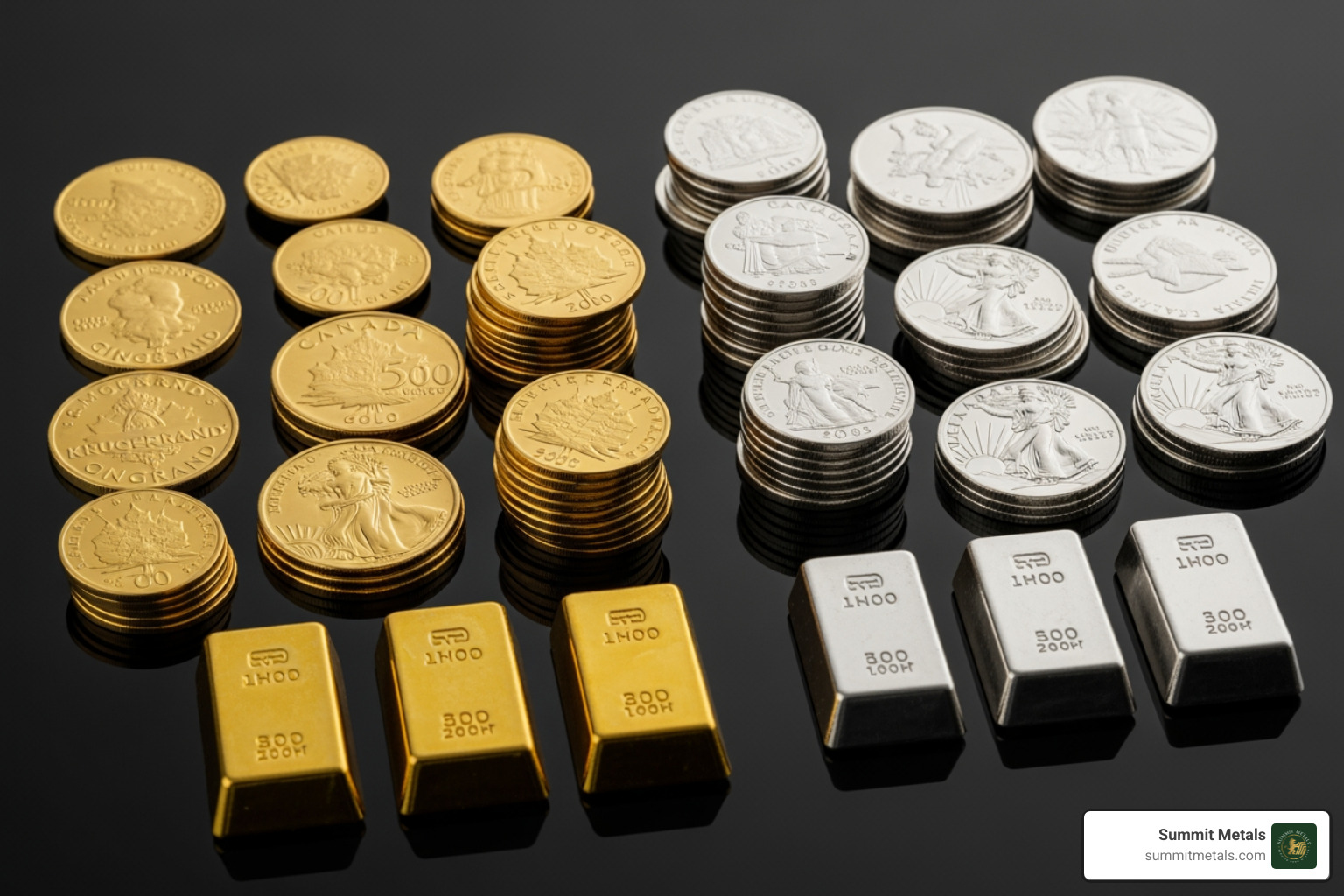
IRA gold and silver offer a proven way to protect your retirement savings from inflation, market crashes, and currency devaluation. These physical assets sit inside a self-directed IRA, giving you the same tax advantages as traditional retirement accounts—but with the security of tangible metals you actually own.
Quick Answer: How IRA Gold and Silver Work
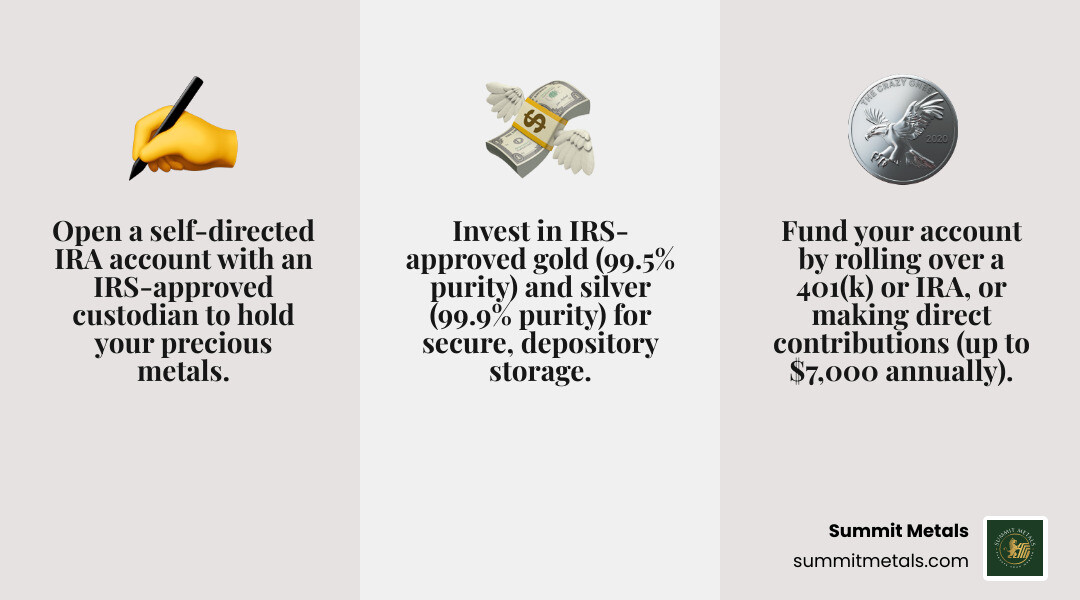
- Open a self-directed IRA with an IRS-approved custodian.
- Fund it through a rollover (401(k), traditional IRA) or direct contribution.
- Buy IRS-approved gold (99.5% purity) and silver (99.9% purity) coins or bars.
- Store metals in an IRS-approved depository (not at home).
- Grow tax-deferred (Traditional) or tax-free (Roth).
As global markets remain volatile, more Americans are turning to precious metals to protect long-term wealth. Gold has repeatedly proven its value as a stabilizer when paper assets fail, surging during the 2008 financial crisis and hitting record highs during the 2020 pandemic uncertainty. Traditional stock and bond portfolios offer little protection against systemic financial risk, but gold and silver aren't tied to corporate earnings or government policy, holding their value for thousands of years.
However, the path to investing in a Gold IRA is not without risks. Fraudulent dealers have drained retirement accounts with excessive markups, hidden fees, and high-pressure sales tactics. Without proper guidance, investors can lose a significant portion of their savings. This guide walks you through everything you need to know: IRS rules, custodian selection, funding options, and how to spot scams. You'll also learn about Summit Metals' Autoinvest program, which lets you build wealth consistently by making automated monthly purchases of gold and silver, much like a 401(k).
I'm Eric Roach, and after a decade as an investment banker, I now help everyday investors apply institutional discipline to IRA gold and silver. This guide translates complex risk management into clear, actionable steps for protecting your retirement. Whether you're rolling over a 401(k) or starting fresh, you'll gain the tools to make informed decisions and avoid costly mistakes.
Understanding the Fundamentals of a Precious Metals IRA
A Gold and Silver IRA is a powerful tool for diversifying a retirement portfolio beyond traditional paper assets like stocks and bonds. It allows you to hold physical gold, silver, platinum, and palladium, offering a tangible hedge against economic instability.
What is a Gold & Silver IRA?
At its core, a Gold and Silver IRA is a Self-Directed IRA (SDIRA). Being "self-directed" means you, the investor, have control over a wider range of investment choices, including physical precious metals. The structure involves three key players:
- You, the Investor: You make all investment decisions.
- An IRS-Approved Custodian: This entity handles the administration, ensures IRS compliance, and facilitates the purchase and storage of your metals.
- An IRS-Approved Depository: A secure facility where your physical gold and silver are stored, as the IRS prohibits home storage for IRA metals.
This structure provides the same tax advantages as a standard IRA—tax-deferred growth (Traditional) or tax-free withdrawals (Roth)—while holding real assets outside the traditional banking system.
Why Precious Metals Belong in Your Retirement Strategy
True diversification means holding assets that perform differently in various economic climates. IRA gold and silver offer this unique advantage for several reasons:
- Historical Store of Value: For thousands of years, gold and silver have maintained their purchasing power through economic crises, wars, and currency devaluations.
- Non-Correlated Asset: Precious metals often move independently of the stock market. When paper assets decline, gold frequently rises, helping to smooth out portfolio returns and reduce overall risk.
- Protection from Systemic Risk: Physical gold and silver are tangible assets, not digital entries or government promises. They provide a safeguard against currency devaluation and financial system instability. Many advisors suggest a 10% allocation to precious metals for this reason.
- Long-Term Wealth Preservation: While not offering the rapid growth of some stocks, precious metals excel at preserving wealth over the long term, protecting your retirement savings from the erosion of inflation.

Navigating IRS Rules for Your IRA Gold and Silver
The IRS has specific, non-negotiable regulations for precious metals held in an IRA. Understanding these rules is key to maintaining the tax-advantaged status of your IRA gold and silver.
IRS Purity and Product Requirements
The IRS sets strict purity standards to ensure only investment-grade bullion is included in an IRA. Collectible coins are generally not permitted.
- Gold: Must be 99.5% pure (.995 fineness). An exception is the American Gold Eagle coin, which is 91.67% pure but IRA-approved due to its government minting.
- Silver: Must be 99.9% pure (.999 fineness).
- Platinum: Must be 99.95% pure (.9995 fineness).
- Palladium: Must be 99.95% pure (.9995 fineness).
Commonly approved products for IRA gold and silver include government-minted coins like the American Gold Eagle, Canadian Gold Maple Leaf, and American Silver Eagle, as well as bars from accredited refiners like PAMP Suisse and the Royal Canadian Mint.
Prohibited Collectibles: Items like pre-1933 gold, South African Krugerrands, and most "numismatic" coins are not allowed in an IRA. Be wary of any dealer pushing these for an IRA, as they often carry inflated prices and are rarely eligible.

Choosing Your Metals: IRA-Approved Coins vs. Bars
When selecting your IRA gold and silver, you'll choose between coins and bars. Understanding their differences helps you make an informed decision.
| Feature | Gold/Silver Coins (e.g., American Eagles) | Gold/Silver Bars (e.g., PAMP Suisse) |
|---|---|---|
| Premium over Spot | Often higher due to minting costs and design intricacy. | Generally lower, offering more metal for your money. |
| Liquidity | Very high. Globally recognized and easily traded. | High, especially for recognized brands, but may be slightly less liquid than sovereign coins. |
| Recognizability | Excellent. Iconic designs are universally known and trusted. | Good for well-known brands but less visually distinct. |
| Divisibility | Excellent. Available in smaller fractions (e.g., 1/10 oz, 1/4 oz) for flexible selling. | Good. Available in various sizes (e.g., 1 oz, 10 oz, 1 kg). |
| Security Features | Strong. Government backing and a legal tender face value provide an inherent layer of anti-counterfeit protection. | Good. Reputable bars include serial numbers and assay certificates. |
Why coins might be a smart choice: While bars may have a lower premium, government-minted coins like the American Gold Eagle offer superior security and recognizability. Their face value, though nominal, signifies government backing, which deters counterfeiting and can simplify future transactions. For investors, ensuring IRA gold and silver is both valuable and secure is paramount.
How to Open and Fund Your Gold & Silver IRA: A Step-by-Step Guide
Opening a precious metals IRA is a straightforward process. Our goal is to make investing in IRA gold and silver simple and secure.
- Choose a Custodian & Dealer: Select an IRS-approved custodian that specializes in Self-Directed IRAs for precious metals. Simultaneously, choose a reputable dealer like Summit Metals, where our transparent, real-time pricing and bulk purchasing power ensure you get the best value.
- Open Your SDIRA Account: Your chosen custodian will guide you through the application, which is similar to opening any other retirement account.
- Fund Your Account: Transfer funds from an existing retirement account or make a new contribution.
- Purchase Your Metals: Direct your custodian to buy IRS-approved metals from your dealer. The metals are then shipped directly to a secure, IRS-approved depository.
Funding Your IRA Gold and Silver Account
There are three primary ways to fund your IRA gold and silver account:
- Rollovers: Move funds from a former employer's plan, like a 401(k), 403(b), or 457(b), into your new precious metals IRA. A "direct rollover" is recommended, where funds move from custodian to custodian, to avoid potential taxes and penalties.
- IRA Transfers: Transfer funds from an existing Traditional, Roth, SEP, or other IRA to your new precious metals IRA custodian. This is often the fastest method and has no tax consequences.
- Direct Contributions: Make annual contributions up to the IRS limit. For 2024, the limit is $7,000, with an additional $1,000 catch-up contribution for those age 50 and over.
Automating Your Investment with Autoinvest from Summit Metals
Consistent investing is key to long-term wealth. Summit Metals' Autoinvest program brings the discipline of a 401(k) to your IRA gold and silver investments.
With Autoinvest, you can:
- Dollar-Cost Average: Invest a fixed amount regularly instead of trying to time the market. This strategy mitigates volatility by buying more metal when prices are low and less when they are high.
- Invest Consistently: Set up automatic monthly purchases of your chosen gold and silver products. This hands-off approach ensures you are always building your holdings.
- Build Wealth Over Time: Like a 401(k), regular, automated investments compound over the long term, helping you steadily accumulate physical assets.
Autoinvest is an excellent way to secure your financial future with minimal effort. Learn more and set up your monthly investment plan at Set up your monthly investment plan with Summit Metals Autoinvest.
The Financials: Fees, Taxes, and Distribution Rules
Understanding the financial aspects of a precious metals IRA is crucial. This includes fees, tax implications, and the rules for accessing your investments in retirement.
Understanding Gold IRA Tax Rules
The tax rules for IRA gold and silver mirror those of standard IRAs. Your custodian handles all IRS reporting.
- Traditional IRA: Contributions may be tax-deductible, and investments grow tax-deferred. You pay income tax on withdrawals in retirement.
- Roth IRA: Contributions are made with after-tax dollars, but qualified withdrawals in retirement are completely tax-free.
- Taxable Events: Any distribution from a Traditional IRA is taxable income. Taking physical possession of your metals is also a taxable distribution, valued at the metal's market price.
Distribution and Withdrawal Guidelines
Accessing your IRA gold and silver follows standard IRA rules.
- Age 59 ½ Rule: You can begin taking penalty-free withdrawals once you reach age 59 ½. Withdrawals before this age are typically subject to a 10% penalty plus ordinary income tax.
- Required Minimum Distributions (RMDs): For Traditional IRAs, you must begin taking RMDs at age 73. Your custodian will help calculate and facilitate these.
-
Distribution Options: When you're ready to take a distribution, you have two choices:
- Liquidate for Cash: Your custodian sells the metals, and you receive the cash proceeds. This is the most common method.
- Take Physical Possession (In-Kind): You can have the physical metals shipped to you. This is still a taxable distribution, and the market value of the metals is reported as income.
Pros, Cons, and Avoiding Common Pitfalls
Like any investment, IRA gold and silver has advantages and disadvantages. Understanding them, along with common pitfalls, is key to making wise decisions.
Pros of IRA Gold and Silver:
- Diversification: Reduces portfolio risk by holding an asset that moves independently of stocks.
- Inflation Hedge: Historically protects purchasing power during periods of inflation.
- Tangible Asset: You own a physical asset outside the financial system, offering security in a crisis.
- Tax Advantages: Enjoy tax-deferred growth or tax-free withdrawals, just like a standard IRA.
Cons of IRA Gold and Silver:
- Market Volatility: Precious metals prices can fluctuate.
- No Income: Physical gold and silver do not generate dividends or interest; returns depend on price appreciation.
- Higher Fees: Specialized custodians and secure storage lead to higher fees than typical IRAs.
This table compares holding gold within an IRA versus holding it personally.
| Feature | Gold IRA | Physical Gold (Outside IRA) |
|---|---|---|
| Tax Benefits | Tax-deferred growth (Traditional) or tax-free withdrawals (Roth). | Sale is subject to capital gains tax, often at a higher collectible rate. |
| Storage | Must be stored in an IRS-approved depository. No home storage. | Can be stored at home (with risks) or in a private vault. |
| Fees | Includes custodian, depository, and annual maintenance fees. | May include private vault fees, insurance, or home safe costs. |
| Ownership | Owned by the IRA custodian on your behalf; you direct the investments. | Owned directly by you. |
How to Spot and Avoid IRA Gold and Silver Scams
The precious metals market attracts fraudulent actors. The CFTC and FINRA have issued warnings about schemes designed to drain retirement accounts. Be vigilant and watch for these red flags:
- High-Pressure Sales Tactics: Avoid any dealer who uses scare tactics or creates false urgency. Legitimate investing requires careful consideration.
- Excessive Markups and Hidden Fees: Fraudulent dealers charge exorbitant spreads (30% to 300% or more). Always demand a clear, itemized list of all fees in writing before committing.
- Unsolicited Investment Advice: Be wary of cold calls and pitches from salespeople, who are rarely licensed financial advisors. Verify credentials with FINRA or the SEC.
- Promises of "Secret" Loopholes or Collectible Coins: There are no secret tax loopholes. Stick to IRS-approved bullion and avoid overpriced "numismatic" coins for your IRA.
- Home Storage Schemes: Any dealer suggesting you can store IRA metals at home is promoting a practice that leads to severe tax penalties. The IRS explicitly forbids it.
For more information on protecting yourself, review advisories from the CFTC and FINRA.
Frequently Asked Questions about Gold & Silver IRAs
Here are clear, concise answers to the most common inquiries about IRA gold and silver.
Can I store my IRA gold at home?
No. The IRS explicitly prohibits storing IRA-held precious metals at home or in a personal safe deposit box. They must be held by an IRS-approved depository. Taking physical possession is considered a taxable distribution and will trigger taxes and potential penalties. The Tax Court case McNulty v. Commissioner confirmed this, making home storage a costly mistake.
What is the minimum investment for a Gold IRA?
While the IRS does not set a minimum investment, most custodians and dealers do. These minimums are necessary to cover administrative and storage costs and typically range from $10,000 to $50,000. At Summit Metals, we can help you understand the requirements for getting started.
How do I take distributions from my Gold IRA?
When you are ready to take distributions (typically after age 59 ½), you have two options:
- Liquidate for Cash: Instruct your custodian to sell the metals. The cash proceeds are sent to you. This is the most common method.
- Take Physical Possession (In-Kind): Request to have the physical metals shipped to you. This is still a taxable distribution, and the market value of the metals is treated as income.
Your custodian will guide you through either process to ensure it is handled in compliance with IRS rules.
Conclusion
We've covered a lot of ground today, exploring how IRA gold and silver can be a cornerstone of a robust retirement strategy. We've seen how these tangible assets offer crucial portfolio diversification, act as a powerful hedge against inflation and economic uncertainty, and provide a layer of security that traditional paper assets simply cannot match.
However, the journey into precious metals IRAs requires diligence. Understanding IRS purity and storage requirements, navigating fees, and, most importantly, identifying and avoiding the prevalent scams are all critical steps. By choosing a reputable custodian and a transparent dealer like Summit Metals, you empower yourself to make informed decisions and safeguard your future.
At Summit Metals, we're committed to providing you with transparent, real-time pricing and competitive rates, ensuring you get true value for your investment. We believe in making the process of securing your retirement with precious metals straightforward and trustworthy.
Secure your financial future with a Gold & Silver IRA today. Visit our comprehensive guide: Secure your financial future with a Gold & Silver IRA today.