The Mechanics of JP Morgan Manipulating Silver
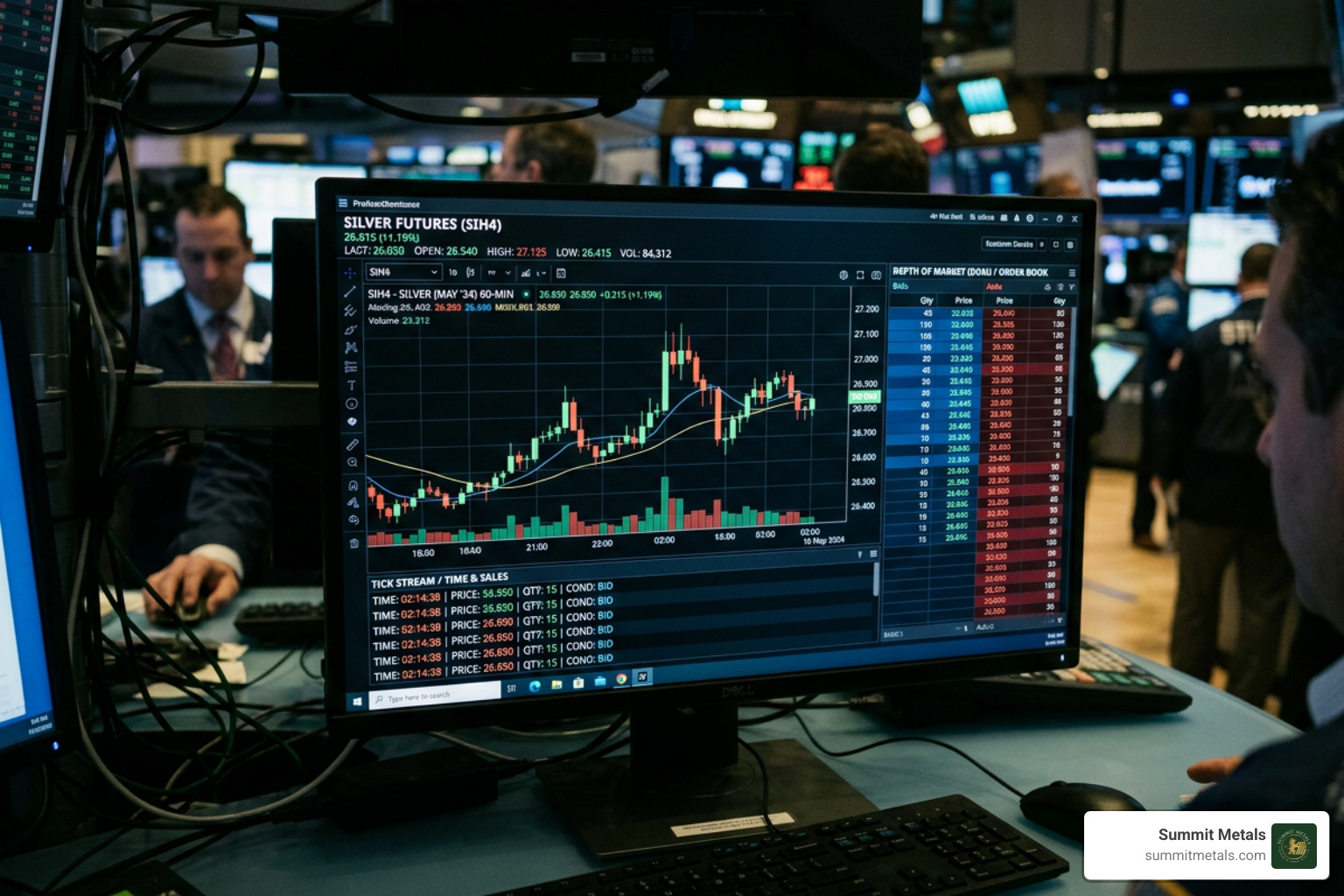
To understand how jp morgan manipulating silver worked, we have to look at the difference between the physical world and the "paper" world. In the physical world, if you want silver, you buy a bar or a coin. In the paper world, traders use COMEX Futures contracts and LME Futures contracts. These are agreements to buy or sell silver at a specific price at a date in the future.
The price of silver is largely discovered in these futures markets. JPMorgan's traders didn't necessarily move truckloads of metal to change the price; they moved the perception of value using a technique called spoofing.
What is Spoofing?
Spoofing is the financial equivalent of a "head fake" in basketball, but with millions of dollars on the line. Traders would place "non-bona fide orders"—huge buy or sell orders that they had absolutely no intention of executing.
When other traders (and high-frequency trading algorithms) saw these massive orders, they assumed a big move was coming. If a JPMorgan trader placed a massive "sell" spoof, the market would panic, thinking supply was suddenly high, and the price would drop. The JPMorgan trader would then buy at that lower price, cancel their fake sell order, and walk away with a profit. According to the CFTC, JPMorgan traders engaged in hundreds of thousands of these deceptive trade sequences between 2008 and 2016.
How JP Morgan Manipulating Silver Impacted Retail Traders
You might wonder, "If a big bank is playing games with paper contracts, why does it matter to me?" It matters because those paper prices dictate the price you pay for a silver eagle or a 10-ounce bar.
When jp morgan manipulating silver caused sudden, artificial price drops, it triggered "stop-loss" orders for smaller investors. A stop-loss is an instruction to sell a position if the price hits a certain level to prevent further losses. By spoofing the price downward, the big banks forced these retail traders to sell their positions at a loss.
This created a cascade of forced liquidations. As more people were forced to sell, the price dropped even further, allowing the manipulating bank to buy back their positions at a massive discount. For the average investor, this felt like the market was "rigged" against them—and as the DOJ eventually proved, in many ways, it was. To protect yourself today, it is vital to work with identifying reputable bullion dealers and avoiding counterfeits to ensure you are holding real assets rather than just being a pawn in a paper game.
The Role of the Precious Metals Trading Desk
The manipulation wasn't the work of one "rogue trader." It was a systemic culture within JPMorgan's precious metals trading desk. Key individuals included Michael Nowak, the managing director who ran the desk, and Gregg Smith, a lead trader. Other traders like John Edmonds and Christian Trunz eventually pleaded guilty and cooperated with the government.
Trunz admitted that spoofing was an open secret on the desk. He was taught the technique by senior traders and practiced it for years with the knowledge and consent of his supervisors. Despite internal surveillance systems flagging these suspicious trades as early as 2014, the bank failed to stop the practice, leading to years of continued market distortion.
A Timeline of Deception: From Bear Stearns to the DOJ
The story of jp morgan manipulating silver truly accelerated in March 2008. During the height of the financial crisis, JPMorgan took over the failing investment bank Bear Stearns. Along with Bear’s offices and staff, JPMorgan inherited a massive "naked short" position in silver.
A naked short means selling silver you don't actually own, betting the price will go down. By August 2008, JPMorgan and HSBC reportedly controlled over 85% of the commercial net short position in COMEX silver. They were effectively the "house" in the silver casino.
- 2008-2010: Whistleblowers like Andrew Maguire, a London-based trader, began alerting the CFTC. Maguire famously predicted exactly when and how the banks would manipulate the price during specific economic news releases.
- 2011: Silver prices spiked toward $50 an ounce. This was followed by a "silver raid" where prices were slammed down by $3.6 billion in paper selling in a matter of days, unrelated to any change in physical supply.
- 2016-2019: The DOJ began using advanced data analytics—originally designed to catch healthcare fraud—to sift through years of trading data. They found the "fingerprints" of spoofing everywhere.
- 2020: JPMorgan reached its landmark settlement.
This history of investigations into market conduct shows that while the market can be distorted in the short term, the truth eventually comes out. It also echoes historical events like Silver Thursday in 1980, proving that silver has always been a battleground for major financial players.
Is JP Morgan Manipulating Silver Still Happening Today?
The short answer is: the game has changed. After paying nearly a billion dollars in fines, JPMorgan appears to have shifted its strategy. Instead of just being "short" (betting against silver), they have spent the last decade becoming the largest physical silver hoarder in history.
By late 2025, estimates suggested JPMorgan held a staggering 713 million ounces of silver through its COMEX warehouse and its role as a custodian for the SLV ETF. As silver rallied toward $83/oz in December 2025, the bank was no longer the one trying to suppress the price; they were positioned to profit from the rise. You can read more about the silver price and the bullish case for silver with a potential 20% upside to see how the market dynamics have shifted from manipulation to structural scarcity.
The $920 Million Reckoning and Criminal Sentences
In September 2020, the hammer finally fell. JPMorgan Chase & Co. agreed to pay a record-breaking $920.2 million to settle charges with the DOJ, CFTC, and SEC.
The breakdown of this massive penalty included:
- $436.4 million in criminal fines.
- $311.7 million in restitution to victims.
- $172 million in disgorgement (giving back ill-gotten gains).
This was the largest settlement ever imposed by the CFTC. More importantly, the bank had to admit to wrongdoing. The DOJ entered into a Deferred Prosecution Agreement (DPA), essentially putting the bank on "probation" for three years.
Individual Accountability and Prison Sentences
Unlike many financial scandals where only the corporation pays a fine, this case saw actual jail time. The DOJ used the RICO Act (Racketeer Influenced and Corrupt Organizations)—a law typically used to take down the Mafia—to argue that the precious metals trading desk was a criminal enterprise.
In August 2023, the leaders of that desk were sentenced:
- Michael Nowak: Sentenced to 1 year and 1 day in federal prison.
- Gregg Smith: Sentenced to 2 years in federal prison.
The judge noted that these weren't just "mistakes," but a calculated effort to rig the system for years. For more on the legal specifics, you can view the DOJ Sentencing Details directly.
Broader Industry Fallout
JPMorgan wasn't the only bank caught in the web. The investigation revealed a pattern of behavior across the "bullion banks."
- Scotiabank paid over $127 million in 2020 and eventually exited the precious metals business entirely. You can find the Scotiabank $127.5M settlement details here.
- HSBC faced similar HSBC spoofing enforcement actions, paying $76.6 million.
- Deutsche Bank settled for $75 million regarding silver fix rigging.
In total, eight major banks paid over $1.27 billion in fines related to precious metals manipulation between 2016 and 2025.
Market Dominance: COMEX Holdings and the 2025 Rally
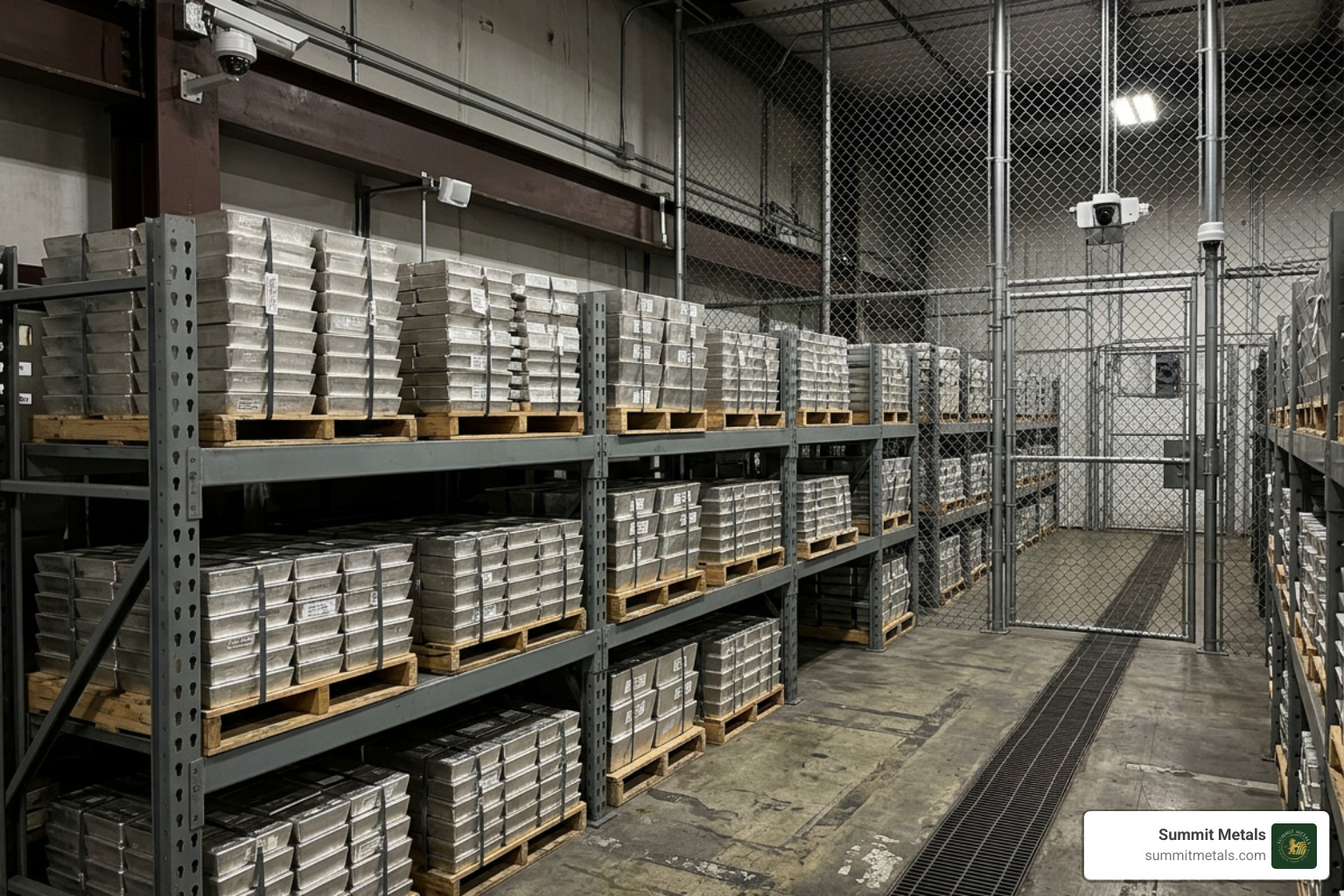
While the "spoofing" era focused on suppressing prices, the modern era is defined by physical dominance. JPMorgan's silver vault is now the largest modern hoard of silver ever amassed, surpassing even the legendary holdings of the Hunt Brothers or Warren Buffett.
The Shift from Short to Long
Why did the bank stop shorting and start hoarding? A few reasons:
- Regulatory Pressure: Fines and prison sentences made spoofing too risky.
- Basel III: New banking regulations (the Net Stable Funding Ratio) made it more expensive for banks to hold "unallocated" (paper) gold and silver, incentivizing them to hold physical metal instead.
- Structural Scarcity: Between 2021 and 2025, the world saw a cumulative silver supply deficit of about 820 million ounces.
This scarcity was driven by the green energy transition. Solar panels, which require significant silver for their conductive paste, saw demand skyrocket. This created a "perfect storm" for the 2025 rally, where silver prices surged 260% to hit $83/oz. JPMorgan, once the primary manipulator holding the price down, was now the primary beneficiary of the price going up.
Understanding silver's strategic edge to thrive in a world of shifts is essential for any investor looking to navigate this new landscape. We also keep an eye on other major players, such as Goldman Sachs and their silver outlook, to provide a complete market picture.
Protecting Your Wealth: Lessons for Silver Investors
The history of jp morgan manipulating silver teaches us one vital lesson: If you don't hold it, you don't own it. Paper markets can be manipulated, spoofed, and crashed in an afternoon. Physical silver held in your possession or a private vault is much harder to rig.
Building a Resilient Portfolio
At Summit Metals, we believe the best defense against market manipulation is a consistent, long-term strategy.
1. Use Autoinvest (Dollar Cost Averaging) Don't try to "time" a market that might be being spoofed. Our Autoinvest service allows you to buy a set amount of silver every month. This is just like contributing to a 401k. When prices are artificially low (thanks to the banks), your monthly investment buys more ounces. When prices are high, you buy fewer. Over time, this lowers your average cost and removes the stress of market volatility.
2. Choose the Right Asset When buying, consider the form of your silver. Here is a quick comparison to help you decide:
| Feature | Silver/Gold Coins | Silver/Gold Bars |
|---|---|---|
| Fraud Protection | High (Face value is backed by a government) | Moderate (Relies on mint hallmarks) |
| Liquidity | Very High (Recognized worldwide) | High (Easy to sell in bulk) |
| Premiums | Slightly Higher | Lower (Best for bulk accumulation) |
| Legal Status | Legal Tender | Bullion |
Recommendation: For new investors, coins offer a layer of protection because they are legal tender, making them subject to stricter anti-counterfeiting laws.
3. Have an Exit Strategy Buying is only half the battle. You need to know how to sell. We encourage our clients to consider private vault storage, which keeps your metals liquid. When you are ready to cash out, you can Sell to us directly. Because we already know the provenance of the metal in our vaults, the process is fast and transparent.
Always stay vigilant against how to avoid common precious metals scams to ensure your hard-earned wealth remains secure.
Frequently Asked Questions about Silver Manipulation
What is spoofing in the silver market?
Spoofing is the act of placing large buy or sell orders with the intent to cancel them before they are executed. This creates a false impression of market demand or supply, tricking other traders into moving the price in a direction that benefits the manipulator's real trades.
How much did JPMorgan pay in fines for silver manipulation?
JPMorgan paid a total of $920.2 million in 2020. This included a criminal fine of $436.4 million, $311.7 million in restitution to victims, and $172 million in disgorgement. It remains the largest fine in the history of the Commodity Futures Trading Commission (CFTC).
Who were the JPMorgan traders sentenced to prison?
Michael Nowak, the former head of the precious metals desk, was sentenced to one year and one day. Gregg Smith, a lead trader, was sentenced to two years. Both were convicted of fraud and market manipulation.
Conclusion
The story of jp morgan manipulating silver serves as a cautionary tale for anyone entering the commodities market. It reminds us that even the world's largest financial institutions are capable of systemic deception. However, it also highlights the enduring value of physical silver. Despite years of spoofing and price suppression, silver's industrial necessity and scarcity eventually forced the market to reflect its true value.
At Summit Metals, based in Wyoming, we are committed to providing you with the tools to navigate these markets safely. We offer authenticated gold and silver with transparent, real-time pricing. Whether you are looking to start an Autoinvest journey or need a reliable partner to sell your precious metals, we provide the integrity that the big banks often lacked.
Prices shown are at the time of this publication. Our team in Salt Lake City, Utah, is ready to help you secure your financial future with assets you can actually see, touch, and trust.